Pakatan Harapan is preparing for an uncertain electoral landscape in the Johor state election, particularly in the 23 constituencies where its rival Perikatan Nasional has opted not to field candidates. The coalition's caution reflects a broader strategic challenge facing Malaysian politics: voter behaviour becomes harder to predict when established party structures withdraw from competition, potentially reshaping contest outcomes in ways that defy conventional analysis.
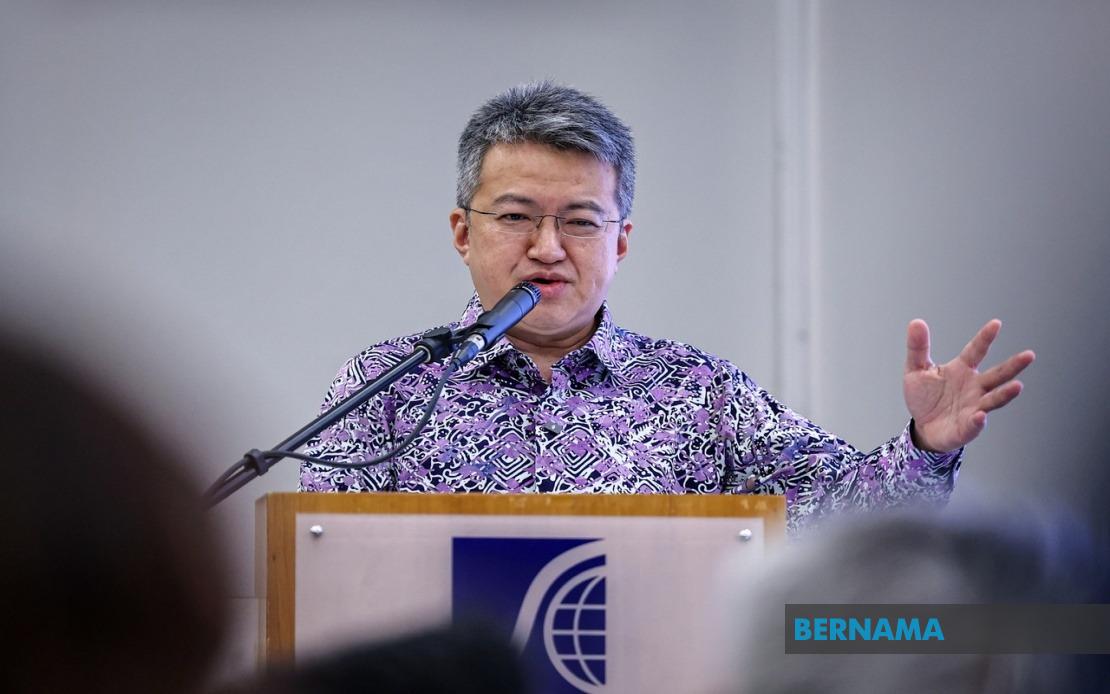
DAP's Strategic Director Liew Chin Tong articulated the core concern driving PH's cautious stance on July 29. The fundamental question, he explained, centres on whether supporters traditionally aligned with PN will consolidate their votes behind other parties or splinter across multiple alternatives. In closely contested seats, even modest vote migration could prove decisive, particularly affecting DAP candidates who may face unexpected electoral arithmetic in what superficially appear to be favourable contests.
This uncertainty reflects a distinctive feature of Malaysia's fractured political landscape. Unlike established two-party systems where voter loyalty follows predictable patterns, Malaysia's multi-coalition environment creates scenarios where traditional vote banks can disperse in unexpected directions. PN's strategic withdrawal from these 23 seats does not necessarily translate into automatic PH advantage; instead, it creates a vacuum that competing narratives and local dynamics may fill in unpredictable ways. Liew acknowledged this explicitly, emphasising that elections consistently produce outcomes that even seasoned analysts fail to anticipate.
As Deputy Finance Minister, Liew carries responsibility for the government's broader electoral performance, lending weight to his warnings. His assessment that PH candidates must remain vigilant while campaigning with renewed vigour and policy substance speaks to a deeper recognition that complacency in uncontested or nominally favourable seats carries genuine risks. The coalition's response strategy emphasises demonstrating competence and vision rather than assuming demographic or historical voting patterns will guarantee victory.
Liew's personal decision to step aside from defending his Perling state seat provides instructive context for understanding PH's broader positioning. He framed this move as consistent with DAP's principle discouraging simultaneous parliamentary and state assembly representation, thereby signalling commitment to institutional discipline and democratic norms. This positioning contrasts with patterns elsewhere in Malaysian politics where such dual mandates remain common, allowing PH to project an image of principled governance even as it navigates tactical electoral challenges.
The Perling constituency itself illustrates the complexity facing PH in these transitional contests. With 109,992 registered voters, the seat will feature a three-way battle between DAP's Alan Tee Boon Tsong, Barisan Nasional's P. Pannir Selvam, and Boo Wei Han representing Parti Bersama Malaysia. This configuration suggests that while PN formally withdrew, other opposition-aligned or alternative political forces have filled the space, creating genuinely competitive dynamics rather than walkovers. Tee, a former Senai assemblyman, brings state-level experience, yet BN's presence demonstrates that Johor remains contested ground where traditional ruling-coalition parties retain organisational capacity.
Liew's emphasis on fielding young and credible candidates represents PH's attempt to convert the PN withdrawal into a broader governance narrative. Rather than simply occupying uncontested seats, the coalition is ostensibly using these contests as platforms to introduce fresh political talent capable of delivering at state level. This approach acknowledges an underlying vulnerability: PH's support may rest partly on negative sentiment against PN rather than positive endorsement of its own personnel and policies. Strategic candidate selection therefore becomes crucial for consolidating electoral gains into durable political support.
The timing of this Johor election carries significance within Malaysia's broader political calendar. Occurring in July 2023, it represents a mid-term test of PH's governance performance following the December 2022 federal election. Johor, as a major state with substantial economic and demographic weight, serves as a bellwether for national political trajectories. Results here will influence calculations about potential snap elections and coalition stability at federal level, making even marginal seat losses potentially consequential for PH's governing position.
The technical framework governing the election reinforces the stakes involved. Early voting on July 7 allows certain populations—particularly civil servants and those with mobility constraints—to cast ballots before the main July 11 polling day. These early voting patterns often provide predictive signals of broader results, allowing campaigns to adjust final-week strategies. For PH, monitoring these intermediate indicators becomes especially important in constituencies where PN's withdrawal creates uncertainty about baseline voting patterns.
For Malaysian voters and regional observers, this election illuminates how Malaysia's complex multi-party environment differs from neighbouring democracies. Where Thailand, Indonesia, and the Philippines contend with two-bloc or dominant-party systems, Malaysia's coalition fragmentation creates fluid competitive dynamics. PN's decision to withdraw from 23 Johor seats reflects strategic calculations about resource allocation and perceived electoral prospects, but creates exactly the kind of uncertainty that Liew articulates. The outcome will reveal whether PH's institutional discipline, fresh candidates, and governance narrative prove sufficient to capitalise on PN's absence or whether voter confusion and fragmentation produce surprising results that reshape Malaysian politics unexpectedly.

