Pakatan Harapan has signalled its receptiveness to Barisan Nasional's emerging flexibility on seat allocation ahead of the Melaka state election, framing the development as a constructive opening that warrants serious exploration. The move represents a potential shift in the political positioning of Malaysia's two largest coalitions as they contemplate their electoral strategy in the southern state, a stronghold where BN currently maintains a commanding presence.
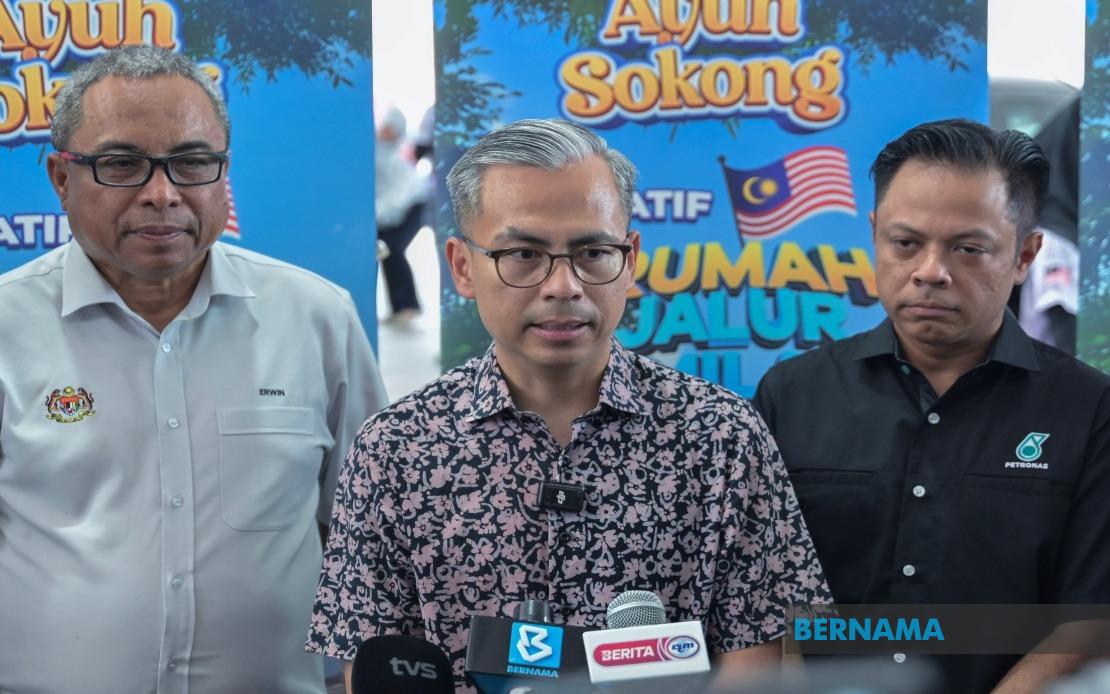
Communications Minister Datuk Seri Fahmi Fadzil articulated PH's stance following his attendance at a dengue awareness programme in the Lembah Pantai area, emphasising that BN's demonstrated openness carries significance not merely for Melaka's electoral dynamics but extends to broader considerations of regional stability and national governance. His framing of the opportunity as one deserving careful examination suggests PH intends to pursue substantive discussions rather than engaging in perfunctory exchanges, indicating that both sides view a negotiated settlement as preferable to contested elections.
The numerical disparity in Melaka's state legislature underscores the pragmatic foundations for any negotiation. BN currently holds 21 of the state assembly seats, while PH commands only five positions, a distribution that reflects decades of electoral dominance by the incumbent coalition in this particular state. Fahmi's acknowledgment of this reality suggests PH recognises that a direct confrontation in all constituencies would likely yield unfavourable results, making negotiated seat arrangements a strategically rational alternative that could nonetheless allow both coalitions to contest for voter support.
PH's Keadilan party chairman in Melaka, Yang Berhormat Adam Adli, has already initiated direct communications with Melaka Chief Minister Datuk Seri Ab Rauf Yusof regarding specific proposals for seat distribution, indicating that preliminary conversations have moved beyond theoretical discussions into practical negotiation territory. This parallel track of engagement, operating simultaneously at both state and federal levels, suggests both coalitions have designated negotiators and established channels for pursuing agreements without invoking public controversy or creating unnecessary tensions.
Barisan Nasional's willingness to consider negotiations, articulated by coalition chairman Datuk Seri Dr Ahmad Zahid Hamidi, operates within defined parameters that prioritise the integrity of each party's existing electoral foundations. Ahmad Zahid's explicit statement that seats won by individual parties within the coalition must be respected and cannot be arbitrarily ceded to political partners establishes a ceiling on negotiation flexibility, essentially declaring that BN's overall seat count cannot be further reduced through internal coalition arrangements. This boundary condition protects smaller BN component parties from marginalisation while maintaining the coalition's unified electoral presence.
The principle of reciprocal respect for existing achievements extends to Ahmad Zahid's broader framework for negotiations, which emphasises that any seat exchanges or redistributions must occur through processes characterised by honesty and sincerity. This language, repeated across recent statements by BN leadership, appears designed to elevate negotiations above transactional calculations, framing them instead as expressions of political maturity and commitment to democratic processes. For Malaysian voters accustomed to seeing electoral politics conducted through combat rhetoric, such language represents a notable tonal shift.
The distinction between seat redistribution and seat exchange carries strategic importance that extends beyond semantic niceties. Exchange arrangements allow both coalitions to present the negotiation to their respective supporters as a mutual accommodation rather than capitulation, preserving the appearance of competitive integrity even as they resolve to contest specific constituencies while ceding others to coalition partners. This face-saving mechanism enables political elites to justify power-sharing arrangements to grassroots members who might otherwise view such agreements as betrayals of electoral commitment.
For Melaka specifically, the implications of successful negotiation could reshape electoral competition substantially. The state has witnessed significant political turbulence in recent years, experiencing multiple changes in state government and chief minister positions despite BN's persistent numerical advantage. This instability, paradoxically occurring within the framework of clear electoral dominance, suggests that internal coalition cohesion and factional management have proven more consequential than competition with opposition parties. A negotiated settlement with PH might actually stabilise the state's political environment by reducing zero-sum electoral contests that have historically exacerbated internal BN tensions.
From a broader Southeast Asian perspective, the willingness of Malaysian coalitions to pursue negotiated electoral arrangements reflects sophisticated political culture uncommon in the region. While electoral competition remains fierce, the capacity of opposing camps to recognise mutual interests and structure power-sharing arrangements suggests democratic institutions have developed sufficient resilience to accommodate elite-level compromise without fracturing into factional violence. This contrasts with neighbouring countries where electoral disputes frequently trigger institutional crises.
The timing of these discussions, occurring before formal election announcements, suggests both coalitions view pre-election negotiations as preferable to post-election recriminations or protracted disputes about vote-splitting and tactical voting. By establishing clear boundaries and mutual expectations in advance, they reduce uncertainty and allow campaign messaging to focus on policy platforms rather than speculation about potential coalition arrangements. This approach, while undoubtedly serving elite interests, may actually clarify voter choice by reducing ambiguity about post-election power configurations.
For Malaysian voters in Melaka, the emerging cooperation framework raises questions about substantive policy differentiation between the negotiating coalitions. If electoral contests become limited to specific constituencies rather than statewide competition, the mechanism through which voters signal preferences for different political visions becomes constrained. PH supporters outside designated contested areas would lack direct means to express support through voting, potentially dampening voter mobilisation and engagement. Similarly, BN strongholds might experience reduced campaign intensity if outcomes appear predetermined through negotiated arrangements.
The success of these negotiations will likely establish a precedent influencing other state-level elections and potentially the next general election. If Melaka demonstrates that coalition partners can cooperate effectively on seat distribution while maintaining distinct party identities and campaign messaging, other states might adopt similar frameworks. Conversely, if negotiations collapse acrimoniously or lead to internal party discontent when implemented, future cooperation becomes significantly more difficult. Both coalitions therefore carry responsibility for structuring agreements that deliver electoral legitimacy to their respective parties while satisfying grassroots members who expect vigorous political competition.
As discussions progress, attention will focus on whether preliminary agreement frameworks can withstand public scrutiny and translate into formal coalition arrangements. The involvement of senior figures like Ahmad Zahid Hamidi and the sustained engagement of state-level leaders suggests commitment extends beyond exploratory conversations, though implementation challenges inevitably await. For Melaka and Malaysia more broadly, the development represents an interesting test of whether electoral democracy and elite consensus can coexist productively.

