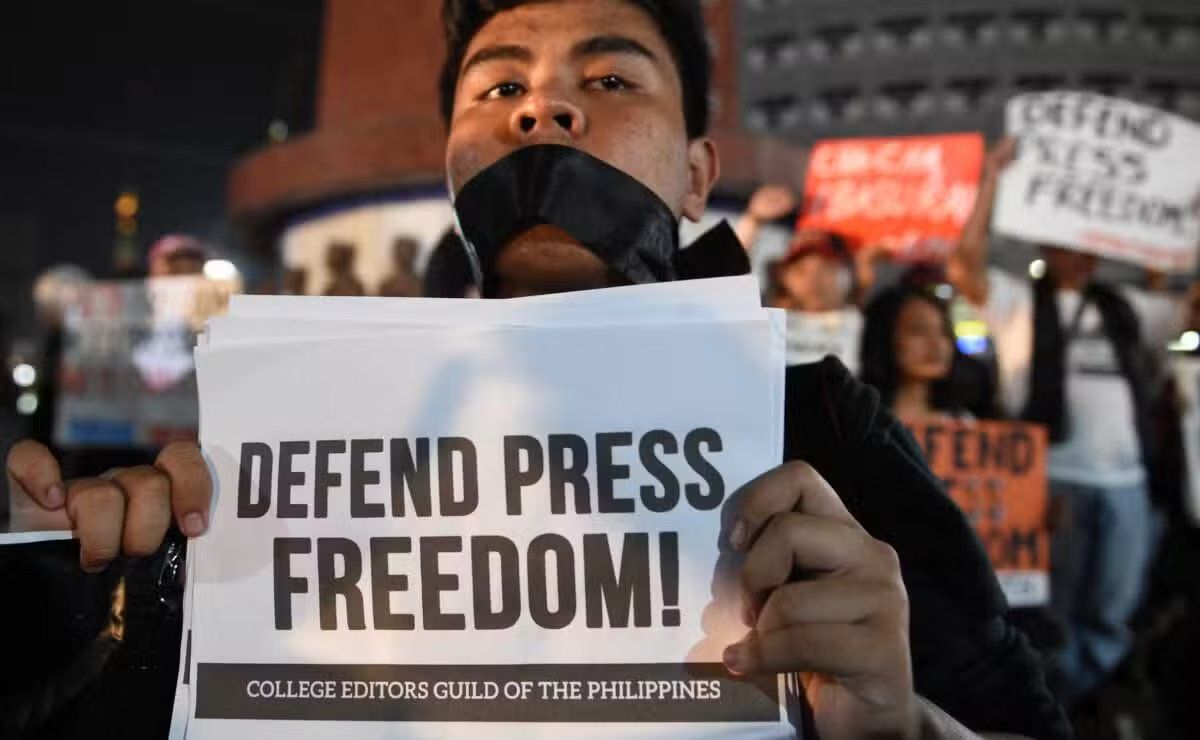
Four years into President Ferdinand Marcos Jr.'s administration, the National Union of Journalists of the Philippines has compiled a sobering record: approximately 260 documented instances of violence and intimidation directed at media workers. Yet these figures mask a more troubling reality about whose freedom is genuinely at stake when press safety deteriorates in the country.
The pattern of targeting reveals a systematic vulnerability affecting those operating furthest from the safety of major urban newsrooms. Local newspaper reporters, radio broadcasters and community journalists account for more than 180 of the recorded cases—a substantial majority indicating that smaller, independent media outlets face disproportionate danger. Unlike their counterparts in Metro Manila's established broadcasting networks and large newspapers, these journalists operate with constrained budgets, minimal institutional protection and scarce resources for security or legal defence.
This disparity has profound implications for information access and democratic accountability across the archipelago. When community journalists become targets, the communities themselves lose their primary window into local governance, corruption and abuse of power. Provincial newsrooms rarely command the financial reserves or legal infrastructure that shield journalists at major national publications. A radio broadcaster in a provincial capital operates in conditions fundamentally different from those in the nation's largest cities—with lower salaries, fewer colleagues and significantly elevated personal risk.
Jay Lavapiez, station manager of Baskog Radyo in Roxas City, Capiz, embodies this precarious position. In June, unknown assailants on a motorcycle blocked his vehicle and fired four shots from a 9 mm pistol in an assassination attempt that nearly claimed his life. The attack came after months of escalating harassment stemming from his station's reporting on a cemetery owned by a local official and allegations of municipal corruption and abuse. Rather than deterring his work, Lavapiez continues broadcasting from the same streets where he lives, navigating daily interactions with the officials and community members whose conduct he scrutinises.
The pressure on Lavapiez and his wife, India, intensified dramatically when cyberlibel and libel cases were filed against them and their staff across multiple jurisdictions—Manila, Muntinlupa and Capiz—following their investigative coverage. This geographic dispersal of legal actions, characteristic of coordinated harassment campaigns, forces defendants to mount simultaneous defences across court systems, straining resources provincial journalists simply do not possess. The litigation strategy itself becomes a silencing mechanism, consuming time and money that should fund journalism.
For context, community journalist RJ Ledesma was killed in April in Toboso, Negros Occidental during a military operation he was documenting. Ledesma had been reporting on renewable energy projects and their impact on farming communities—precisely the kind of accountability journalism that shapes informed local discourse. A fact-finding mission investigating the incident documented serious violations including alleged indiscriminate firing despite military personnel having clear visibility of the area. His death underscores that the threats facing provincial journalists extend beyond litigation and intimidation to lethal violence.
The economic reality underpinning this vulnerability cannot be separated from the security question. Provincial media workers receive modest salaries that Lavapiez characterises as entirely disproportionate to the dangers they navigate daily. This creates a cascading disadvantage: journalists earning provincial wages lack resources to hire security, engage experienced lawyers or relocate to safer locations. The compensation structure reflects an industry-wide assumption that journalism is its own reward—a notion that rings hollow when that work invites assassination attempts and prosecution.
Yet despite these obstacles, community journalists persist in covering stories that metropolitan newsrooms overlook or deprioritise. Their work addresses local power dynamics, misuse of public funds and threats to ordinary citizens who lack influential platforms. Lavapiez notes that community journalism was never primarily financially motivated for those drawn to it. The commitment stems from recognition that somebody must pose difficult questions when public resources are at stake and marginalised citizens feel voiceless within established institutions. This mission becomes more challenging, not less, when proximity to one's community becomes a liability.
The paradox Lavapiez articulates captures the core dilemma: community journalists are simultaneously most essential and most vulnerable. Everyone knows where they live and work. Their faces are recognisable on provincial streets. The very embeddedness that enables nuanced local reporting and trust-building with sources becomes a security disadvantage when authorities or powerful interests decide to intimidate or eliminate critical voices. Journalists cannot simply leave town as some urban counterparts might; these are their communities, their neighbours, their social fabric.
Regionally, the Philippine situation illuminates broader Southeast Asian challenges to press freedom. As authoritarian pressures increase across the region, smaller markets and provincial journalism bear disproportionate costs. Malaysia, Indonesia, Thailand and Myanmar have experienced parallel targeting of community and independent journalists operating outside major urban centres. The pattern suggests a systematic strategy: allow large, institutionally powerful newsrooms sufficient latitude to maintain democratic appearance, while crushing grassroots accountability mechanisms that threaten local power structures.
The NUJP's framing—that behind each statistic stands a journalist, a newsroom and a community losing access to truth—reframes the debate from abstract press freedom principles to concrete human vulnerability. Lavapiez and his peers do not demand special treatment or security details. Their request remains elementary: the capacity to pursue journalism without facing prosecution, harassment, threats or assassination. This baseline protection remains conspicuously absent for community journalists across the Philippines, creating a two-tier press system where accountability journalism thrives only for those with institutional backing and financial resources to withstand coordinated pressure campaigns.

