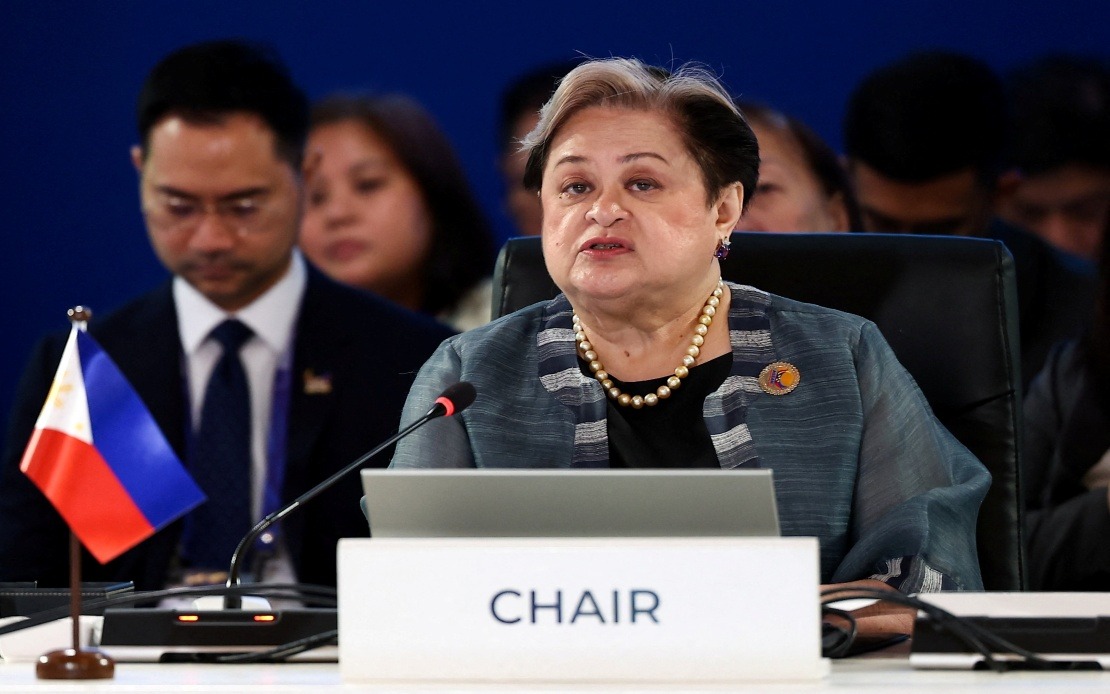
The Philippines' Foreign Affairs Secretary Ma. Theresa Lazaro has announced plans to lead a comprehensive humanitarian mission into Myanmar during the final quarter of 2026, marking a significant escalation in ASEAN's hands-on engagement with the conflict-affected nation. As the special envoy of the ASEAN chair, Lazaro's initiative reflects growing regional concern about the humanitarian toll of Myanmar's ongoing instability and the association's commitment to direct intervention in addressing the crisis.
The announcement emerged following intensive diplomatic consultations that Lazaro conducted in Thailand across mid-July, where she engaged with her counterparts from other Southeast Asian nations and representatives from Myanmar's government. These back-to-back meetings underscored ASEAN's determination to maintain pressure on all parties involved in Myanmar's political crisis while seeking constructive pathways forward. The timing of these engagements suggests a carefully orchestrated diplomatic strategy designed to build consensus among member states before launching the humanitarian initiative.
According to the Department of Foreign Affairs in Manila, the proposed mission has already secured backing from all key stakeholders involved in the Myanmar discussions. This broad-based support is crucial for ASEAN operations, given the association's consensus-based decision-making framework and the sensitivity surrounding Myanmar's internal affairs. The fact that diverse parties—from ASEAN member governments to Myanmar ethnic armed organisations—have expressed openness to the mission indicates a rare moment of diplomatic alignment on the need for humanitarian assistance.
The core objective of the mission centres on improving humanitarian access to regions within Myanmar that currently face severe shortages of aid and essential services. The conflict that has intensified since 2021 has created pockets of acute need across the country, particularly in areas controlled by various armed factions or caught in crossfire between government forces and resistance movements. By expanding access to these zones, ASEAN hopes to alleviate suffering while simultaneously demonstrating its relevance as a regional problem-solver during a period of significant instability.
Lazaro's engagement with Myanmar Foreign Minister U Tin Maung Swe on July 12 focused extensively on the implementation of the Five-Point Consensus, a framework that ASEAN adopted in 2021 as its roadmap for addressing Myanmar's crisis. The consensus emphasises dialogue, cessation of violence, humanitarian assistance, and a return to democratic governance. Despite international scepticism about the framework's effectiveness, ASEAN foreign ministers have consistently reaffirmed its centrality to their Myanmar strategy, viewing it as the only mechanism through which the association can maintain diplomatic leverage.
During the same engagement, U Tin Maung Swe presented details about Myanmar's domestic peace initiatives, including a 100-day plan aimed at reducing violence and creating conditions for dialogue. He also highlighted government efforts to combat transnational crimes—a growing concern in the region as organised criminal networks exploit Myanmar's instability. These presentations suggest that Myanmar's military-led government remains engaged with ASEAN's diplomatic process, even as its control over territory and respect for human rights remain contested internationally.
Particularly significant was the convening of ASEAN foreign ministers with their Myanmar counterpart, representing the first in-person meeting of this configuration since 2021. This milestone reflects a deliberate effort to normalise engagement with Myanmar despite international pressure on some ASEAN members to adopt harsher stances. The meeting highlighted ASEAN's distinctive approach: maintaining dialogue and institutional connection even during periods of profound disagreement, contrasting sharply with the approach taken by Western nations and the United Nations.
On July 13, Lazaro shifted focus to engagement with Myanmar's ethnic armed organisations and the National Solidarity and Peacemaking Negotiation Committee, representing the diverse opposition forces that have emerged during the conflict. These discussions emphasised the need for an inclusive national political dialogue that brings together all significant parties rather than focusing solely on government-to-government relations. The receptiveness expressed by these groups to dialogue processes offers tentative hope that space exists for negotiated solutions, though historical patterns suggest formidable obstacles remain.
For Malaysia and other ASEAN nations, this humanitarian mission carries multiple implications. First, it signals that the association intends to deepen its practical involvement in Myanmar beyond diplomatic statements, potentially setting precedents for ASEAN's future crisis response. Second, it demonstrates that despite internal disagreements within ASEAN on various issues, member states can still mobilise around consensus positions regarding regional stability. Third, the mission's focus on humanitarian access rather than political conditions reflects ASEAN's preference for pragmatic engagement over ideological positions—an approach that resonates differently across the region's diverse political systems.
The success of this mission will substantially depend on securing cooperation from all armed parties operating within Myanmar, not merely the government in Naypyidaw. Many ethnic armed organisations and newer resistance forces control territory where humanitarian needs are acute, and they may impose conditions on aid access or use it as a bargaining chip in negotiations. Lazaro's team will need to navigate these complex power dynamics carefully, demonstrating neutrality and commitment to reaching all affected populations regardless of political affiliation.
From a broader Southeast Asian perspective, the mission also reflects increasing regional anxiety about Myanmar's trajectory and its spillover effects. Refugee flows, drug trafficking, weapons smuggling, and cyber-enabled crimes emanating from Myanmar increasingly affect neighbouring countries. By investing in humanitarian access and dialogue facilitation, ASEAN aims to stabilise Myanmar sufficiently to reduce these transnational pressures, even if complete resolution of Myanmar's political crisis remains distant.
The initiative also underscores ASEAN's continued struggle to balance its non-interference principle with practical engagement in member states facing internal conflict. By framing the mission explicitly as humanitarian rather than political, ASEAN maintains plausible consistency with its founding principle while advancing substantive involvement in Myanmar's future. This semantic and practical distinction will likely remain central to how ASEAN members justify their Myanmar engagement to domestic constituencies and international observers throughout the coming months.

