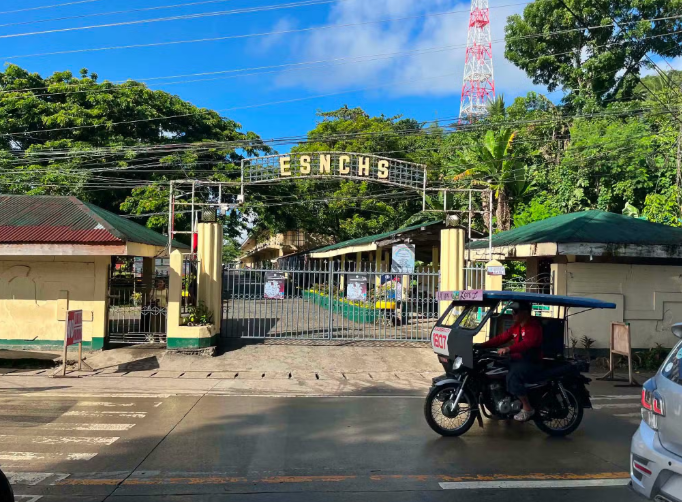
A sprawling public high school in the Philippines locked down its campus on Friday after threatening messages circulated online, forcing authorities to deploy specialized security teams and suspend classes at what is the largest secondary institution in Eastern Samar province. The online post, allegedly originating from students enrolled in a Grade 11 culinary programme at Eastern Samar National Comprehensive High School in Borongan City, contained explicit references to bombs and firearms, prompting an immediate institutional and law enforcement response centred on protecting thousands of students and staff members.
School administrators, operating through Acting Head Dean Ernest Paul Hermano, moved swiftly to shut down operations after consulting with the Borongan City Police Station, which recommended the precautionary measure. The decision was coordinated through multiple layers of the education bureaucracy, including the Office of the Schools Division Superintendent and the Assistant Schools Division Superintendent of the Department of Education's Borongan City Division. This multi-agency approach underscores how seriously Philippine authorities are treating campus security threats in the current climate of elevated anxiety surrounding school safety.
Responding to the threat declaration, law enforcement dispatched a Special Weapons and Tactics unit to the school grounds to conduct systematic searches of areas where the threatening photographs were allegedly created or posted. The security operation moved methodically through the campus, inspecting buildings, classrooms, and facilities to rule out the presence of explosive devices or weapons. By mid-morning on Friday, Police Lieutenant Colonel Silver Cabanillas, commanding the Borongan City Police Station, issued an all-clear declaration at 8:35 a.m., confirming that no credible weapons or bombs were discovered during the sweep.
The incident arrives in an atmosphere of intensified apprehension about student safety that has gripped the Eastern Visayas region following a catastrophic shooting that occurred just two weeks earlier. On June 22, a student at San Jose National High School in nearby Tacloban City opened fire on campus, killing three fellow students and wounding twenty others in what became a watershed moment for school safety policy discussions across the Philippines. That tragedy, still raw in the regional consciousness, transformed abstract concerns about campus security into visceral reality for administrators, parents, and students throughout Eastern Visayas.
The response to the Borongan City threat reveals how quickly institutional muscle memory has developed in the aftermath of the Tacloban shooting. Schools and municipal governments across Eastern Visayas have rushed to implement stronger security protocols, increase visible police presence on campuses, and revise emergency response procedures. What might have been treated as a low-priority online rumour before June 22 now triggers full-scale security operations, specialized team deployments, and administrative suspensions. This recalibration of threat assessment reflects a fundamental shift in how educational institutions approach student welfare.
Eastern Samar National Comprehensive High School occupies a significant position within the provincial education system as the flagship secondary institution, serving several thousand students drawn not only from Borongan City but also from neighbouring municipalities across the province. The scale of the institution means that any security incident carries implications for thousands of families and disrupts the educational routines of an entire region's student population. The school's size and prominence also make it a visible symbol of institutional vulnerability to security threats, magnifying the psychological impact of such incidents beyond the immediate campus.
Investigators have not yet publicly identified who created or posted the threatening content, and police continue their inquiry into the incident's origins and motivations. The involvement of alleged Grade 11 students in the threat, if confirmed, would raise troubling questions about motivations, access to online platforms for threat-making, and the adequacy of student supervision and digital literacy programmes. Determining whether the threats represented genuine planning, misguided jokes, or attention-seeking behaviour becomes critical for calibrating appropriate institutional and legal responses.
The school administration, through its official statement, emphasized full cooperation with law enforcement authorities and reaffirmed its commitment to maintaining a secure learning environment. This rhetorical positioning serves multiple audiences: anxious parents and students concerned about safety, community members questioning institutional competence, and government officials evaluating school system readiness. The statement frames the suspension not as institutional failure but as responsible precaution, distinguishing between potential threats and actual danger.
Authorities have issued public appeals urging restraint in sharing unverified security information online while simultaneously encouraging citizens to report genuine threats directly to law enforcement rather than through social media channels. This dual messaging attempts to reduce panic-driven online rumour-spreading while maintaining public vigilance. The challenge facing administrators involves calibrating sensitivity to real threats without creating an environment of perpetual fear that itself becomes corrosive to the educational mission.
The pattern of school security incidents continuing to emerge across Eastern Visayas in recent days suggests either that genuine security concerns are proliferating or that awareness and reporting mechanisms have become more responsive to potential threats. Both scenarios carry implications for how institutions allocate security resources and how communities perceive campus safety. For Malaysian observers, the Philippine experience offers cautionary lessons about the speed with which a single violent incident can reshape institutional practices and public perception across entire regions, demonstrating how security concerns in educational settings transcend national boundaries and challenge administrators across Southeast Asia to balance vigilance with normalcy.

