The Philippine Department of Justice has opened a comprehensive investigation into potential criminal charges against government officials in connection with a shooting incident at the Senate building on May 13 and the escape of Senator Ronald dela Rosa from protective custody the following morning. Justice Secretary Fredderick Vida confirmed that prosecutors are actively gathering evidence and witness statements to establish whether a direct link exists between these two events, which occurred within hours of each other.
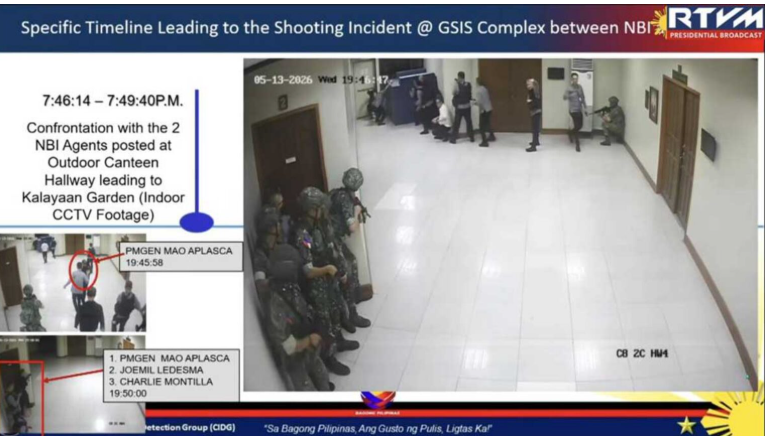
According to Vida, investigators have collected accounts from members of the National Bureau of Investigation, journalists present at the scene, and security camera recordings that suggest shots were fired from the fifth floor of the Senate building with what appears to have been a sniper weapon. The shots were directed at an identifiable vehicle belonging to the NBI that was positioned at the GSIS premises, indicating a targeted operation rather than a random incident. This detail suggests a level of coordination and advance planning that has raised serious concerns about potential involvement by officials with access to the building and knowledge of security movements.
The Justice Secretary emphasised that the investigation remains in an active phase, with prosecutors continuing to follow multiple leads and interview additional witnesses. While formal charges have not yet been filed against specific individuals, Vida indicated that preliminary findings suggest numerous personalities with official positions are implicated in the unfolding inquiry. The nature of his statement suggests the investigation may ultimately encompass a wider network of officials than initially apparent from public reports.
The timing and sequence of events have fuelled speculation about whether the Senate shooting and dela Rosa's escape were coordinated actions or separate incidents. Dela Rosa, a prominent senator and former Philippine National Police chief, was reportedly under protective custody at the time of his departure. His escape during the same timeframe as the shooting has prompted investigators to examine whether there was any connection between the two events, including the possibility that the shooting may have been designed as a distraction or diversionary tactic.
Vida's careful language reflects the delicate political nature of the investigation. By stating that "not yet" have specific persons been charged, he acknowledges that the evidence-gathering phase remains incomplete, yet his acknowledgment that many personalities involved hold public office signals that this will likely develop into a significant governmental scandal. The Justice Department appears intent on conducting a thorough examination before making any formal accusations that could trigger immediate political fallout.
The Justice Secretary provided assurances to the Philippine public that the department will handle the investigation with professionalism and objectivity, explicitly pledging to pursue the matter "without fear or favor." This commitment carries particular weight in the Philippine context, where concerns about selective justice and political influence over law enforcement remain significant. His statement amounts to a public commitment that no official, regardless of rank or political connections, will receive preferential treatment if evidence implicates them in the incident.
Vida also articulated a crucial principle of justice by noting that no individual stands above the law, yet cautioning against prejudging anyone before evidence has been thoroughly examined. This balanced approach seeks to maintain public confidence in the process while protecting the presumption of innocence for those under investigation. Given the high-profile nature of the case and the involvement of a sitting senator, such reassurances are essential for maintaining institutional credibility.
The investigation carries significant implications for Philippine governance and the rule of law. If public officials are ultimately proven responsible for orchestrating or participating in the shooting, it would represent a serious breach of public trust and democratic norms. The circumstances—involving gunfire at the nation's legislature and the escape of a detained official—suggest instability within government security and oversight mechanisms that would warrant urgent reforms.
For regional observers, the case highlights ongoing concerns about institutional stability and accountability in the Philippines. The incident and subsequent investigation could influence perceptions of the country's commitment to democratic governance and the independence of its justice system. The way the DOJ handles this investigation will serve as a test of whether Philippine institutions can effectively hold powerful officials accountable when evidence warrants such action.
The investigation also raises questions about security protocols within Philippine government buildings and the procedures governing protective custody arrangements for high-ranking officials. That a senator could escape such custody, and that gunfire could be directed from within a legislative building, suggests systemic vulnerabilities that officials will need to address regardless of the investigation's outcome. The Department of Justice's ongoing work will ultimately determine not only which officials bear responsibility for these events, but also what institutional reforms are necessary to prevent similar incidents.