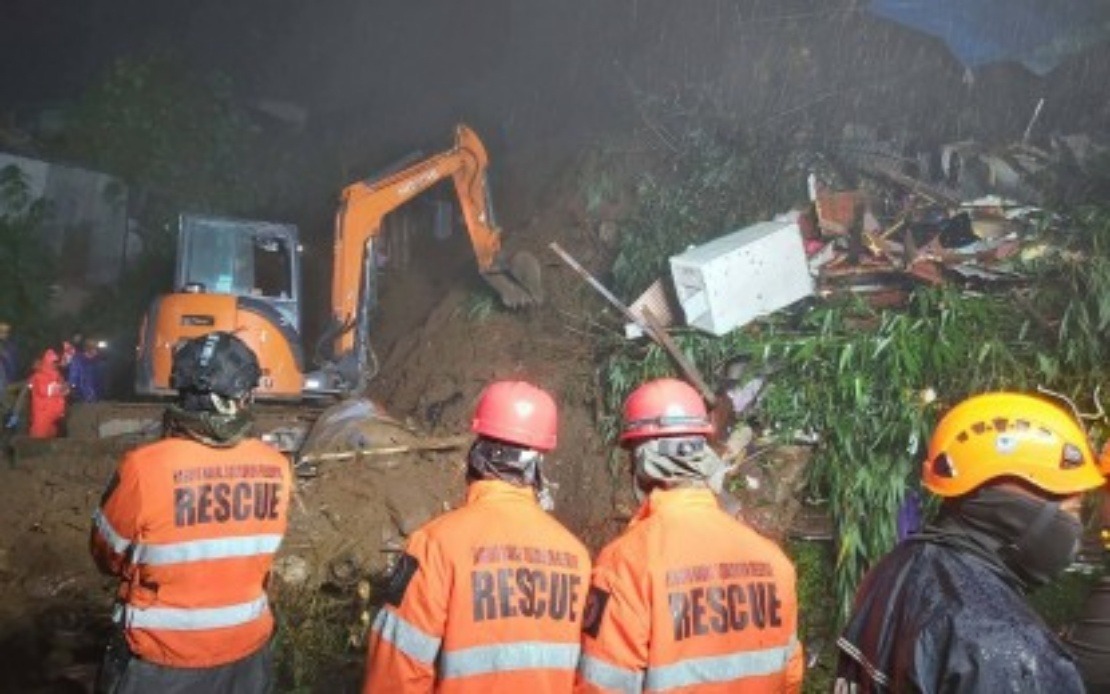
The Philippines is confronting a humanitarian crisis in the wake of consecutive tropical weather systems that have claimed 19 lives and displaced millions across the archipelago. The Office of Civil Defence confirmed the casualty toll on Tuesday, with public information officer Diego Mariano providing reporters with an updated assessment of the devastation wrought by Tropical Depressions Luis and Maymay alongside the seasonal southwest monsoon surge. The verified death count represents a stark reminder of the tropical cyclone belt's recurring threat to the nation's citizens and infrastructure, particularly in the mountainous and low-lying regions most susceptible to flooding and landslides.
Geographically, the fatalities concentrated in three provinces reveal the differential impact of these weather events across the country's varied terrain. The mountainous Benguet region accounted for the highest death toll with 12 confirmed fatalities, while Rizal in the national capital periphery recorded four deaths and Batangas in the southern Tagalog region saw three lives lost. These figures underscore how elevated areas face acute risks from torrential rainfall triggering mudslides and overflowing water systems, whilst low-lying urban fringe communities encounter inundation hazards. The distribution pattern reflects both population density and geographic vulnerability, factors that remain constant variables in the Philippines' annual disaster calendar.
Beyond the confirmed fatalities, the humanitarian dimension extends to those injured and unaccounted for across affected territories. The OCD documented 15 injuries, with the largest concentration of 12 cases again in Benguet, alongside isolated incidents in Ilocos Sur, Rizal, and Cavite. More concerning are four missing persons still being sought, three in Benguet and one in Batangas, intensifying rescue operations in mountainous terrain where access remains challenging for emergency personnel. These figures, while smaller in absolute terms than the broader displacement count, represent individual traumas with profound family and community ramifications.
The scale of civilian displacement dwarfs the casualty figures, illuminating the comprehensive disruption these weather systems inflict on national life. Approximately 2.27 million individuals from nearly 647,000 families have been affected across ten major geographic zones spanning from northern Ilocos to the southern Cordillera and diverse island regions. The enumeration encompasses displacement, temporary shelter reliance, damaged property, and economic disruption cascading through farming, fishing, and merchant communities dependent on stable weather and functioning supply chains. This demographic totality—roughly equivalent to the population of a major Southeast Asian city—illustrates why disaster management frameworks in the Philippines must operate at scales comparable to emergency responses in more developed nations.
Temporary shelter arrangements reveal the ongoing instability facing affected populations. The civil defence agency documented 919 evacuation centres providing refuge to approximately 95,000 individuals distributed across 26,174 families, suggesting many remain in improvised shelters with uncertain timelines for return to permanent housing. These centres, hastily established in schools, government facilities, and community buildings, typically offer basic provisions but limited comfort or privacy for vulnerable populations including children, elderly persons, and individuals with medical conditions. The protracted nature of tropical depression recovery means many centres may remain operational for weeks, straining local government resources and creating secondary challenges involving sanitation, disease prevention, and psychological wellbeing.
Residential infrastructure damage quantifies the material loss confronting reconstruction efforts. Official assessments documented 639 houses sustaining damage while 45 were completely destroyed across the affected regions. Though numerically modest compared to major cyclone impacts, this destruction translates to homelessness for hundreds of families lacking resources for rapid repair or reconstruction. Given that many Philippine rural and peri-urban families live in modest structures vulnerable to water and wind damage, destruction of even a single family home constitutes economic devastation requiring months of rebuilding and significant financial outlays beyond disaster victims' typical capacity.
Infrastructure damage assessments reveal the broader economic consequences extending beyond residential zones. The OCD quantified structural and systems damage at PHP1.46 million, encompassing roads, bridges, water systems, electrical infrastructure, and government facilities facilitating regional administration and service delivery. This infrastructure damage cascades through economic activity and public service provision, as damaged roads impede commerce and emergency response whilst compromised utilities disrupt daily functions across healthcare, education, and economic sectors. For Southeast Asian nations like the Philippines with infrastructure development perpetually outpaced by maintenance demands, weather-induced damage represents opportunity costs diverted from planned expansions.
Agricultural devastation constitutes the deepest economic wound for the Philippines' predominantly rural affected regions. Preliminary damage assessments valued agricultural losses at PHP135.33 million, encompassing crop destruction, livestock mortality, fishery damage, and equipment loss across farming and coastal communities already operating with minimal profit margins. This agricultural impact reverberates through food supply chains, market prices, and rural household incomes during periods when immediate replanting demands cash outlays agricultural families typically cannot sustain independently. For Malaysian observers, these figures underscore vulnerability patterns affecting ASEAN agricultural economies dependent on seasonal stability and vulnerable to intensifying tropical weather systems.
The geographic distribution of impact across ten major Philippine regions—spanning Ilocos Region through Mimaropa—demonstrates the nationwide character of these tropical depressions rather than localised events. From the Cagayan Valley's agricultural heartland through Central Luzon's industrial-agricultural zones to Calabarzon's urban-rural interface and the Bicol Region's typhoon-vulnerable southeastern coast, the sequential weather systems achieved comprehensive territorial reach. This broad-based impact complicates recovery logistics requiring coordinated response across multiple regional governments with varying administrative capacities and resource availability, challenging centralized coordination from Manila.
The southwest monsoon's concurrent influence underscores how multiple weather phenomena combining force create amplified impacts exceeding single-system predictions. Rather than discrete meteorological events, the tropical depressions arrived during the July-to-September southwest monsoon season when baseline atmospheric moisture and rainfall already elevated, creating compound precipitation exceeding normal absorption capacities of waterlogged soils and drainage systems. This seasonal overlapping pattern appears likely to intensify under climate change scenarios projecting longer and more vigorous monsoon periods across Southeast Asia, suggesting the Philippines faces structural increases in disaster frequency and severity beyond historical baselines.
For Malaysia and Southeast Asian nations sharing tropical geography, the Philippine experience offers cautionary perspective on disaster management requirements. The 2.2 million affected figure, drawn from a 115 million national population, represents roughly 1.9 percent of Philippine citizens directly impacted by a single meteorological event—a ratio that applied to Malaysia's 35 million population would suggest similar disasters potentially affecting 600,000 to 700,000 Malaysians. Understanding Philippine response architectures, evacuation centre operations, and recovery frameworks provides practical reference points for ASEAN disaster management planning amid accelerating climate impacts affecting the entire region's vulnerable populations.
Recovery trajectories from these tropical depressions will extend beyond immediate casualty and damage assessments, encompassing psychological trauma, economic hardship, and infrastructure reconstruction demanding months of sustained national attention and resource commitment. The verified death count of 19 represents finality for nineteen families, whilst 2.27 million affected individuals face extended disruption and uncertain recovery pathways. As climate systems continue shifting across the Pacific-Asian region, such episodes will likely intensify, demanding increasingly sophisticated disaster governance, climate adaptation investment, and regional cooperation frameworks across ASEAN to protect vulnerable populations facing recurring tropical weather threats.

