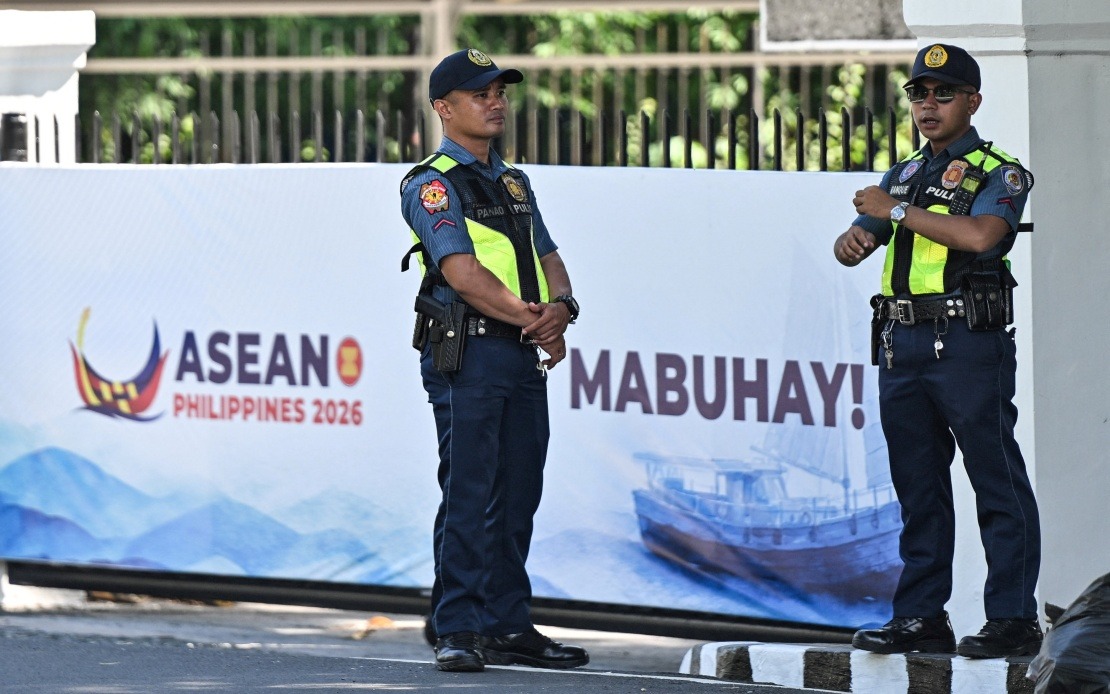
The Philippines assumes the diplomatic spotlight this week as it shepherds ASEAN through a critical five-day ministerial forum addressing the region's most pressing strategic challenges. From July 20 to 24, the 59th ASEAN Foreign Ministers' Meeting (AMM) and Related Meetings in Manila will bring together the ten Southeast Asian nations to chart a course through intensifying global tensions while reinforcing the bloc's institutional cohesion. The gathering represents a pivotal moment for regional dialogue at a time when geopolitical uncertainty threatens to destabilize the carefully calibrated balance ASEAN has maintained as a neutral and pragmatic voice in Asian affairs.
Philippine leadership has framed this week as a continuation of momentum built over the preceding seven months, with an explicit focus on advancing shared developmental goals whilst strengthening the collective identity that distinguishes ASEAN from other regional mechanisms. Foreign Affairs Assistant Secretary Dominic Xavier Imperial, speaking for the Philippine government, emphasised that these gatherings will consolidate progress on community initiatives while reasserting ASEAN's institutional commitment to shared values. This positioning reflects the Philippine chair's determination to ensure that even as external pressures mount, the bloc remains focused on internal cohesion and the pursuit of collectively determined priorities rather than allowing external powers to set the regional agenda.
The week commenced with the 16th direct engagement between ASEAN's Foreign Ministers and the ASEAN Intergovernmental Commission on Human Rights, signalling from the outset that human rights considerations occupy a central position in the bloc's contemporary concerns. This interface carries symbolic weight—it represents an explicit acknowledgment that regional security and human rights protections are complementary rather than competing objectives. Imperial underscored that this dialogue reaffirms ASEAN's commitment to promoting and safeguarding fundamental freedoms, particularly for populations facing marginalisation or vulnerability. The prominence given to this human rights component reflects broader regional recognition that sustainable stability depends not merely on military or diplomatic equilibrium but on the rule of law and protection of citizen welfare.
Parallel proceedings have included a meeting of the Southeast Asia Nuclear Weapon-Free Zone Commission, where ministers reviewed strategic plans extending through 2027 and discussed potential accession from new candidates seeking to join the Protocol. This forum represents ASEAN's longest-standing collective security achievement—the 1995 Bangkok Treaty that established Southeast Asia as a nuclear-weapons-free region. Maintaining this status requires sustained diplomatic effort and periodic renewal of commitment, particularly as technological developments in nuclear capability create new verification and enforcement challenges. The commission's work underscores a fundamental principle underlying ASEAN's approach to security: that maintaining zones of non-militarisation and explicitly prohibiting weapons of mass destruction remains preferable to arms competition.
The formal opening of the 59th AMM on Tuesday will establish the framework for ministerial deliberations across three broad fronts. Ministers will assess implementation progress on ASEAN's three pillars—the political-security community, economic community, and socio-cultural community—thereby taking stock of institutional functioning and identifying areas requiring acceleration or adjustment. Simultaneously, they will evaluate relationships with external partners who engage with ASEAN through various dialogue and partnership frameworks. Additionally, the gathering will provide a venue for exchanging perspectives on international developments affecting regional interests, from ongoing conflicts to emerging economic or technological challenges.
Two significant outcomes are expected to emerge from formal proceedings. The 59th AMM Joint Communiqué will synthesise the week's discussions into a single comprehensive document articulating collective positions, decisions, and priorities. This document carries considerable weight within Southeast Asian diplomacy, as it represents the distilled consensus of ten sovereign states whose interests do not always converge naturally. The second document—Guidelines on the Modalities for Engagement of ASEAN with High Contracting Parties to the Treaty of Amity and Cooperation in Southeast Asia—represents a deliverable specifically attributed to Philippine stewardship. These guidelines establish standardised procedures for engagement with states that have not yet formalised comprehensive partnerships with ASEAN, thereby broadening the bloc's diplomatic reach whilst maintaining principled consistency. Imperial characterised this framework as strengthening cooperation channels whilst preserving the Treaty of Amity and Cooperation as the foundational instrument governing peaceful coexistence and confidence-building across the region.
Wednesday's Post-Ministerial Conferences will draw in the bloc's major dialogue partners—India, the United States, Canada, Russia, China, the Republic of Korea, Japan, Australia, New Zealand, the United Kingdom, and the European Union. These bilateral and minilateral sessions allow ASEAN to engage each external power individually while maintaining the collective orientation that defines the bloc's diplomatic identity. For Malaysia and other Southeast Asian nations, these interactions serve as critical opportunities to communicate regional interests regarding trade, security cooperation, and broader geopolitical positioning. Imperial characterised these meetings as forums where dialogue partners can address issues with regional and global ramifications, suggesting that conversations will extend beyond bilateral matters to encompass shared concerns about international developments.
Thursday's agenda will be dominated by larger multilateral frameworks that have evolved to encompass expanding circles of regional participants. The ASEAN Plus Three format, incorporating China, Japan, and South Korea, allows discussion of East Asian integration pathways. The ASEAN Regional Forum, the region's oldest multilateral security dialogue, brings together some 27 countries in discussions of confidence-building and conflict prevention. The East Asia Summit represents the broadest framework, including India, the United States, Russia, and Australia alongside ASEAN and Plus Three members. These escalating circles of dialogue reflect the reality that Southeast Asian security cannot be disaggregated from broader Asian and Indo-Pacific developments.
A bilateral meeting between Philippine Foreign Affairs Secretary Ma. Theresa Lazaro and Chinese Foreign Minister Wang Yi has been scheduled, reflecting the importance attached to Sino-Philippine relations despite ongoing territorial disputes. Imperial emphasised that this engagement addresses not only bilateral matters but also regional implications of global developments, suggesting that discussions may extend to issues transcending Philippines-China relations to encompass broader geopolitical trajectories. The meeting carries particular significance given tensions over maritime jurisdiction in the South China Sea and the increasing involvement of external powers in regional dynamics.
Two perennial ASEAN challenges will command significant attention throughout the week. The Myanmar crisis, now in its third year of military rule following the February 2021 coup, continues to occupy ASEAN's agenda despite limited progress toward the Five-Point Consensus adopted in 2021. That consensus called for an end to violence, dialogue, humanitarian assistance, and mediation through a special ASEAN envoy—yet implementation has stalled against Burmese military intransigence and the regime's increasing international isolation. Imperial confirmed that engagement continues not only with the State Administration Council but also with other Myanmar stakeholders, suggesting ASEAN maintains diplomatic channels across the fractured political landscape. The Code of Conduct regarding the South China Sea, under negotiation since 2002, will similarly feature prominently. Though negotiations have advanced incrementally, finalising language acceptable to all parties—particularly Vietnam, the Philippines, and China—remains elusive. Imperial described both issues as permanent fixtures on ASEAN agendas, acknowledging their intractability whilst signalling the bloc's determination to maintain focus despite obstacles.
The week concludes Friday with commemorative activities marking the fiftieth anniversary of the Treaty of Amity and Cooperation in Southeast Asia. This treaty, signed in 1976 alongside ASEAN's founding declarations, enshrined principles of mutual respect for sovereignty, non-interference, peaceful settlement of disputes, and renunciation of force. Five decades later, these principles remain foundational to how ASEAN negotiates its position amid powerful external actors seeking to expand influence across the region. The anniversary provides occasion to reaffirm commitment to these principles precisely when geopolitical pressures tempt deviation toward alignment with particular external powers at the expense of ASEAN solidarity.
For Malaysia and other Southeast Asian nations, this week's proceedings carry direct implications across multiple dimensions. Regional security developments, human rights protections, economic cooperation frameworks, and engagement strategies with major powers are all subjects shaping national interests. The meetings will signal whether ASEAN can maintain coherence and agency amid intensifying great power competition, or whether the bloc will fracture along lines reflecting divergent alignments with China, the United States, India, and other major actors. The outcomes—both formal documents and informal consensus patterns—will influence regional stability trajectories across coming months.

