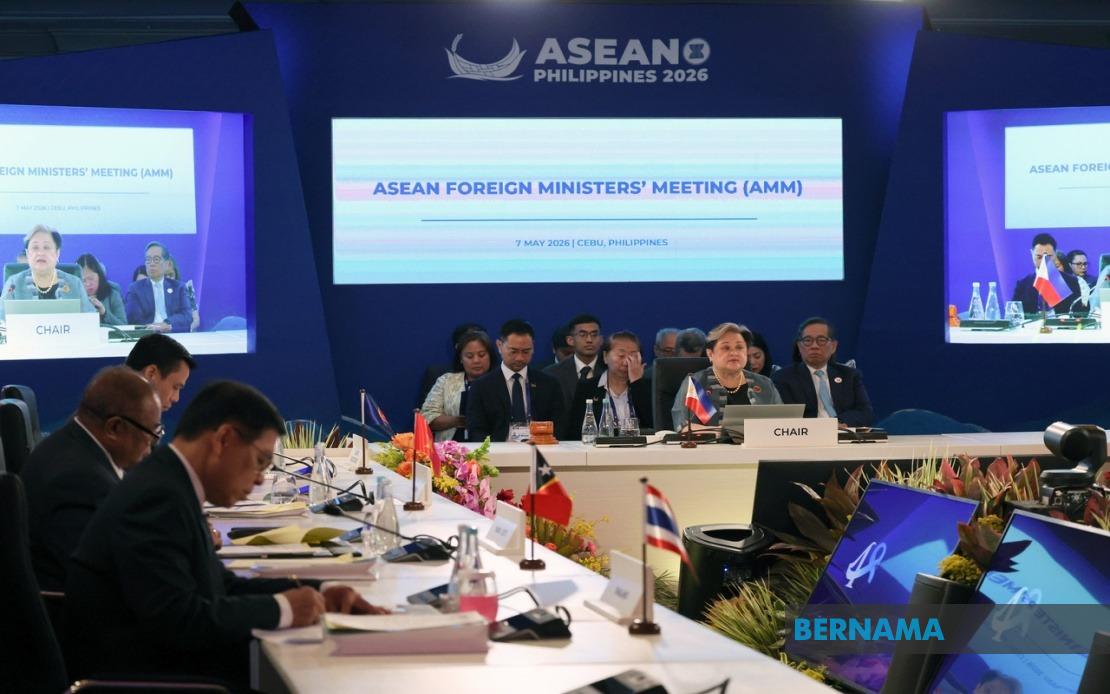
The Philippines has thrown its weight behind a recalibrated approach to ASEAN's peace framework for Myanmar, signalling that the regional bloc's diplomatic strategy must evolve alongside the deteriorating humanitarian and political situation. Speaking this month, Philippine Foreign Affairs Secretary Ma. Theresa P. Lazaro emphasised that the Five-Point Consensus, adopted in April 2021 following the military coup that toppled Aung San Suu Kyi, remains the foundational architecture for any breakthrough—yet several ASEAN members are pressing for adaptation in how this framework operates in practice.
The distinction Lazaro articulated is subtle but consequential for ASEAN's credibility. By explicitly stating that reconsidering implementation does not equate to abandoning the Five-Point Consensus, the Philippines is attempting to navigate a diplomatic tightrope. The consensus calls for an immediate end to violence, inclusive dialogue spanning all warring factions, designation of an ASEAN Special Envoy to broker talks, humanitarian aid flows, and the envoy's systematic engagement with every significant stakeholder. These pillars remain theoretically non-negotiable; what has become malleable is the tactical sequencing and intensity with which ASEAN pursues each objective.
For Malaysian and Southeast Asian observers, this repositioning reflects growing frustration among member states with the glacial pace of progress since 2021. The Philippines, having assumed the ASEAN chair, finds itself presiding over a Myanmar crisis that has metastasised beyond the initial junta-versus-opposition binary into a multi-sided conflict involving the military, the shadow National Unity Government, the armed People's Defence Force, and myriad ethnic armed organisations. Clashes have killed tens of thousands, displaced millions, and created a humanitarian catastrophe that no amount of diplomatic protocol-following appears capable of stemming.
Lazaro's language about being "shaped by the realities as they transpire on the ground" implies acknowledgment that ASEAN's previous posture—placing high-level dialogue talks ahead of immediate de-escalation, for instance—may have been counterproductive. The regional bloc has long championed the "ASEAN Way," a consensus-driven, non-confrontational approach to regional disputes. Yet Myanmar's armed conflict has exposed the limitations of this philosophy when applied to states undergoing internal state collapse rather than bilateral disputes between governments.
The question of Myanmar's participation in ASEAN forums has become another flashpoint where pragmatism clashes with principle. Since the coup, ASEAN has permitted only non-political representatives from Myanmar to attend summits, effectively barring the junta's top commanders. Lazaro's statement that any restoration of full representation hinges on "tangible progress" in de-escalation, dialogue, and humanitarian delivery suggests the Philippines is using Myanmar's seat as leverage. However, this creates a paradox: excluding the military from dialogue platforms makes negotiating with them more difficult, yet including them risks legitimising their rule.
Malaysia, which held the ASEAN chair previously, has taken a complementary tack. Foreign Minister Datuk Seri Mohamad Hasan indicated in late June that Malaysia would persist in engaging all parties—military junta, National Unity Government, People's Defence Force, and ethnic armed groups—to strengthen implementation of the Five-Point Consensus. This comprehensive stakeholder approach contrasts with ASEAN's traditional preference for dealing with government-to-government channels, reflecting recognition that Myanmar's fracturing state structure demands unconventional diplomacy.
The annual ASEAN Leaders' Review and Decision mechanism that Lazaro referenced offers a formal venue for recalibrating the Myanmar strategy without formally abandoning it. Rather than convening special extraordinary sessions each time the situation deteriorates, member states can use these regular assessments to justify incremental policy adjustments. This procedural flexibility may be precisely what allows ASEAN to maintain diplomatic engagement without appearing to capitulate to the junta or appear impotent before the wider international community.
For Malaysia and other ASEAN nations, the implications are substantial. Myanmar's collapse would destabilise the entire region—threatening refugee flows into Thailand and Malaysia, disrupting trade corridors, and creating ungoverned spaces where transnational criminal networks and extremist groups might flourish. Southeast Asia cannot afford Myanmar to become a failed state, yet neither can ASEAN force a political settlement through traditional diplomatic pressure alone. The Philippines' emphasis on pragmatism thus reflects a broader acceptance that the region must pursue multiple, sometimes contradictory tracks simultaneously: maintaining dialogue with the junta while supporting the National Unity Government, delivering humanitarian aid without appearing to endorse the military's legitimacy, and reinforcing the Five-Point Consensus while quietly adjusting how it functions.
The real test lies in translating these rhetorical adjustments into concrete results. ASEAN's mediation efforts have produced no ceasefire, no meaningful power-sharing negotiations, and no measurable improvement in humanitarian access. Malaysian and other member states investing diplomatic capital in Myanmar do so largely to prevent the worst outcomes rather than to engineer a durable political transition. Lazaro's call for flexibility and intentionality signals that ASEAN is slowly accepting this more modest objective—stabilisation rather than transformation—as the realistic near-term goal.

