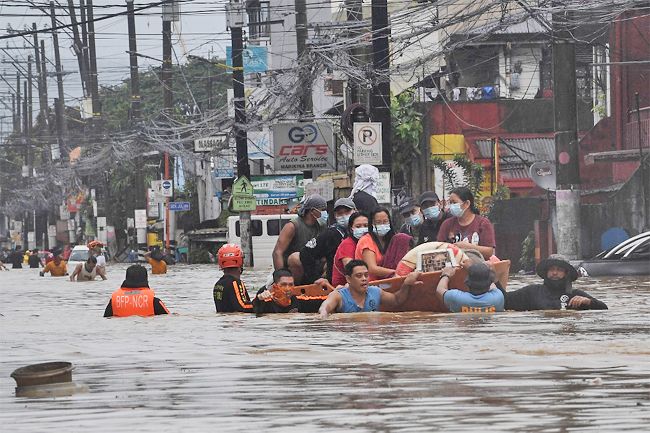
The Philippines is moving to harness Singapore's proven expertise in flood management, with government officials exploring how the city-state's advanced technologies and strategic approaches might be adapted to protect the archipelago's 112 million residents from increasingly devastating natural disasters. The Department of Public Works and Highways (DPWH) is actively assessing Singaporean flood control solutions presented at the 2026 Stormwater Summit in Makati City, with Undersecretary Charles Calima indicating the agency will evaluate both feasibility and financial requirements for implementation across Philippine infrastructure projects.
Undersecretary Calima emphasised that the evaluation process extends beyond simple technology transfer, stressing the need to examine how Singapore executes its flood management strategies with greater effectiveness and efficiency. The DPWH recognises that Singapore's systematic approach to water management, refined over decades, offers valuable lessons for a nation struggling with recurring inundation. Alongside technological adoption, Calima reiterated the government's commitment to improving waste management systems, acknowledging that comprehensive debris removal remains fundamental to reducing flood severity and blockages that exacerbate water accumulation.
The Philippines faces inherent geographic vulnerabilities that make flooding a persistent threat to economic development and public safety. Positioned in the Western Pacific typhoon belt, the nation experiences an average of 20 cyclones annually, compounded by heavy monsoon rains during certain seasons. This combination creates a perfect storm scenario where tropical systems bring intense rainfall while coastal and low-lying areas face surge and tidal complications. For a developing nation with constrained fiscal resources, learning from Singapore's sophisticated engineering solutions represents a pragmatic strategy for risk reduction.
Singaporean tech companies showcased an impressive array of flood mitigation tools at the summit, demonstrating how modern data analytics and infrastructure innovation can provide early warning capabilities and preventive measures. The Tethys platform, developed by Flexi Systems and highlighted by founder and chief executive officer April Yang, aggregates five critical data streams in real-time: water quality and turbidity measurements, rainfall intensity readings with predictive forecasts, alerts regarding blockages and silt accumulation, live flood elevation tracking, and tidal influence analysis affecting drainage systems. This integrated approach enables decision-makers to anticipate flooding events hours or even days in advance, fundamentally shifting from reactive crisis management to proactive disaster prevention.
Yang explained that real-time data collection represents a paradigm shift in flood response capability, emphasising that advance knowledge provides communities and administrators the psychological reassurance and practical planning time needed to implement protective measures. The psychological dimension of disaster preparedness is often overlooked, yet understanding that authorities possess accurate information and are taking preventive action significantly enhances public confidence. This contrasts sharply with historical patterns in the Philippines where communities experienced sudden, unexpected flooding with minimal warning.
Singapore's national water agency, PUB, through its international consulting arm PUB Consultants, outlined the city-state's comprehensive approach developed across five decades of consistent investment. Ryan Yuen detailed Singapore's multi-layered strategy encompassing reservoir regulation systems that store excess water during heavy rainfall, enhanced drainage infrastructure designed to rapidly evacuate accumulated water, and innovative treatment technologies including rain gardens that filter and manage stormwater runoff naturally. These engineering interventions work in concert to transform rainwater from a destructive force into a managed resource.
Critically, Singapore has integrated water recycling into its sustainability framework, treating every raindrop as a recoverable resource rather than waste. The city-state's approach views water security holistically, understanding that recycled rainwater serves multiple purposes: it reduces pressure on conventional freshwater sources, provides irrigation for urban green spaces, and decreases the volume of untreated stormwater entering drainage systems. For water-stressed regions or nations facing climate-induced precipitation variability, this resource conservation model offers both environmental and economic benefits.
Both Singaporean representatives acknowledged, however, that technological infrastructure alone cannot solve flooding challenges comprehensively. Yang and Yuen emphasised that engineering solutions must be coupled with community-level resilience building—the social and institutional capacity of populations to withstand and recover from disasters. This recognition reflects growing understanding that infrastructure represents only one dimension of disaster risk reduction; human behaviour, preparedness, community organisation, and psychological readiness are equally critical components.
Dingdong Dantes, an actor serving as ambassador for the Office of Civil Defense, brought this human dimension into sharp focus during his summit address. Dantes reframed resilience not merely as the capacity to recover from disasters but as the courage to adapt to changed circumstances. He illustrated this perspective through the story of Nanay Evelyn, a woman whose home experienced devastating flood damage and whose daily life became permanently altered—she now sleeps on her home's upper floor while the ground level remains perpetually waterlogged, and she navigates flood conditions routinely. Rather than waiting for complete restoration to pre-disaster conditions, Nanay Evelyn exemplifies the painful reality that some communities must fundamentally adjust their living patterns.
Dantes's reflection on this situation highlighted a sobering truth often absent from technical discussions: many Filipinos lack the luxury of expecting their communities to return to previous conditions. Instead, resilience for vulnerable populations means developing the discipline to prepare for recurring hazards, the humility to collaborate with neighbours and authorities, and the determination to maintain dignity and hope even as circumstances remain suboptimal. This emotional and social reality underscores why the Philippines cannot rely exclusively on Singaporean engineering solutions without simultaneously addressing poverty, housing insecurity, and governance capacity in flood-prone communities.
The intersection of technology transfer and community resilience building represents the path forward for Philippine disaster management. Singapore's data systems and recycling infrastructure offer concrete tools for reducing flood severity and frequency, but implementation success depends on Philippine government capacity to integrate these technologies with local contexts and governance structures. The DPWH's evaluation process will determine which Singaporean approaches translate effectively to Philippine conditions, considering differences in climate patterns, urban development density, waste management capacity, and available financing.
For Southeast Asian observers, the Philippines' engagement with Singapore's flood solutions demonstrates regional awareness that prosperity and stability require proactive investment in disaster risk reduction. As climate change intensifies precipitation patterns and increases cyclone intensity across the region, nations that learn from success stories—adapting rather than merely copying external models—position themselves to protect lives and economic assets more effectively. The convergence of advanced technology, infrastructure investment, and community resilience represents the comprehensive approach that developing nations need.

