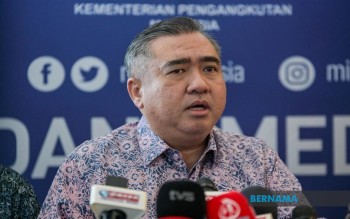
Transport Minister Anthony Loke has announced that the Penang International Logistics Aeropark will substantially increase air cargo capacity across Malaysia's northern region, positioning Penang as a more competitive hub for regional logistics operations. Speaking at the Ministry of Transport's monthly assembly in Putrajaya on August 13, Loke emphasised how the infrastructure expansion would strengthen the northern region's standing in the air logistics sector and help diversify the country's cargo handling capabilities beyond Kuala Lumpur.
The PILA initiative represents a strategic expansion of Penang's existing cargo facilities rather than a standalone project. Loke described the undertaking as transforming the current cargo hub into a comprehensive Penang Air Logistics Complex, significantly scaling up infrastructure and operational capacity. This incremental approach allows for better integration with existing operations whilst accommodating anticipated growth in air freight demand across the region.
Construction work on the project has already commenced, with both Malaysia Airports Holdings Bhd and Penang Development Corporation driving the initiative forward. Loke revealed that the Transport Ministry has extended an invitation to the Prime Minister to formally launch the facility once completed, signalling the project's importance within the broader national infrastructure agenda. The proposed complex will be situated adjacent to the current cargo hub, enabling operational synergies and streamlined logistics processes.
The partnership between MAHB and PDC follows months of planning and regulatory approval. Both organisations formally established a joint venture company, PILA Sdn Bhd, in April 2026, with their respective boards having approved the formation earlier in May. This collaborative structure allows Malaysia's airport operator to leverage the development corporation's local expertise and connections whilst maintaining operational control over a critical logistics asset.
Malaysia Airports Holdings is funding the expansion as a private-sector investment, with government involvement limited to facilitating regulatory approvals and support. This approach aligns with contemporary infrastructure development strategy, which increasingly emphasises private capital mobilisation rather than direct public spending. Loke stressed that whilst government will provide necessary support mechanisms, the financial commitment and operational responsibility rest with MAHB, reducing fiscal pressure on public budgets.
The cargo expansion forms part of a broader MAHB modernisation programme encompassing facilities nationwide. Beyond Penang, Malaysia Airports is also upgrading air cargo infrastructure at Kuala Lumpur International Airport, ensuring that Malaysia's primary aviation hub maintains its competitive edge. This dual-pronged approach distributes cargo handling capacity geographically, reducing congestion at KLIA whilst enabling regional specialisation appropriate to each location's economic ecosystem.
The first construction phase involves developing a new free commercial zone-class air cargo warehouse facility, incorporating modern handling systems and administrative infrastructure. This phase is scheduled for completion and operational readiness by 2029, allowing a five-year implementation window for site preparation, structural work, and systems integration. The warehouse component will incorporate features suited to contemporary e-commerce and express logistics requirements, including temperature controls for perishable cargo and secure facilities for high-value shipments.
By 2050, the expanded facility is projected to handle up to 500,000 tonnes of cargo annually, representing a substantial increase in the northern region's logistics throughput. Associated warehouse infrastructure will exceed two million square feet, providing flexibility for tenant operations and future service enhancements. This capacity trajectory reflects conservative estimates of air freight growth across Southeast Asia, driven by rising e-commerce penetration, premium goods demand, and regional supply chain integration.
For Malaysian stakeholders, the PILA expansion carries significant implications. Northern region businesses gain improved access to international air freight networks without routing through Kuala Lumpur, reducing logistics costs and transit times. The project creates employment opportunities across construction, warehouse operations, customs clearance, and value-added services. Additionally, Penang's positioning as a dedicated air logistics complex strengthens its competitiveness relative to other Southeast Asian cargo hubs in Thailand, Singapore, and Vietnam.
The development also supports Malaysia's broader regional integration strategies within the Association of Southeast Asian Nations. As supply chains increasingly regionalise, maintaining efficient cargo infrastructure becomes essential for retaining manufacturing and distribution operations. Penang's enhanced logistics capabilities position the state as an attractive location for companies seeking integrated manufacturing-to-distribution operations across ASEAN markets.
The private-sector-led financing model reflects contemporary infrastructure trends across Asia-Pacific. By channelling private capital toward logistics infrastructure, governments can pursue infrastructure modernisation without accumulating debt or diverting funds from social programmes. For MAHB, the investment represents portfolio diversification beyond airport operations, generating revenue through warehouse leasing, cargo handling services, and ancillary logistics operations.
The timeline extending to 2029 for initial operational capacity provides sufficient planning horizon for freight forwarders, shipping lines, and logistics operators to adjust their routing strategies and investment plans. Early visibility into capacity expansion allows these stakeholders to coordinate terminal investments, recruit specialised personnel, and develop market relationships supporting cargo volumes commensurate with expanded facilities.
As Malaysia navigates post-pandemic supply chain restructuring and faces intensifying competition from regional logistics hubs, investments in air cargo infrastructure represent strategic competitive positioning. The PILA expansion demonstrates government commitment to infrastructure modernisation whilst leveraging private-sector efficiency and capital. For businesses across northern Malaysia and ASEAN seeking reliable, efficient air logistics solutions, the Penang International Logistics Aeropark will emerge as a critical regional asset.

