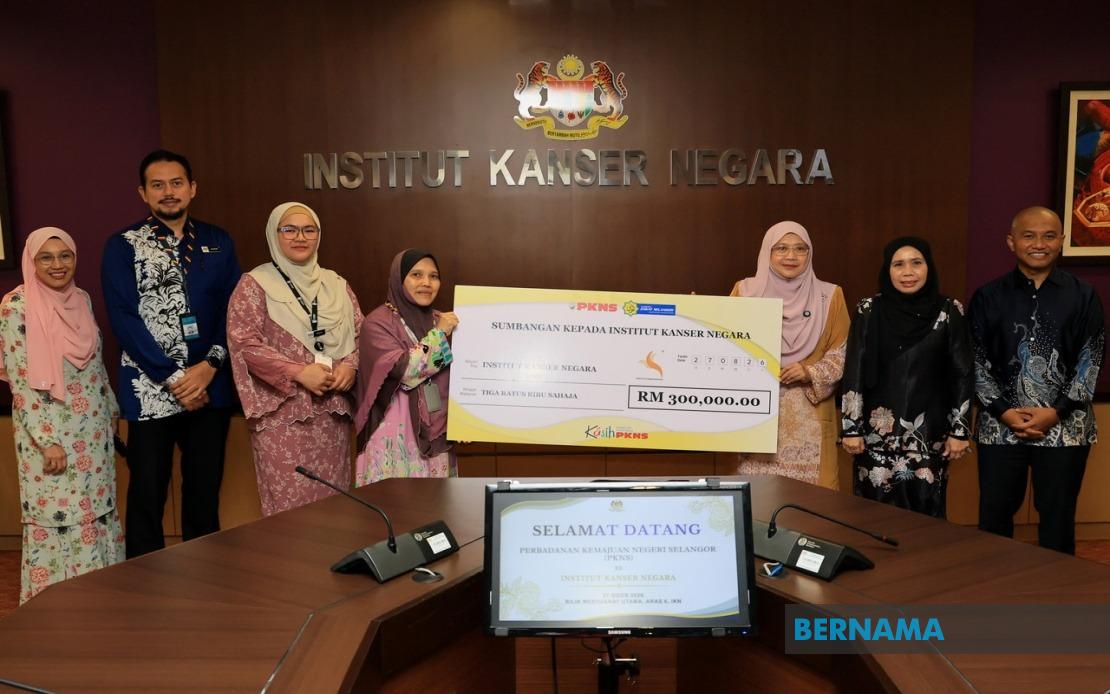
The Selangor State Development Corporation (PKNS) has pledged RM300,000 to support cancer patients undergoing treatment at the National Cancer Institute (IKN) in Putrajaya, addressing the growing financial strain that many face during their medical journey. The funding, formally presented on August 27, will provide relief to between 50 and 100 patients who struggle with the mounting costs associated with cancer care, a burden that extends far beyond medical expenses.
Speaking at the presentation ceremony, PKNS Corporate Services senior general manager Sapna Turmidi emphasised that the corporation's commitment transcended mere financial transactions. She articulated a broader vision of corporate responsibility that encompasses emotional solidarity, psychological encouragement, and genuine compassion for those navigating the complexities of cancer treatment. This perspective reflects a growing recognition among Malaysian corporations that social responsibility involves holistic support for vulnerable populations, recognising that patients and their families require more than money—they need validation, hope, and community backing during their most challenging moments.
The genesis of PKNS's initiative traces back to a personal tragedy within the organisation. A staff member diagnosed with glioma in February passed away merely four months later at IKN, an event that profoundly shifted the corporation's understanding of cancer's devastating impact. This loss catalysed PKNS leadership to transition from abstract corporate values into tangible action, transforming grief into purposeful contribution. Such personal anchors often prove more compelling than distant statistics in driving organisational change and demonstrating authentic commitment to social causes rather than performative gestures.
The assistance mechanism employs a sophisticated approach through wakalah zakat, a framework combining corporate funds with the Selangor Zakat Board (LZS) to ensure religiously compliant distribution. Notably, the programme specifically targets eligible Muslim cancer patients classified under the asnaf al-Gharimin category—those burdened by debt—creating a targeted intervention that addresses both religious principles and genuine need. This collaborative structure between secular corporations and religious institutions represents an increasingly common model in Malaysia, where zakat channels augment corporate social responsibility initiatives, leveraging both institutional strengths and community trust.
The timing coincides with PKNS's 62nd anniversary, marked on August 1, when the corporation was established in 1964 as Selangor's primary development agency. The donation reflects the organisation's evolution beyond purely economic development into broader social welfare considerations, illustrating how mature institutions increasingly integrate compassion into their institutional identity. This shift acknowledges that sustainable development requires attending to human dignity and social welfare alongside economic growth.
Dr Nur Aslina Bahakodin, IKN's director, provided sobering context regarding institutional funding gaps. The institute requires between RM1 million and RM2 million annually merely to assist underprivileged cancer patients with essential needs—a figure that starkly illustrates the mismatch between treatment demands and available resources. The assistance extends beyond pharmaceuticals and medical equipment to encompass travel expenses, specialised nutrition, and family welfare support, reflecting cancer's comprehensive impact on household economics. Financial constraints frequently force patients to skip critical follow-up appointments, compromising treatment continuity and recovery prospects, a reality that underscores why supplementary funding remains crucial.
The Medical Social Work Unit will administer the PKNS contribution following rigorous socio-economic assessments, ensuring funds reach those facing genuine hardship. This structured approach prevents misallocation and maintains programme integrity, demonstrating that effective charitable work requires sophisticated administrative frameworks beyond simple distribution. Such mechanisms, though sometimes invisible to donors, represent the difference between well-intentioned but ineffective aid and genuinely transformative support.
Dr Nur Aslina highlighted that rising cancer detection rates partly reflect expanded screening programmes and improved public awareness—a phenomenon with significant implications for Malaysian healthcare planning. When screening catches diseases earlier, patients access treatment sooner and experience improved recovery prospects, with breast cancer predominating among women and colorectal cancer among men. This epidemiological profile has shaped Malaysian healthcare priorities and informs resource allocation decisions across public institutions.
The PKNS initiative arrives amid a broader conversation about cancer care accessibility in Malaysia. While the RM300,000 provides meaningful relief, the Institute's estimated annual requirement of RM1-2 million suggests that comprehensive support demands continued contributions from multiple stakeholders. Corporate donors, charitable foundations, NGOs, and government bodies must collaborate systematically to close this funding gap, particularly as cancer incidence continues rising and treatment costs escalate. PKNS's contribution, therefore, functions simultaneously as practical relief and symbolic endorsement of a national imperative: ensuring that financial circumstances never prevent Malaysians from accessing life-saving cancer treatment.
For Malaysian corporate leaders monitoring social responsibility trends, this initiative exemplifies how authentic engagement with social causes requires moving beyond tokenistic donations toward sustained partnerships addressing systemic gaps. The collaboration between PKNS, IKN, and LZS demonstrates that effective solutions often emerge when secular and religious institutions align around common humanitarian objectives. As cancer continues affecting Malaysian families across socioeconomic strata, such coordinated support mechanisms become increasingly vital for ensuring equitable access to treatment and preserving human dignity during medical crises.

