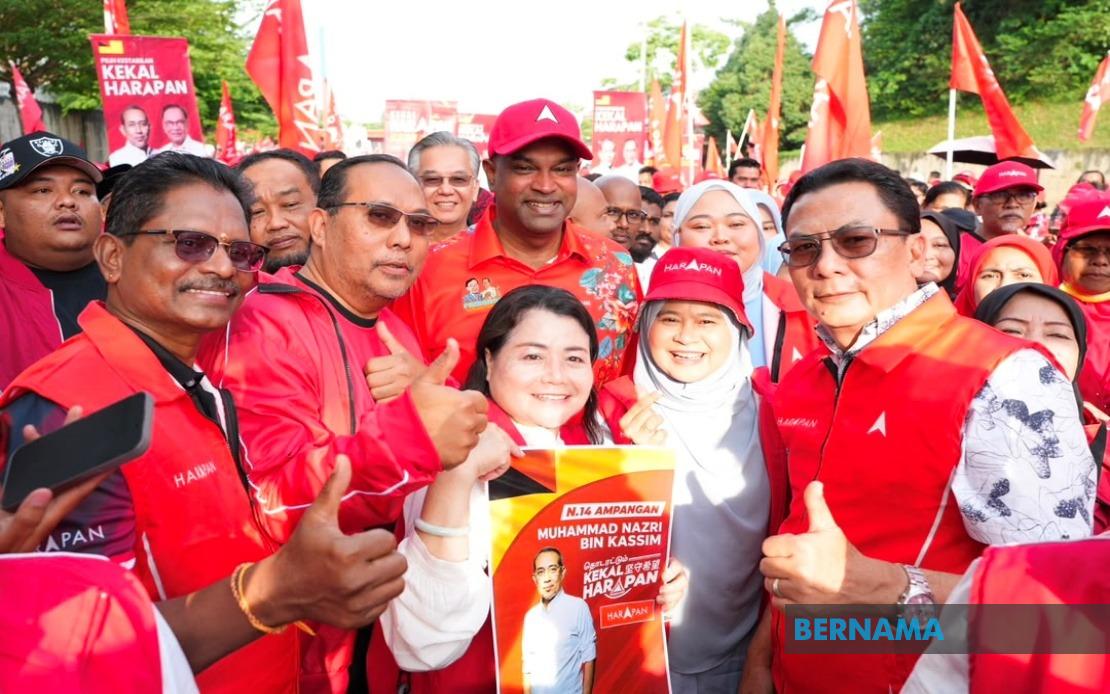
A show of unity among Pakatan Harapan partners unfolded at the Seremban City Council Building nomination centre as senior coalition leaders threw their weight behind six candidates seeking seats in the upcoming Negeri Sembilan state election. Datuk Seri R. Ramanan, PKR vice-president and Sungai Buloh Member of Parliament, led the delegation on July 18, joined by DAP deputy secretary-general Steven Sim and other party officials in demonstrating the coalition's determination to retain control of the state assembly.
The six candidates receiving backing from the high-profile delegation represent a cross-section of the Pakatan Harapan coalition. They include Nor Azman Mohamad contesting Sikamat, Datuk Muhammad Nazri Kassim in Ampangan, Zarinna Abu Zarin in Lenggeng, Chew Seh Yong in Lobak, J. Arul Kumar in Nilai, and Ho Weng Wah in Temiang. The visibility of top-tier party leadership at the nomination stage carries symbolic importance, signalling confidence in these candidates and warning opposition parties of the coalition's ground readiness.
Ramanan's presence and remarks emphasised the strategic nature of the campaign effort now underway. He attributed the visible turnout of party workers and supporters at the nomination centre to underlying enthusiasm within Pakatan Harapan's ranks. This observation reflects a common election-year narrative in Malaysian politics, where party organisational strength in the weeks before polling day is frequently cited as evidence of broader voter appetite for a particular side.
The PKR vice-president framed the coalition's agenda around governance stability and developmental continuity in Negeri Sembilan. His statement indicated that Pakatan Harapan intends to position itself as the custodian of steady progress rather than disruptive change. This messaging appeals to voters concerned about economic uncertainty or policy inconsistency, particularly in a state where coalition fortunes have shifted considerably in recent election cycles.
The campaign phase officially commenced following completion of the nomination process on July 18, setting the stage for an intensive fortnight of grassroots engagement. The Election Commission has structured the election calendar with early voting scheduled for July 28 and the main polling day for August 1. This compressed timeline means that both Pakatan Harapan and the opposition face pressure to mobilise their support bases rapidly and efficiently across all 36 state assembly constituencies.
Negeri Sembilan's political significance extends beyond the state itself. As a Pakatan Harapan stronghold with strong opposition presence, the election serves as a barometer for coalition cohesion and voter sentiment ahead of potential federal elections. The decision by DAP to position Steven Sim alongside PKR's Ramanan underscores the importance both parties attach to maintaining their partnership in the state, a relationship that has occasionally faced strain in other electoral contests.
The dissolution of the state assembly on June 5 triggered the formal machinery for this election, leaving a window of approximately eight weeks from dissolution to polling day. Within this period, candidates must establish themselves, parties must activate their machinery, and voters must form electoral preferences. The concentration of PH leadership at nomination centres during this critical phase aims to generate momentum and media attention that might translate into voting intent when election day arrives.
For Pakatan Harapan, retaining Negeri Sembilan holds practical and symbolic value. Losing ground in the state would represent a setback for the federal coalition and might embolden opposition parties across other state contests. Conversely, a strong performance would reinforce the coalition's narrative of growing support and governmental competence. The resource commitment evident through leadership visibility suggests the coalition views this election as worth fighting for at the highest levels.
The Southeast Asian context matters too. Malaysia's regional standing depends partly on political stability and predictable governance transitions. A well-contested but orderly state election in Negeri Sembilan demonstrates that competitive democratic processes function normally in Malaysia, an important message for regional and international observers. The presence of established democratic institutions and peaceful election cycles distinguishes Malaysia from some neighbours experiencing greater political turbulence.
Ramanan's reference to continuous people engagement throughout the campaign period indicates that Pakatan Harapan plans a conventional ground strategy rather than relying heavily on event-based publicity. This approach requires sustained volunteer efforts, ward-level meetings, and direct voter outreach—the traditional foundation of successful election campaigns in Malaysia. The visible backing of senior leaders like Ramanan and Sim aims to inspire such grassroots activity and provide assurance to lower-level party cadres that their efforts matter.
The stakes for individual candidates also merit consideration. Six candidates receiving backing from senior coalition figures enjoy political oxygen and resources that less prominent contenders may lack. This differentiation within the broader PH slate suggests strategic prioritisation, with coalition leadership concentrating firepower where they believe victory is most achievable or most consequential. Conversely, this may leave some other PH candidates feeling under-resourced for their contests.
Looking ahead to August 1, voters in Negeri Sembilan will decide between continuity under Pakatan Harapan and change under opposition parties. The intensity of coalition leadership engagement visible at nomination centres will need to translate into actual voter mobilisation and ballot-box performance. The campaign period stretching to July 31 offers ample time for either side to shift voter sentiment, making the current expressions of PH confidence preliminary rather than conclusive predictions of electoral outcomes.

