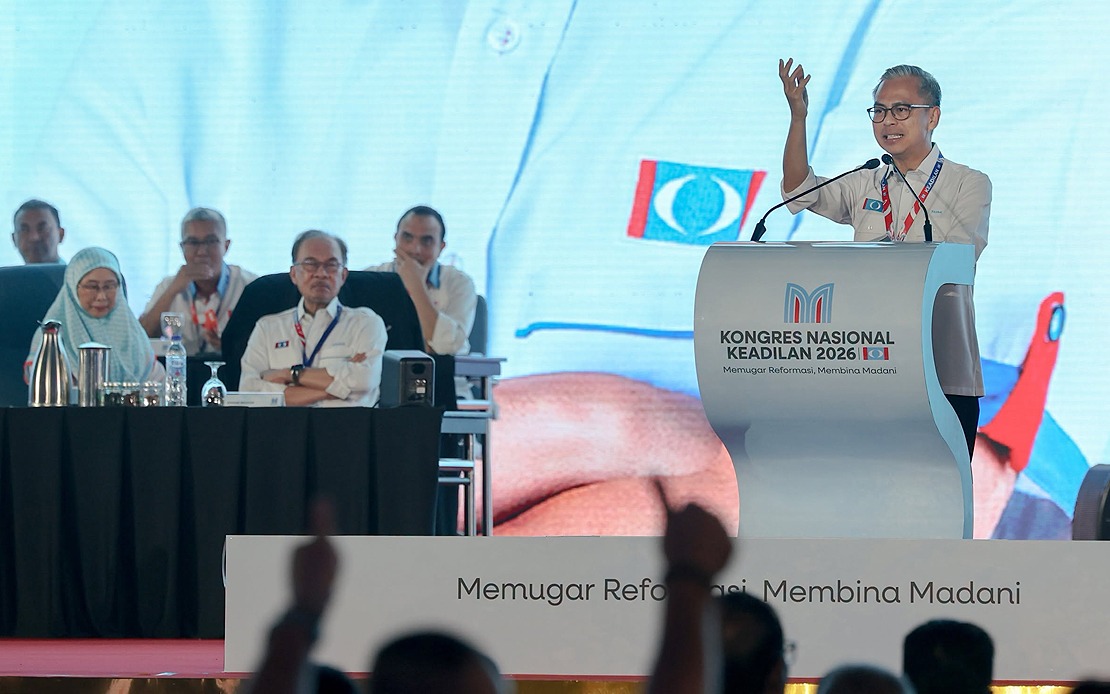
The Parti Keadilan Rakyat concluded its 2026 National Congress in Kuala Lumpur this week with a stated emphasis on reinvigorating the party's foundational reform principles and consolidating its organisational structures. Party Information Chief Datuk Seri Fahmi Fadzil characterised the two-day gathering as more than a conventional assembly of speeches and procedural debates, instead framing it as an introspective exercise in which the party evaluated its performance, acknowledged both capabilities and shortcomings, and reaffirmed its central mission.
Fahmi's remarks reflected a leadership narrative centred on the notion that internal party renewal serves as prerequisite for meaningful policy delivery. Rather than treating the congress as a ceremonial conclusion, PKR portrayed it as a launching point for fresh organisational efforts. The emphasis on "listening to the grassroots" and "assessing the party's strengths and weaknesses" suggests a degree of self-critical evaluation within PKR's upper echelons, particularly as the party navigates Malaysia's complex political landscape heading toward the next electoral cycle.
At the congress, PKR President Datuk Seri Anwar Ibrahim delivered what Fahmi described as a pointed restatement of the party's reformasi philosophy, underscoring that the broader reform agenda must persist beyond parliamentary terms and remain anchored firmly in public interest rather than factional advantage. This messaging carries particular significance given Malaysia's history of coalition politics, where smaller parties often find their original principles diluted through compromise and power-sharing arrangements. By publicly restating reform commitments at a national congress, party leadership appears to be reasserting ideological consistency to its base.
The strategic messaging emphasised decentralised engagement, with Fahmi urging party members to return to their constituencies and engage directly with constituents on their pressing concerns. This grassroots reconnection strategy addresses a perennial challenge for Malaysian opposition and coalition parties: maintaining membership enthusiasm between electoral contests. The directive to "listen to their views, understand their concerns, and keep finding ways to solve the problems they face" reflects a recognition that public perception of political parties often hinges on tangible local engagement rather than national-level pronouncements.
Fahmi also highlighted the critical importance of organisational discipline and cohesion, characterising PKR's effectiveness as dependent upon members functioning as "an organized and disciplined team." This emphasis on internal unity carries implicit acknowledgment that PKR, as one component of a multi-party governing coalition, must maintain internal consistency to wield meaningful influence in national policy formulation. Coalition politics in Malaysia requires participating parties to balance their individual agendas with collective cabinet responsibility, a tension that frequently generates internal friction.
The congress messaging also carried a note of realism about the political environment confronting PKR. Fahmi's acknowledgment that "political challenges will continue to come" reflects the volatile nature of Malaysian coalition governance, where shifting alliances and factional dynamics constantly reshape the political terrain. By preparing party members psychologically for ongoing difficulties while simultaneously calling for unwavering adherence to principles, the party sought to build resilience against potential setbacks or internal dissension.
For Malaysian and Southeast Asian political observers, PKR's messaging holds broader significance regarding how opposition-turned-coalition parties maintain ideological coherence while governing. The region has witnessed multiple instances of reform-oriented movements compromising original principles upon assuming state power. PKR's emphatic restatement of its reform commitment—delivered at a formal party congress rather than in casual remarks—suggests leadership awareness that such concerns persist among its membership base.
The practical implications for PKR's future operations remain significant. The party leadership has effectively established accountability expectations: members cannot simply return to business-as-usual after the congress without demonstrating renewed commitment through grassroots engagement and strengthened organisational work. This framing transforms the congress from passive ceremonial event into active mandate-setting exercise, with implicit performance metrics tied to improved constituent relations and organisational effectiveness.
Fahmi's repeated emphasis that "the responsibility of the party machinery continues" underscores that party renewal represents ongoing labour rather than a completed task. This messaging prepares the party base for sustained effort and resists the post-congress complacency that often afflicts political gatherings. As PKR navigates its role within Malaysia's coalition government while simultaneously positioning itself for future electoral contests, this renewal narrative serves both to energise the base and to clarify organisational expectations moving forward into the challenging years ahead.

