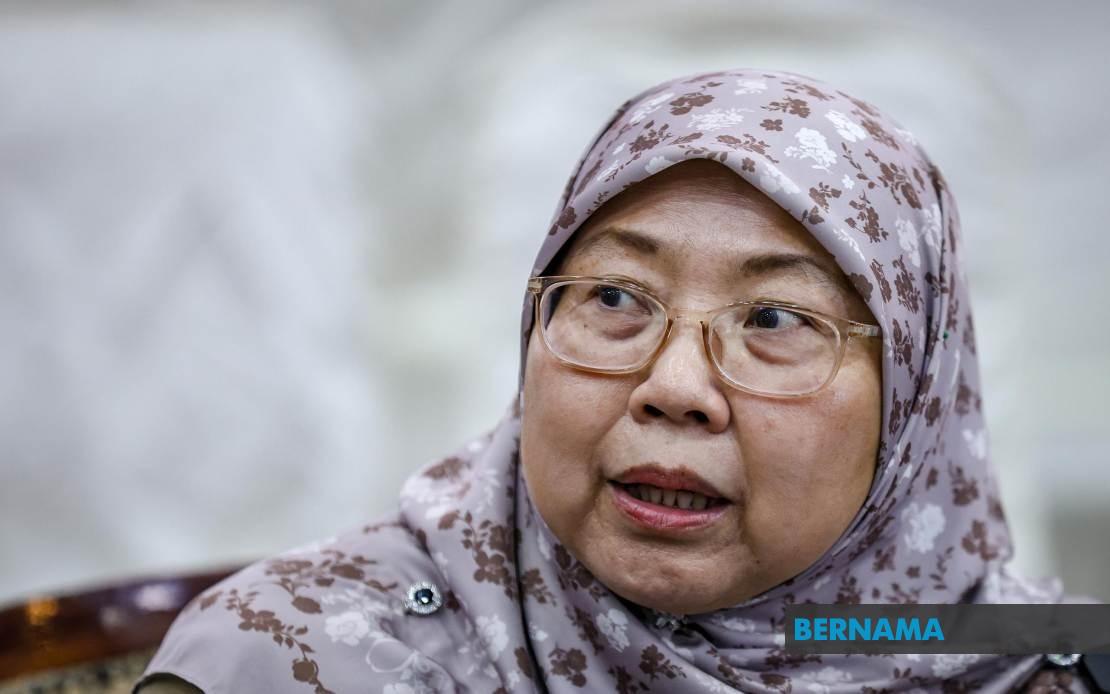
Parti Keadilan Rakyat has moved to extinguish speculation about its organisational membership following a photograph that circulated widely on social media depicting a prominent businessman in party regalia. PKR secretary-general Datuk Dr Fuziah Salleh issued a formal statement on July 26 confirming through official party records that Datuk Seri Nicky Liow Soon Hee maintains no formal affiliation with the coalition party, settling questions that had emerged in online forums and messaging platforms.
The clarification came after the party conducted a comprehensive review of its membership database, the KEADILAN Membership System, to verify Liow's status. This systematic approach underscores the importance Malaysian political parties now place on responding swiftly to claims that could carry implications for party reputation and public perception. Fuziah's statement additionally confirmed that Liow has never lodged an application seeking membership within PKR, removing any ambiguity about potential pending registrations or deferred applications.
The photograph fuelling speculation showed Liow wearing an Angkatan Muda Keadilan (AMK) shirt, the youth wing of PKR. Such imagery, when distributed across social media platforms without proper context, can rapidly shape public narrative and generate assumptions about political alignment. The viral spread of this particular image demonstrates how visual content divorced from backstory can trigger widespread conjecture, especially involving public figures whose names carry significant weight in Malaysian business and public discourse.
The timing of this clarification takes on additional significance given Liow's ongoing legal entanglements. The businessman currently faces charges in the Shah Alam Sessions Court connected to allegations of involvement with an organised crime network colloquially known as the "Nicky Gang" and related money laundering offences. These serious accusations have kept his name in public view, making any suggestion of political association potentially sensitive for any political party seeking to maintain credibility and distance itself from criminal investigations.
For PKR specifically, the need to immediately and definitively deny any membership connection reflects broader concerns about party integrity in Malaysian politics. When businesspeople facing criminal charges become associated—even tangentially—with political organisations, questions inevitably arise about potential connections between party leadership and individuals under investigation. By conducting swift verification and issuing transparent public denial, PKR sought to preempt more damaging speculation that could undermine confidence in the party's governance standards and judgment in member recruitment.
The incident illustrates a persistent challenge facing Malaysia's digital information ecosystem. Social media's capacity to amplify images and claims with minimal context creates space for misinterpretation and false associations to take root quickly. A photograph, without accompanying explanation about when it was taken, under what circumstances, or whether it represents any substantive affiliation, can generate political consequences that organisations then must spend resources addressing. In this instance, PKR's response mechanism functioned relatively efficiently, though the initial viral spread had already shaped some portions of public perception.
The distinction between wearing party merchandise and holding formal membership remains important but not always intuitive to general audiences. Items of apparel bearing party symbols circulate widely through various channels—gifts, purchases, commemorative events—and do not necessarily correlate with organisational membership. The broader public sometimes conflates such visible markers with official standing, creating the conditions for exactly the type of misunderstanding that emerged from Liow's photograph.
This episode also carries implications for how political parties manage their youth wings and affiliated organisations. Angkatan Muda Keadilan operates as a distinct entity within PKR's broader structure, and activities or merchandise associated with AMK do not automatically signify formal PKR membership. Yet public understanding of such structural distinctions remains limited, meaning that peripheral association with any party entity can trigger assumptions about core membership status. Political organisations across Malaysia navigate this challenge of explaining layered organisational structures to audiences more accustomed to simpler hierarchies.
For Malaysian political observers, the incident demonstrates how effectively social media can generate false narratives that subsequently require official party resources to refute. Each cycle of speculation, viral sharing, and subsequent denial consumes organisational energy and creates temporary distraction from substantive political messaging. In an environment where public trust in political institutions remains fragile, such distractions carry meaningful costs beyond the immediate clarification required.
The resolution of this particular matter—swift confirmation through official systems and public statement—represents a best-case scenario for crisis response in the social media age. Had PKR delayed its response or provided ambiguous messaging, the speculation likely would have calcified further into public assumptions. The party's efficient use of its membership verification systems and willingness to communicate findings transparently offers a model for how Malaysian political organisations might address similar challenges in future, particularly as criminal investigations involving public figures continue generating association risks for political parties.
Looking forward, this episode underscores the ongoing tension between social media's democratisation of information and its vulnerability to decontextualisation and misinterpretation. For PKR and other Malaysian political parties, the imperative remains clear: developing rapid response mechanisms to address false associations, maintaining detailed membership records easily verifiable under pressure, and communicating transparently when clarification becomes necessary to protect organisational reputation.

