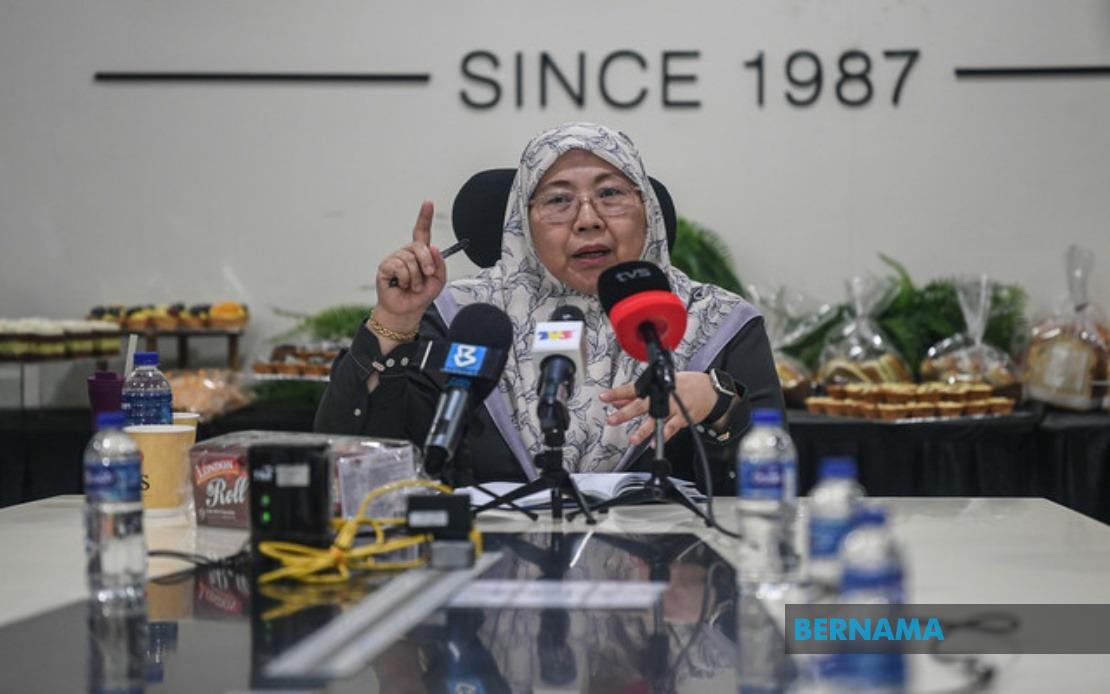
The recent exodus of PKR members to the Malaysian Indian Congress has puzzled party leadership, with PKR secretary-general Datuk Dr Fuziah Salleh characterizing the defections as unexpected during a visit to Johor. Speaking at SDS Food Sdn Bhd in Skudai, Fuziah indicated that internal party analysis pointed to a straightforward explanation: departing members had grown disappointed at being passed over for positions within PKR's organizational hierarchy. This interpretation, while perhaps deflating the significance of the move, reflects a broader pattern within Malaysian politics where internal party advancement often motivates grassroots participation and commitment.
The specific trigger for Fuziah's remarks came when M. Murugan, formerly serving as vice-chairman of the Johor PKR State Leadership Council, announced his departure alongside approximately 200 supporters to join the MIC Iskandar Puteri division. The timing of this defection carries particular weight given that Johor faces state elections scheduled for July 11, with early voting set for July 7. For a ruling coalition party to lose such numbers during an election campaign—however characterized by leadership—represents a tactical vulnerability that could affect ground organization and voter turnout efforts in the state's 56 contested seats, where 172 candidates are competing.
Fuziah's somewhat dismissive framing of the departures as position-seeking may understate deeper organizational challenges within PKR. Position allocation has historically served as a critical mechanism for maintaining party cohesion in Malaysia's political landscape, functioning as both reward for loyalty and motivation for grassroots mobilization. When significant numbers of members feel systematically excluded from advancement opportunities, the issue often reflects either poor internal communication about career pathways or genuine structural limitations in how the party distributes influence and opportunity. The loss of 200 supporters in a single defection suggests that Murugan's departure resonated with a substantive constituency rather than representing an isolated grievance.
Beyond the immediate domestic drama within PKR, Fuziah's comments addressed the broader realignment unfolding across Johor politics. She flagged the recent statement by PAS president Tan Sri Abdul Hadi Awang calling on voters to withdraw support from Pakatan Harapan as particularly significant. Such rhetoric from an Islamist party that nominally opposes the federal coalition raises questions about potential backdoor negotiations with Barisan Nasional, the traditional conservative coalition that has governed Johor through much of the post-independence period. These signals suggest that PAS may be repositioning itself away from explicit opposition politics toward renewed accommodation with established power structures, a calculation that would reshape the competitive dynamics heading into the July polling.
The PKR secretary-general's interpretation of PAS's positioning carries strategic implications for how Johor voters assess their choices. By publicly stating that PAS appeared to be signaling a return to cooperation with Barisan Nasional, Fuziah was essentially warning supporters that the opposition coalition they might join could fracture from internal defections by coalition partners. This framing attempts to portray PAS not as a principled political force but as an unreliable actor more interested in deal-making than in maintaining collective opposition strength. For voters concerned about political instability or fragmented mandates, such messaging underscores the risks of supporting blocs that lack demonstrated commitment to sustained cooperation.
Fuziah's analysis of Perikatan Nasional's tactical approach toward Barisan Nasional supporters revealed her reading of contemporary Malaysian coalition dynamics as inherently unstable. She suggested that PN's strategy to poach BN voters could ultimately prove counterproductive by exposing tensions within that coalition itself. This observation speaks to a reality in Malaysian politics where multi-ethnic, multi-component coalitions operate under constant pressure from contradictory demands and ideological incompatibilities. PN, itself an experimental coalition combining PAS with the Malay-nationalist Bersatu party, presents particular vulnerabilities given that PAS's moves toward BN could be perceived by PN's secular-leaning members as coalition disloyalty.
The PKR leader's contention that internal coalition stress ultimately benefits Pakatan Harapan rests on an assumption that voters facing fragmented opposition alternatives will default to the ruling bloc simply for organizational coherence. While this analysis holds some merit—voter fatigue with political instability has demonstrably driven ballots toward incumbents—it may overestimate the electorate's tolerance for the government's tenure. The Johor state election represents a test of whether bread-and-butter governance concerns outweigh the chaos telegraphed by opposition coalition disintegration, or whether voters punish the ruling coalition regardless for perceived underperformance or unfulfilled campaign promises.
The structural context of the Johor state election itself amplifies the significance of these defections and coalition maneuvers. With 56 seats at stake and 172 candidates competing, the margin for error in organizational capacity becomes pronounced. Each departing member from PKR potentially represents lost volunteer capacity for registration drives, voter contact operations, and day-of-election mobilization. Conversely, the MIC's absorption of 200 new members provides that component party with enhanced capacity in this particular state, though the MIC's broader electoral relevance in Johor remains modest compared to the dominant Malay-Muslim demographic profile of the state's electorate.
The broader implication of these political movements for Malaysian governance deserves attention. The ease with which party members can shift allegiances in pursuit of position or influence underscores how patronage networks rather than ideological coherence drive much of Malaysian politics. Both Fuziah's diagnosis and the defection itself implicitly acknowledge that party politics functions as a mechanism for distributing access and opportunity rather than as forums for sustained policy deliberation. This structural reality shapes not only electoral outcomes but also the quality of representation and governance that citizens ultimately experience. The Johor election results on July 11 will reveal whether voters prioritize coalition stability, government performance, or opposition renewal—a verdict that extends well beyond state-level politics into how national coalitions are recalibrated for the longer term.

