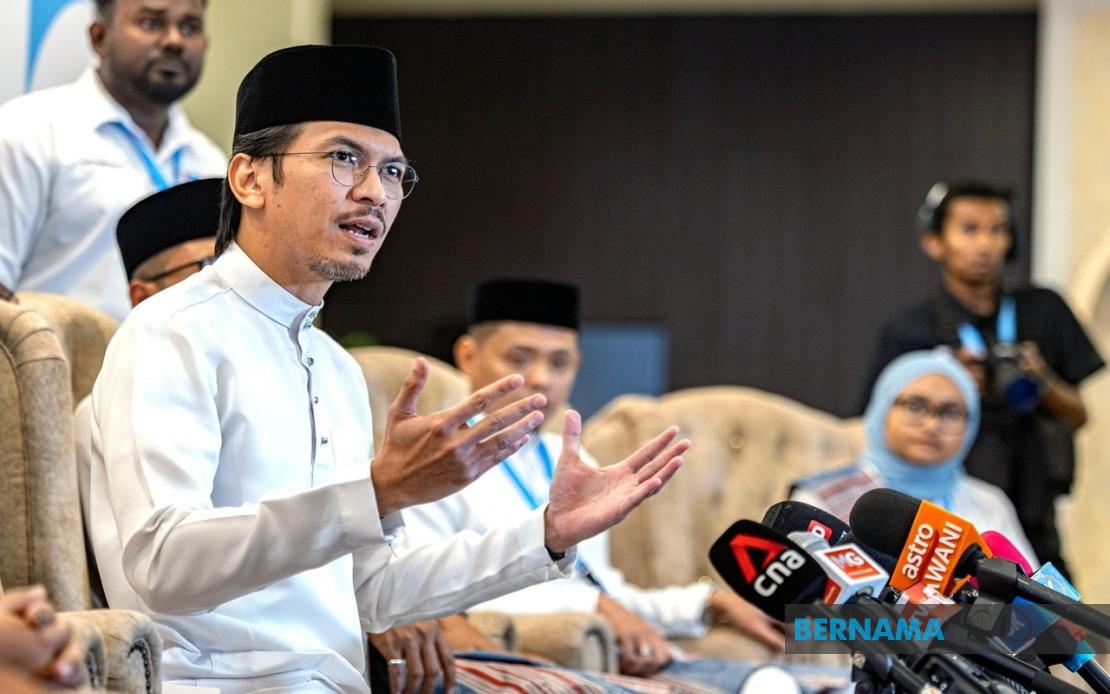
The departure of members from Parti Keadilan Rakyat (PKR) to rival political parties represents only a marginal loss and poses no threat to the party's institutional strength, according to Angkatan Muda Keadilan (AMK) chief Muhammad Kamil Ahmad Munim. Speaking at the 2026 AMK National Congress held at the Melaka International Trade Centre on Wednesday, the youth wing leader characterised recent defections as a natural outcome of individual choice rather than evidence of organisational weakness.
Muhammad Kamil's statement directly addressed claims made by Parti Bersama Malaysia co-founder Datuk Seri Rafizi Ramli, who had asserted that approximately 25 per cent of Bersama's membership consisted of individuals who previously held membership in PKR. While declining to cite precise statistical measures, the AMK chief insisted that internal party data indicated member losses fell well within acceptable parameters and failed to disrupt normal party functioning. He emphasised that the youth wing leadership respected members' autonomy to explore alternative political alignments, framing such decisions as expressions of personal conviction rather than reflections of institutional failings.
The assertion of organisational resilience gains particular significance within Malaysia's evolving political landscape, where party membership mobility has become increasingly common following coalitional realignments and the emergence of new political vehicles. PKR, as a central component of the governing coalition, faces ongoing scrutiny regarding its capacity to retain grassroots support amid broader political volatility. The youth wing's confidence in party stability stands in contrast to observable trends of member migration to newly formed entities seeking to capture disaffected voters.
Muhammad Kamil drew attention to the substantial participation rates observed at the congress gathering as evidence of sustained member commitment. The presence of numerous delegates reflected determination among the party base to maintain their affiliation with PKR despite the availability of competing political options. This exhibition of grassroots engagement, the AMK chief suggested, provided more reliable indicators of party health than raw membership numbers alone.
The timing of these remarks coincides with questions surrounding the operational status of PKR deputy president Nurul Izzah Anwar, who is currently on leave from her formal duties. Rather than treating her absence as problematic, Muhammad Kamil framed the situation as a manageable aspect of party governance requiring no fundamental adjustment to institutional functioning. The distribution of her responsibilities among other senior figures, he explained, had been executed transparently and with sufficient explanation provided to party members at all organisational levels.
Vice-president Datuk Seri Saifuddin Nasution Abdullah and PKR election director Datuk Seri Amirudin Shari have assumed expanded portfolios during the deputy president's leave period. Muhammad Kamil stressed that this allocation of duties operated according to predetermined arrangements rather than representing emergency measures necessitated by unexpected crises. The clarity with which responsibilities had been delineated meant that grassroots members understood the continuity of strategic direction and did not perceive disruption in party leadership.
Acceptance of these arrangements among party membership, according to the AMK chief, reflected maturity in understanding how complex political organisations manage periodic transitions in senior personnel availability. Rather than generating friction or uncertainty, the reallocation had been received with pragmatic recognition that institutional continuity transcended individual office-holders. This suggests that PKR's internal culture has developed sufficient institutional resilience to weather temporary absences of key figures without suffering erosion in organisational coherence.
The forward strategic focus of the party machinery centres on preparing for upcoming state elections and the next general election cycle. Muhammad Kamil positioned member retention and organisational strengthening as interlinked objectives within this longer-term framework. By emphasising preparation for electoral contests, party leadership seeks to maintain member momentum and engagement rather than allowing attention to drift toward internal management questions or competitive threats from rival formations.
For Malaysian political observers, the PKR youth wing's measured response to membership attrition reflects confidence that the party has secured sufficient organisational depth to weather member defections without fundamental damage. The emphasis on systematic planning for elections and the explicit acknowledgment of members' right to choose alternative affiliations suggests a party confident in its institutional fundamentals. Whether this optimism accurately reflects ground-level sentiment or represents aspirational messaging remains subject to interpretation, particularly as Malaysian voters continue navigating the fractionalised political environment that has characterised the past five years.

