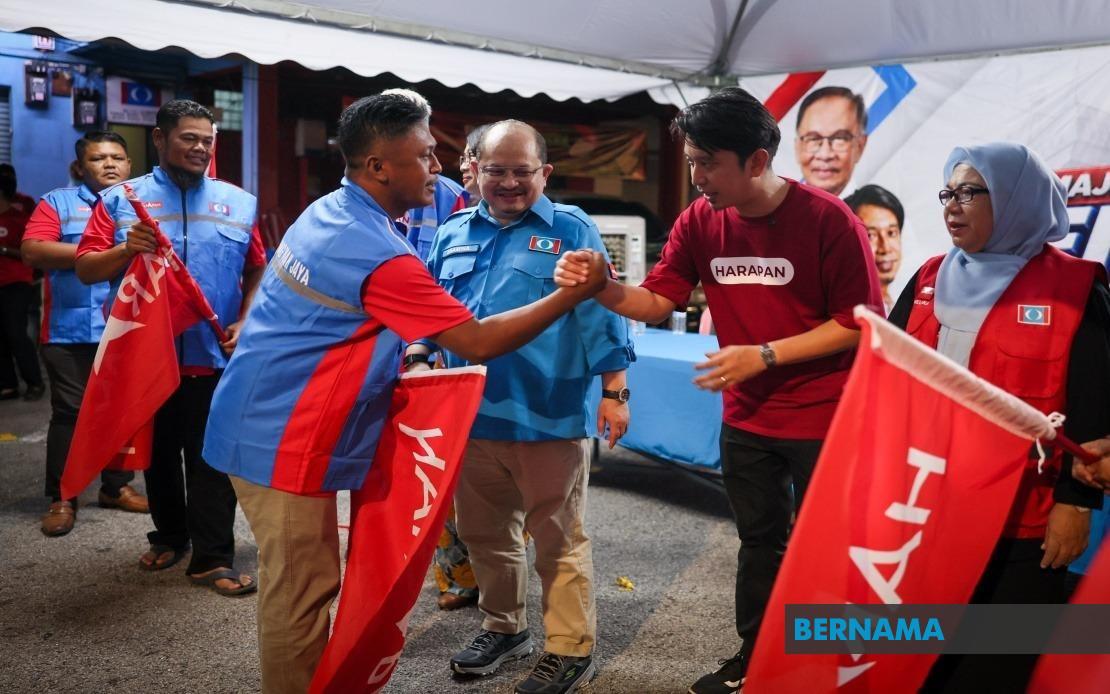
Parti Keadilan Rakyat (PKR) is taking steps to finalise and announce its slate of candidates for the forthcoming Melaka state election well before polling day, marking a shift from previous cycles when naming contenders had often been delayed. The decision reflects an acknowledgement that candidates require substantive lead time to build grassroots networks, establish public visibility, and develop policy positions before facing voters. Acting chairman of the Melaka PKR Leadership Council Adam Adli Abdul Halim disclosed the acceleration strategy at an event in Taman Bukit Piatu, signalling the party's determination to avoid last-minute candidate announcements that have plagued past election cycles.
The party's revised approach addresses a recurring challenge that has hindered campaign preparation. In previous election cycles, PKR in Melaka had struggled with timing due to internal coordination issues, competing preferences among party divisions, and the complexity of achieving consensus on candidate selections across the grassroots, state and national levels. This time, party leadership has resolved to streamline the process by conducting systematic screening at each tier—beginning with branch-level assessments, moving through state-level vetting, and culminating in final approval by the party president. Adam Adli emphasised that the compressed timeline did not mean sacrificing rigour; rather, it represented better organisational preparation and earlier initiation of the screening machinery.
Central to PKR's revised strategy is the deliberate promotion of fresh political talent rather than recycling incumbent candidates. The party intends to field numerous new faces, a move that carries both strategic and demographic logic. New candidates typically bring untested but energetic approaches to campaigning, can access voter bases untapped by long-serving representatives, and may prove more adaptable to shifting political dynamics. Adam Adli, who also serves as Deputy Minister of Higher Education, underscored that early announcement would give newcomers sufficient months to develop name recognition, build community relationships, and absorb party platform messaging before election day arrives.
Another motivation behind the accelerated timeline involves achieving gender and generational balance across the party's slate. PKR has increasingly positioned itself as supportive of women's political participation and youth representation, and candidate preparation timelines directly impact the quality of women and younger nominees who finally take the field. When candidates are announced only weeks before polling, women and youth contenders often receive less robust support structures and face compressed fundraising windows. By announcing earlier, PKR aims to allocate equal organisational resources, training, and media exposure across all demographic categories, potentially yielding more competitive female and young candidates.
The party has mapped a phased approach to building electoral machinery across multiple constituencies, scheduling launches in Tangga Batu, Hang Tuah Jaya, Alor Gajah, Masjid Tanah and Jasin. This sequential rollout signals that PKR recognises the necessity of constructing robust ground operations independent of which specific candidates ultimately receive nomination. Rather than awaiting final candidate lists before launching machinery, the party has inverted the sequence: build strong organisational foundations now, then slot candidates into existing frameworks. This model reduces the disruption typically experienced when new faces must assemble campaign structures from scratch and allows machinery already in place to provide logistical support, volunteer networks, and grassroots intelligence to candidates once they are announced.
The machinery-first approach reflects sophisticated campaign thinking that transcends simple candidate selection. A deeply embedded party structure can absorb candidate changes, overcome personality-driven electoral volatility, and maintain momentum regardless of whether specific nominees prove popular with voters. For Melaka in particular, where political alignment has fluctuated between governing coalitions, this kind of durable machinery offers insurance against candidate-level setbacks. Adam Adli stressed that the party's readiness to support whichever candidates are finally selected represents the true foundation of electoral success, rather than celebrity or name recognition of individual nominees.
Parallel to candidate and machinery preparations, PKR is engaged in preliminary talks with Barisan Nasional (BN) regarding potential cooperation in the Melaka state election. Adam Adli characterised these discussions as currently informal, with formal negotiations on cooperation modalities still pending. He noted that Pakatan Harapan (PH) election director Datuk Seri Amirudin Shari had initiated contact with Melaka Chief Minister Datuk Seri Ab Rauf Yusof to explore meeting possibilities, indicating that both coalitions are at least willing to examine whether coordinated approaches might be mutually beneficial.
The conversation between PH and BN carries significance beyond immediate seat allocation. Both coalitions have experienced fragmentation in recent years, and Melaka represents a politically volatile state where coalition discipline is difficult to maintain. Discussions about potential cooperation suggest that at least some leaders recognise benefits to reducing three-way contests between PH candidates, BN candidates, and potential Perikatan Nasional contenders. Fewer three-cornered fights typically advantage the leading opposition force, which has shifted between coalitions in Melaka depending on the particular election cycle.
Adam Adli positioned inter-party communication as serving a broader democratic purpose beyond mere tactical advantage. He suggested that dialogue between political competitors could contribute to reducing harshness in campaign rhetoric, curtailing what he termed a culture of dirty politics, and creating space for substantive policy discussion. This framing, though partly diplomatic, reflects awareness that Malaysian voters increasingly express dissatisfaction with highly personalised, negative campaigning that prioritises personal attacks over governance issues. Whether such communication actually translates into more civil electoral conduct remains uncertain, but the stated intention signals sensitivity to voter sentiment.
The negotiation framework remains fluid and contains inherent tension. PKR has not committed to any specific cooperation arrangement and explicitly reserved the option to contest independently if talks with BN yield no agreement. This position provides leverage in discussions but also indicates genuine uncertainty about whether cooperation is feasible or desirable. Coalition cooperation requires partners to agree on seat distributions, candidate acceptance, and campaign resource allocation—complex negotiations that often collapse over specific constituency disputes or personality conflicts among prospective nominees.
Melaka's political trajectory over the past decade illustrates the volatility that cooperation arrangements must navigate. The state has swung between PH and BN governance, experienced internal coalition ruptures, and seen voters respond unpredictably to political realignments. PKR's decision to prepare candidates and machinery in parallel with exploring coalition options reflects recognition that electoral outcomes depend on multiple simultaneous factors: candidate quality, organisational readiness, coalition stability, and voter sentiment. By advancing candidate announcements, PKR is essentially betting that investing in these foundational elements provides flexibility regardless of whether ultimate cooperation with BN materialises.
The broader context shapes these Melaka calculations. Malaysia's national political balance remains precarious, with no coalition holding overwhelming parliamentary dominance. State-level results carry significance beyond their local impact, potentially influencing perceptions of coalition viability and voter momentum heading toward the next national election. A strong PKR performance in Melaka would provide evidence that the party can deliver electoral competitiveness, potentially strengthening its negotiating position within PH and buttressing its claim to lead opposition efforts. Conversely, poor results would prompt internal party recriminations and questions about whether cooperation approaches, machinery investments, or candidate selections were fundamentally flawed.
For Malaysian political observers, PKR Melaka's accelerated timeline and dual-track strategy—simultaneously preparing for both potential cooperation and independent contest—exemplifies how contemporary Malaysian politics operates across multiple contingencies. Parties can no longer simply field candidates and trust established machinery; they must orchestrate complex logistical arrangements, navigate coalition diplomacy, and maintain flexibility as circumstances shift. PKR's willingness to name candidates earlier, at the risk of longer media scrutiny of individual nominees, suggests confidence that early announcement provides net strategic advantage despite potential downsides. The coming months will reveal whether this calculation proves sound and whether early candidate naming actually translates into competitive election performance.

