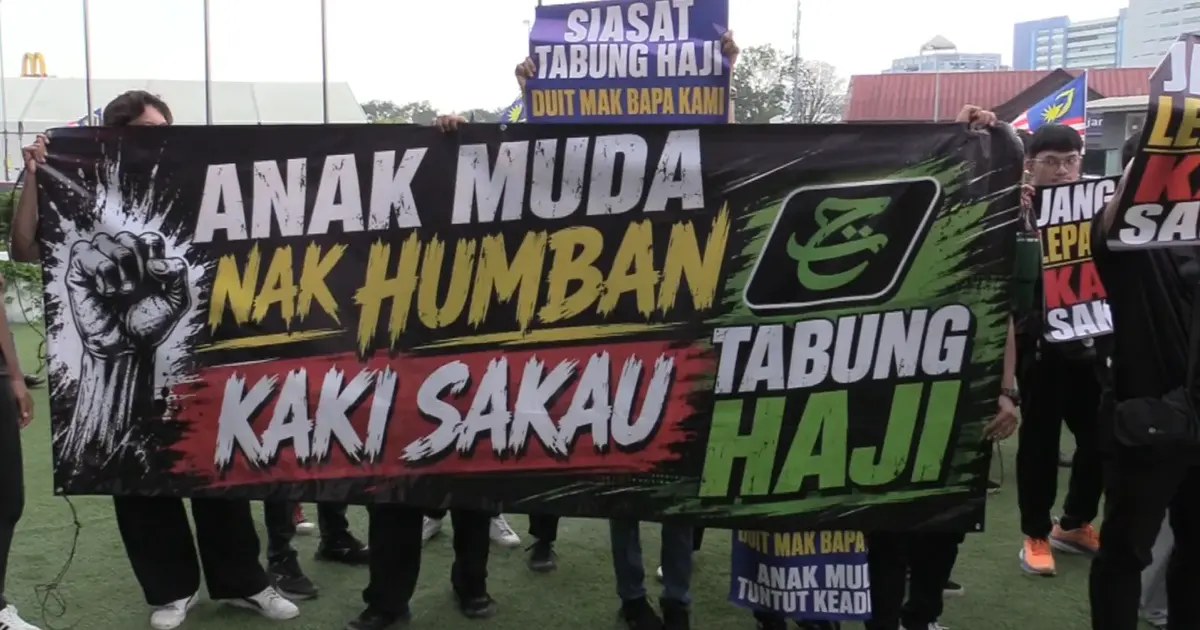
A gathering of 250 members from the Melaka branch of Parti Keadilan Rakyat assembled outside a party congress venue to voice their frustration over the pace of inquiries into Tabung Haji, the nation's pilgrim savings institution. The show of discontent underscores mounting pressure within the opposition coalition for decisive action on governance issues affecting one of Malaysia's most significant financial schemes for Muslim Malaysians.
The rally participants framed their concerns around the cultural and religious dimensions of Tabung Haji's role in the Malaysian Muslim community. For decades, the institution has served as a dedicated savings vehicle through which millions of Malays and Muslims accumulate funds for their hajj pilgrimage—one of Islam's five pillars. When governance concerns or financial irregularities surface at the institution, they resonate deeply across this demographic, making the matter politically and socially consequential beyond typical financial sector disputes.
The demonstration reflects a broader pattern of grassroots activism within PKR as party members seek to hold leadership accountable on issues their constituents perceive as urgent. By staging their action outside an official party congress, the Melaka contingent amplified their message directly to decision-makers attending the gathering, ensuring visibility at a moment when party direction would be debated.
Tabung Haji has faced scrutiny in recent years concerning its investment strategies, governance frameworks, and management decisions. These matters have periodically dominated Malaysian political discourse, particularly when reports emerge suggesting potential mismanagement or inadequate oversight of pilgrim contributions. For many Malaysian Muslims, the institution represents more than an investment vehicle; it embodies trust in a system designed to facilitate one of their faith's most sacred obligations.
The call for expedited investigation carries implications beyond internal party politics. A thorough and timely probe into Tabung Haji matters could influence public confidence in financial institutions managing community assets across Malaysia. Delays or perceived reluctance to investigate comprehensively may fuel skepticism about institutional accountability and governance standards more broadly. This connects directly to governance expectations that shape electoral calculations in Malaysian politics, where institutional trust remains a pivotal issue.
Within PKR's political context, the rally demonstrates that frontline members retain capacity to pressure leadership when they perceive inaction or insufficient urgency on matters their communities prioritize. This dynamic reflects the ongoing tension between established party hierarchies and grassroots expectations, particularly within opposition coalitions where members may expect accelerated responsiveness to public concerns compared to established governing parties.
The Melaka chapter's mobilization also signals that Tabung Haji matters retain electoral salience in the state. Melaka, a state where political competition remains keen and voter sentiment volatile, saw significant swings in recent elections. Opposition parties seeking to consolidate support or recover lost ground must demonstrate their commitment to addressing issues that matter deeply to Malay and Muslim constituencies. The PKR members' action suggests that failure to pursue Tabung Haji accountability energetically could carry electoral costs.
For Malaysia's broader political economy, how opposition parties handle such grassroots pressure matters significantly. These moments reveal whether political organizations can balance internal cohesion with responsiveness to member and constituent demands. Dismissing grassroots concerns risks alienating committed activists who provide organizational capacity during election cycles, while appearing to capitulate to every pressure may suggest unfocused leadership or vulnerability to factionalism.
The religious and cultural resonance of Tabung Haji ensures that any governance lapses or investigation delays will circulate through formal and informal networks within Malaysian Muslim communities. Concerns expressed at mosque gatherings, in neighborhood discussions, and across social media platforms can amplify far beyond the initial rally venue, potentially affecting perceptions of PKR's commitment to issues affecting this demographic across multiple states.
Tabung Haji's significance extends beyond individual pilgrim savings to national narratives about institutional integrity and equitable governance. As Malaysia navigates broader questions about institution-building and public trust in the post-2018 political landscape, how authorities address concerns raised by ordinary citizens through organized channels becomes symbolically important. The Melaka rally represents one instance where citizens sought to hold their political representatives accountable for investigation timelines and thoroughness.
The gathering also highlights how issues at major public institutions develop political lives independent of official announcements or formal investigations. Members' determination to voice demands directly reflects conviction that standard channels may not deliver the urgency or transparency they believe the situation merits. Whether party leadership responds to these signals with accelerated action will likely influence both member retention and electoral positioning in Melaka and similar constituencies where Malay and Muslim voters remain pivotal.

