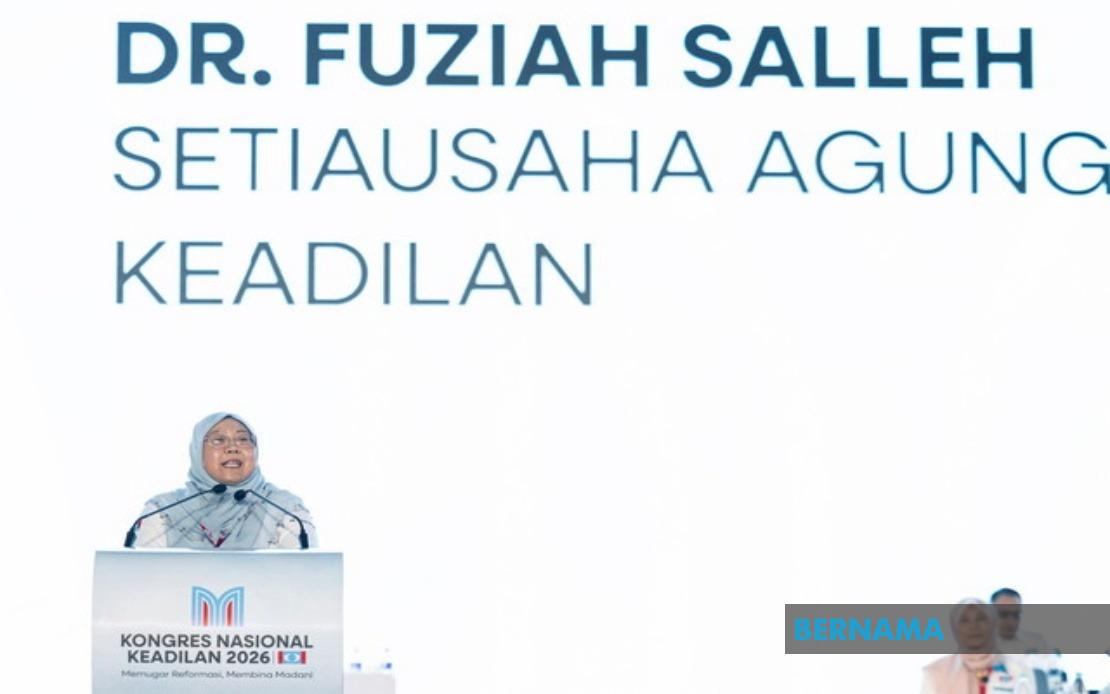
Parti Keadilan Rakyat's leadership has identified a critical gap between its policy ambitions and their implementation, with party secretary-general Datuk Dr Fuziah Salleh warning delegates at the PKR National Congress 2026 in Melaka that merely adopting the MADANI Economy framework is insufficient without substantial institutional change. Speaking during her closing address on August 16, Fuziah outlined a comprehensive challenge facing the party: transforming conceptual economic thinking into tangible improvements in citizens' lives, a task she characterised as demanding unwavering discipline and deep organisational commitment.
The MADANI Economy represents PKR's ideological cornerstone for governance, positioning the party's vision around inclusive prosperity and social justice. However, Fuziah's remarks suggest the framework has remained largely aspirational within party structures, lacking the communication infrastructure and leadership cohesion necessary to operationalise its principles across government institutions. She stressed that PKR members at every organisational level—from federal ministers to grassroots activists—must fundamentally reassess how they conceptualise, articulate, and promote the MADANI agenda to ensure it resonates with voters and guides administrative decisions.
The secretary-general's emphasis on institutional reform reflects broader challenges facing Malaysia's coalition government. Beyond party messaging, PKR faces the practical difficulty of embedding its economic philosophy within established bureaucratic systems that often resist rapid policy shifts. Fuziah's call for heightened discipline suggests internal resistance or inconsistency in how party members implement MADANI principles, particularly when departmental interests conflict with broader party objectives. This internal friction undermines public confidence in the government's reform credentials, especially among voters who elected the coalition on promises of systematic change.
Fuziah articulated that the path forward demands what she termed "sufficient ammunition"—implying PKR requires adequate resources, expertise, and political will to execute its agenda comprehensively. This military metaphor acknowledges that implementing meaningful economic reform against entrenched interests and bureaucratic inertia constitutes a prolonged struggle rather than a swift policy transition. The party must equip itself with policy specialists, effective communication teams, and aligned party machinery to translate MADANI principles into legislation, administrative directives, and measurable outcomes.
Centrally, PKR's secretary-general reaffirmed the party's commitment to inclusivity and cross-communal appeal at a moment when Malaysian politics has increasingly fragmented along ethno-religious lines. By explicitly rejecting identity-based approaches to resource distribution and asserting that PKR champions the economically marginalised regardless of race or background, Fuziah attempted to position the party as fundamentally different from competitors who mobilise ethnic or religious constituencies. This stance carries significant implications for PKR's electoral coalition-building and its ability to govern effectively in Malaysia's diverse society.
The emphasis on championing the poor rather than privileging particular communal interests represents both ideological principle and pragmatic politics. In Malaysian electoral contexts, this approach theoretically broadens PKR's appeal beyond its traditional support base and reinforces its legitimacy as a national party capable of transcending divisive identity politics. Yet Fuziah's repetition of this commitment suggests the party struggles to convince internal members and external observers that it genuinely prioritises universal welfare over communal advancement—a perception problem that transcends rhetoric alone.
Implementing the MADANI framework institutionally requires PKR to simultaneously reform its own party structures while reshaping government machinery to reflect its economic philosophy. Fuziah acknowledged this dual challenge implicitly by stressing that both party apparatus and the wider administration must demonstrate commitment and discipline. The absence of reform in either domain undermines credibility: if PKR cannot discipline its own members or reform its internal decision-making processes, why should voters trust its capacity to reform national institutions?
The timing of these remarks at the party congress carries weight, as PKR navigates a complex political landscape where coalition stability remains uncertain and electoral pressures mount constantly. By invoking the MADANI narrative as the framework for party identity and direction, Fuziah sought to unite members around substantive economic ideology rather than allowing the party to fragment around personalities or narrow interest groups. This approach, if successful, could strengthen PKR's distinctiveness within Malaysia's political ecosystem and clarify its governing agenda for voters evaluating the coalition's performance.
Looking ahead, PKR's ability to translate Fuziah's congressional message into sustained organisational change will determine whether the MADANI Economy remains aspirational rhetoric or becomes embedded in government practice. The secretary-general's stark assessment—that the task ahead is challenging and demanding—suggests the party remains in early stages of implementing its economic vision. Malaysian observers and international analysts will scrutinise PKR's institutional developments, budgetary allocation to MADANI implementation, and measurable policy outcomes to assess whether the party possesses the organisational capacity and political will to realise its ambitions for inclusive economic transformation across Southeast Asia's third-largest economy.

