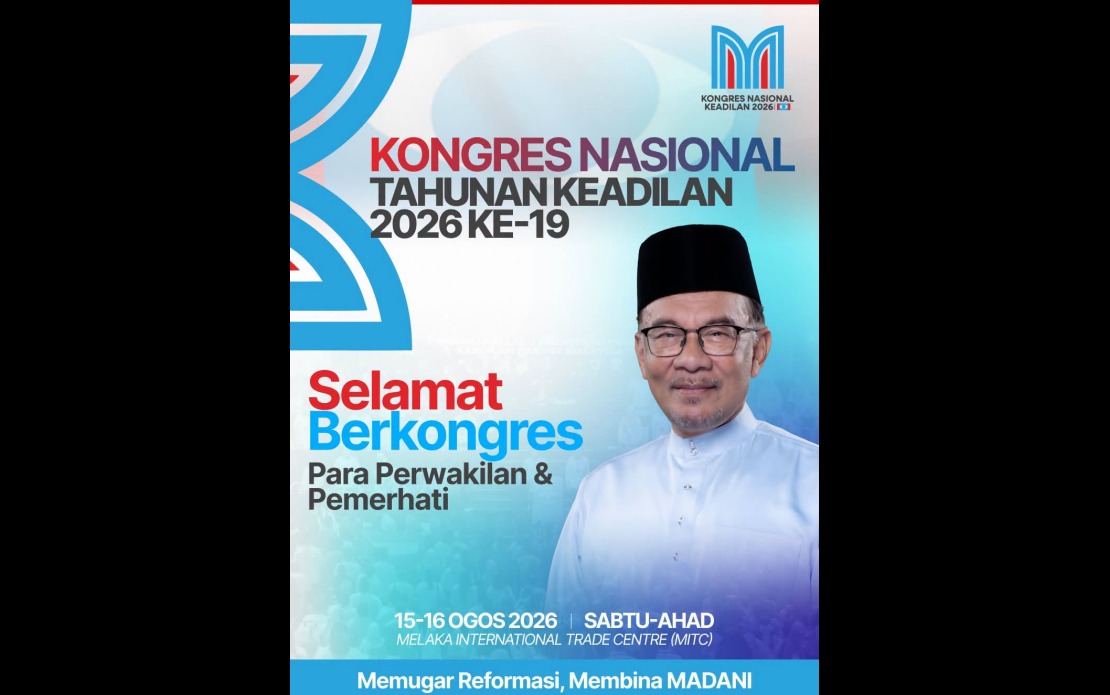
Prime Minister Datuk Seri Anwar Ibrahim has delivered a pointed message to Parti Keadilan Rakyat delegates, emphasizing that the party's foundational purpose extends far beyond capturing electoral victories. In remarks shared via social media ahead of the PKR National Congress 2026, Anwar stressed that the party must continue embodying core principles of integrity, social justice, unity and public trust if it is to build a Malaysia that offers dignity and prosperity to all citizens. His intervention suggests a deliberate effort to realign the party toward its ideological moorings at a time when Malaysian political coalitions face mounting questions about their coherence and principles.
The gathering, which commences at the Melaka International Trade Centre in Ayer Keroh, carries the thematic banner "Memugar Reformasi, Membina MADANI," translating to "Revitalising Reformasi, Building MADANI." This deliberately chosen framing underscores Anwar's desire to reconnect the party with the reformasi movement—the pro-democracy campaign that catalysed PKR's emergence in the 1990s—while simultaneously linking it to the government's contemporary policy framework. For observers tracking Malaysian politics, this dual messaging reflects an ongoing tension within PKR between honouring its revolutionary past and managing the pragmatic demands of governing.
Anwar's intervention arrives at a significant juncture for the party. As Prime Minister leading a coalition government, he faces the perennial challenge confronting all reform movements once they achieve power: maintaining activist energy and ideological conviction whilst managing bureaucratic responsibilities and coalition politics. The congress provides him an opportunity to reset expectations among party members who may feel the party has drifted into conventional machinations. His call for "introspection" signals that party leadership recognizes the need for renewal and recommitment to foundational values.
The two-day congress is designed as more than ceremonial gathering. Party officials have positioned it as a platform for the membership to assess what PKR has accomplished since last taking formal congress in prior years, and to recommit to the reformasi agenda. This emphasis on self-examination carries implicit acknowledgement that the party risks losing moral authority if it becomes indistinguishable from the transactional, patronage-driven politics it once opposed. For Malaysian voters and party members invested in political change, such rituals of recommitment matter considerably in determining whether movements retain legitimacy over time.
Anwar is scheduled to officiate proceedings and deliver a keynote policy speech expected to clarify PKR's strategic direction. Such addresses typically serve multiple purposes simultaneously. They communicate party positions to the wider public, signal priorities to internal factions, and reinforce the leader's vision within the membership. Given the broad coalition dynamics shaping Malaysian government, the speech will likely address how PKR intends to balance its reformist identity with coalition responsibilities, and how it plans to differentiate itself from coalition partners.
The timing and emphasis of Anwar's pre-congress message carries particular resonance for Southeast Asian observers tracking the region's democracy trajectories. Many reform movements across the region have struggled with the transition from opposition activism to governing responsibility. The Philippines, Thailand, Indonesia and Cambodia have all witnessed reform coalitions fracture or compromise their principles under the pressures of power. Anwar's public reminders about maintaining integrity and public trust suggest leadership awareness of these regional patterns and determination to navigate them differently.
For Malaysian political analysts, the congress also provides a barometer of internal PKR cohesion. The party encompasses ideological diversity—from secular-liberal reformers to conservative Islamic factions—alongside significant generational differences between veterans of the 1990s struggle and younger members. How effectively Anwar rallies these disparate elements around shared purpose will influence PKR's trajectory within the Pakatan Harapan coalition and its broader political competitiveness.
The invocation of religious blessing in Anwar's closing remarks—"May Allah SWT bless all our efforts"—adds another dimension often overlooked in secular analysis of Malaysian politics. As a leader representing a party with substantial Malay-Muslim membership, Anwar's integration of Islamic references within the reformasi framework reflects how Malaysian political movements must negotiate the intersection of democratic reform with religious identity. This balancing act remains central to PKR's political positioning.
Beyond PKR's internal dynamics, the congress occurs within Malaysia's broader political context of shifting coalitions and realigned antagonisms. The opposition PN-BN alliance has consolidated significantly, forcing Pakatan Harapan to strengthen its own cohesion. Anwar's insistence that PKR remain principled rather than purely strategic may carry implicit messaging to coalition partners about expected standards of conduct. It simultaneously tests whether Malaysian voters perceive any meaningful ideological differentiation between the competing governing coalitions.
The emphasis on mass movement character rather than electoral apparatus reflects awareness that sustainable political power ultimately rests on popular legitimacy rather than institutional capture alone. This distinction carries particular weight in Malaysia, where historical transitions between ruling coalitions have hinged significantly on public perception of government legitimacy and trustworthiness. By explicitly rejecting the notion that PKR should prioritize winning above all else, Anwar signals recognition that the party's long-term viability depends on public confidence in its integrity.
As PKR enters what promises to be an intensive period of internal deliberation and strategic recalibration, the congress outcomes will reveal whether the party can successfully revitalize its reformasi credentials whilst maintaining effective governance. For Malaysian observers tracking the fate of reform movements under pressure, the PKR gathering offers instructive lessons about whether idealism and pragmatism can coexist within democratic politics, or whether one inevitably subsumes the other.

