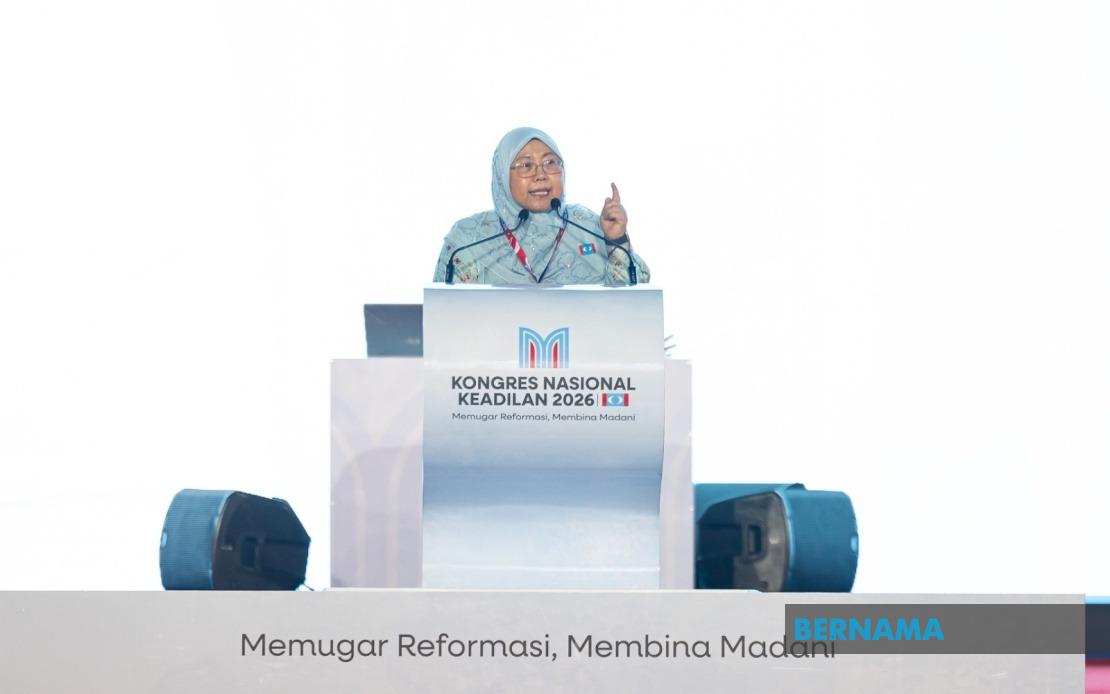
Parti Keadilan Rakyat (PKR) leaders and grassroots members must approach their current political challenges with wisdom and restraint, according to the party's secretary-general Senator Datuk Dr Fuziah Salleh, who delivered this message at the 2026 PKR National Congress held at the Melaka International Trade Centre this week. Rather than allowing recent electoral losses to breed internal conflict or finger-pointing, Fuziah framed the gathering as an opportunity for the party to reassess its trajectory and recommit to rebuilding with renewed vigour.
In her opening remarks at the congress, which drew 2,594 delegates and more than 2,000 observers, Fuziah cautioned against weaponising the event as a forum for blame or retaliation. The stakes of maintaining party cohesion are significant, particularly as PKR navigates shifting political landscapes and seeks to remain relevant in Malaysia's increasingly fragmented electoral environment. By emphasising collective responsibility rather than individual culpability, Fuziah signalled an attempt to redirect potentially divisive energy toward constructive introspection.
The historical context Fuziah invoked carries particular weight for understanding her message. She pointed to PKR's nadir following the 2004 General Election, when the party retained only a single parliamentary seat, as proof that current difficulties, while severe, do not represent an unprecedented crisis. That era tested the party's resilience and commitment to its foundational ideals, yet PKR responded not by fragmenting but by methodically rebuilding its organisational capacity and grassroots reach. This precedent becomes crucial for messaging to a membership that may harbour doubts about the party's viability.
The party's recovery trajectory after 2004 illustrates how institutional persistence and ideological clarity can restore political fortunes. Over the subsequent decade, PKR expanded its parliamentary representation substantially, eventually becoming a central player in coalition politics and ultimately participating in government following the 2018 General Election. Though recent results have proven disappointing compared to those highs, the earlier recovery demonstrates that electoral losses need not be terminal for well-structured political organisations.
Central to Fuziah's rhetoric is the concept of "memugar"—a Malay term meaning to revive or restore—which forms the foundation of this year's congress theme, "Memugar Reformasi, Membina MADANI." This framing deliberately distinguishes between creating entirely new ideological ground and excavating the party's original principles from the Reformasi movement that preceded its formal establishment. For many PKR members and supporters, reconnecting with that foundational spirit offers psychological and political grounding amid contemporary uncertainty.
The Reformasi narrative encompasses broader themes of democratic renewal, justice, and inclusive governance that resonate across Malaysia's diverse constituencies. By explicitly rejecting the impulse to fashion novel ideologies while recommitting to revitalised core principles, Fuziah positioned the party as evolving within continuity rather than abandoning its identity. This rhetorical move carries particular significance for older members who experienced the movement's early struggles and for younger generations seeking connection to historical struggles for democratic reform.
The international dimension of the congress—marked by attendance from 26 diplomatic representatives representing 19 countries, including six ambassadors—underscores PKR's positioning within regional and global political discourse. Malaysia's political developments carry implications beyond national borders, particularly given the country's strategic location, economic importance, and role as a Muslim-majority democracy. The diplomatic presence suggests international interest in how PKR navigates current challenges and maintains democratic values within an increasingly complex geopolitical context.
Fuziah's emphasis on defeating the tendency toward destructive recrimination reflects understanding of a particular vulnerability within multi-ethnic, multi-ideological coalitions like PKR. When electoral performance deteriorates, pressure intensifies for members to identify culprits—whether particular leaders, factions, or strategic decisions. Without active leadership intervention to channel frustration toward constructive analysis, such tendencies can metastasise into bitter factional conflict that further weakens organisational capacity. The secretary-general's call for maturity thus serves both immediate party management and longer-term institutional health.
The congress's timing and framing also merit consideration within Malaysia's political calendar. With general elections not constitutionally required until 2028, the 2026 congress provides a window for PKR to conduct thorough strategic review and organisational renewal without the immediate pressure of imminent electoral competition. This temporal advantage allows space for deliberative reflection rather than reactive positioning, potentially enabling the party to emerge from the process with clarified strategic direction.
For Southeast Asian observers, PKR's experience illustrates broader challenges confronting opposition and reform-oriented political movements in the region. Electoral setbacks can precipitate organisational crisis or internal reconfiguration; whether parties respond through mature institutional reflection or fragmented blame-shifting often determines whether they recover or decline into irrelevance. The pressure Fuziah is attempting to manage—steering between demoralisation and destructive conflict—represents a challenge familiar to reform movements throughout Asia.
The sustainability of PKR's current coalition partnerships also depends partly on how successfully the party manages internal morale and coherence. Coalition partners and potential voters alike observe whether the party demonstrates organisational discipline and strategic clarity or succumbs to publicly visible factional tension. By calling for mature engagement with difficult realities, Fuziah is making an implicit case for why PKR remains worthy of political investment despite recent disappointments.
Looking forward, the critical question for PKR involves whether the 2026 congress generates genuine renewal or merely provides cathartic release before renewed stagnation. Fuziah's framing establishes the rhetorical and normative space for productive engagement, but transformation requires more than exhortation—it necessitates concrete strategic adjustments, leadership choices, and organisational reforms that address underlying sources of electoral underperformance. The congress's real significance will ultimately be measured not in contemporary speeches but in operational changes that follow.

