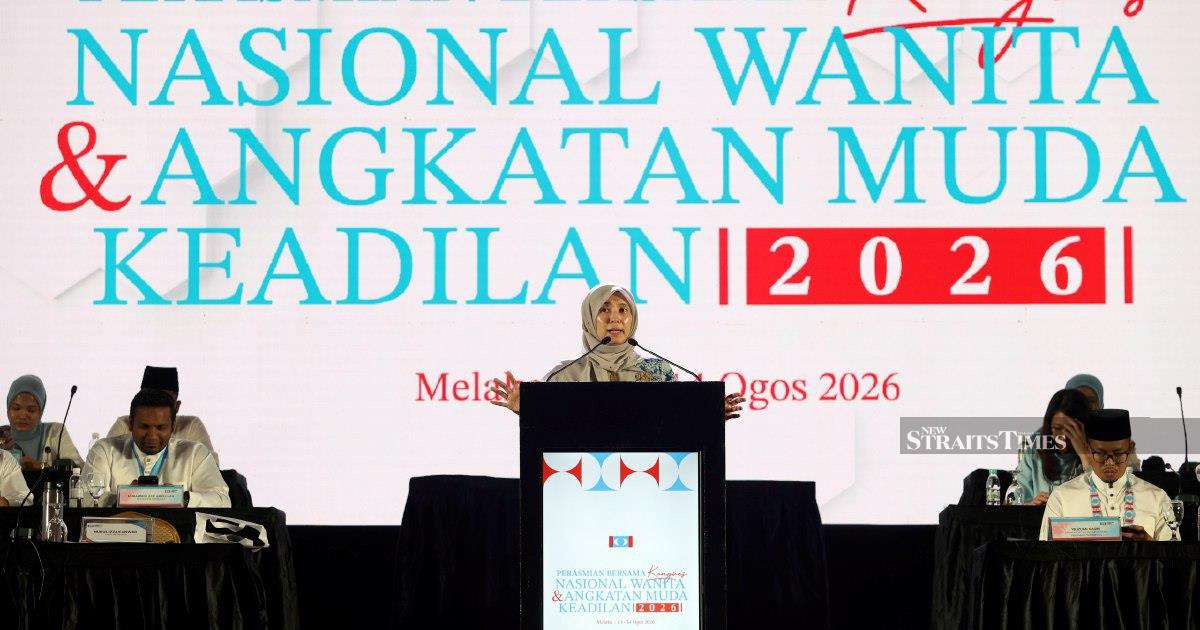
PKR's deputy president Nurul Izzah Anwar has called on her party to establish firm ethical parameters that would prevent political expediency from becoming a cover for misconduct and governance failures. Speaking at an event in Ayer Keroh, she underscored the importance of the party maintaining principled positions on matters of institutional integrity, corruption, and the abuse of state authority—concerns that resonate across Malaysian politics and raise broader questions about how governing coalitions negotiate their values.
The remarks come at a time when PKR continues to occupy a pivotal role within Malaysia's ruling coalition, with the party holding ministerial portfolios and wielding considerable influence over government direction. Nurul Izzah's emphasis on delineating boundaries reflects an awareness that coalition politics, while often necessary to assemble parliamentary majorities, can sometimes create pressures to compromise on fundamental principles. Her intervention signals that parts of PKR's leadership remain alert to the risks of political accommodation diluting the party's reform agenda.
In Malaysia's multiparty democracy, coalitions are virtually essential to govern. The current administration itself emerged from the need to unite disparate factions around a common platform following the 2022 elections. Within such arrangements, disagreements over policy and allocation of resources are routine, and senior leaders must often navigate between party interests and the broader coalition's cohesion. However, Nurul Izzah's call highlights a tension that many reform-minded activists and observers worry about: whether the pragmatism required for coalition governance inevitably erodes the ideological commitments that brought such parties into politics.
The concept of "red lines"—non-negotiable thresholds beyond which a party will not compromise—is one mechanism by which political organisations attempt to protect their core principles whilst still engaging in coalition bargaining. For PKR, which emerged from the reform movement and maintains a substantial constituency devoted to anti-corruption campaigns and institutional accountability, such boundaries might encompass a refusal to shield party members or coalition allies from investigation, or to permit obvious misuse of state resources. By explicitly naming these lines, Nurul Izzah appears to be suggesting that PKR can negotiate on policy details, budget allocation, and ministerial responsibilities without surrendering its moral authority.
The challenge, as Malaysian politics has repeatedly demonstrated, is that red lines can fade or shift when political survival appears at stake. Over the past decade, Malaysia has witnessed several instances where parties nominally committed to reform have found themselves defending or enabling questionable conduct by coalition partners in order to maintain government stability. Conversely, rigid adherence to principle can fragment coalitions and return power to opponents. Nurul Izzah's statement can be read as an attempt to thread this needle—maintaining PKR's reform credentials whilst acknowledging that coalition membership requires flexibility.
For Malaysian voters, particularly those who supported reform movements in recent elections, the question of whether governing parties can uphold ethical standards whilst sharing power carries real weight. Public trust in institutions has long been scarred by corruption scandals, and the performance of reform-minded administrations in actually fulfilling accountability commitments remains under close scrutiny. PKR's specific track record in investigating misconduct, resisting pressure to overlook allies' wrongdoing, and ensuring transparent governance has become a measure by which the coalition's broader credibility is assessed.
Nurul Izzah's intervention also arrives amid evolving discussions within Malaysian politics about how parties should relate to their founding principles as they mature and integrate into established power structures. PKR itself has undergone considerable transformation since its founding in the late 1990s as a vehicle for dissent, eventually becoming a mainstream governing party. This trajectory, while politically successful, has prompted recurring questions about whether ideological commitments survive the transition to institutional responsibility, or whether they become merely rhetorical commitments deployed at convenient moments.
The framing of this issue in terms of "corruption, abuse of power, or other wrongdoing" is notably comprehensive. Rather than targeting specific policies or personalities, Nurul Izzah identified categories of behaviour that transcend particular policy disagreements. This suggests PKR should resist not only direct corruption—embezzlement or bribery—but also the softer forms of institutional abuse that can occur when officials exploit their positions for partisan advantage, manipulate procurement processes, or selectively enforce laws. Such a broad framing aligns with international anti-corruption standards and reflects global reform discourse, making it relevant to PKR's standing among Southeast Asian observers and international governance bodies.
The practical application of such red lines remains uncertain. Internal PKR dynamics, relationships with coalition partners, and the pressures of electoral politics will all influence whether explicitly stated principles translate into actual behaviour. However, by articulating these boundaries publicly, Nurul Izzah has created a standard against which PKR's conduct will be measured. This transparency itself serves a function: it clarifies expectations and creates accountability, at least amongst the party's own base and among voters who prioritise governance standards.
For the broader Malaysian political landscape, Nurul Izzah's remarks offer a reminder that principles and pragmatism need not be entirely opposed. Governing coalitions can potentially establish agreed-upon ethical frameworks that all members commit to upholding, creating mutual accountability. Whether PKR and its coalition partners will formalise such commitments and, more importantly, enforce them remains an open question that will shape perceptions of the current administration's commitment to reform for years to come.

