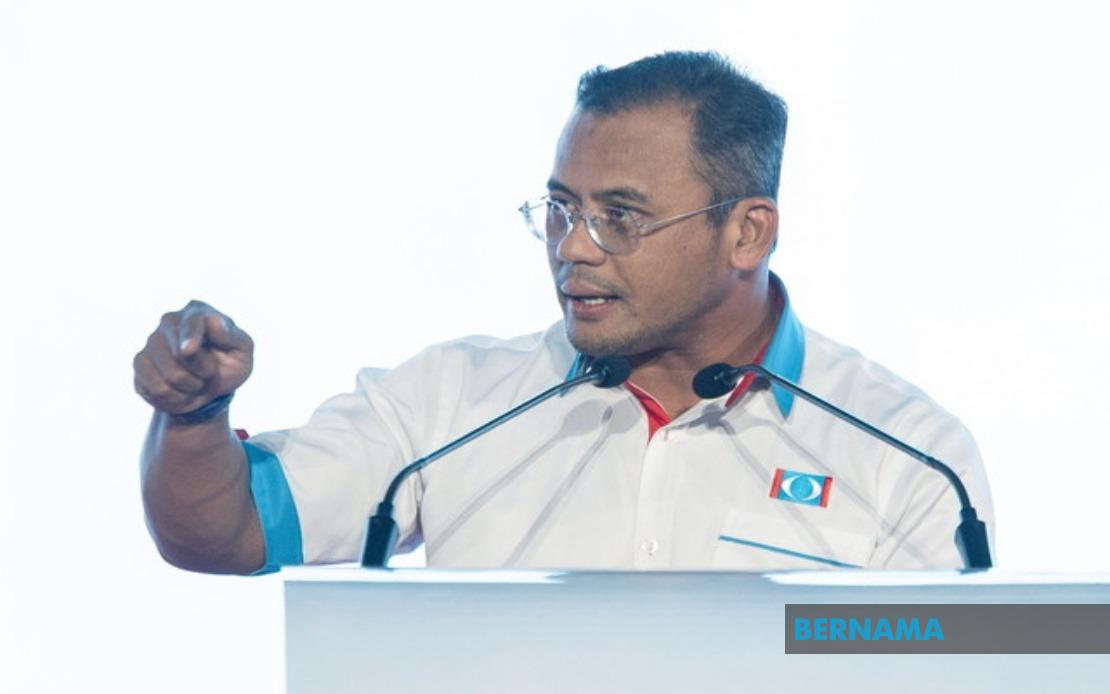
PKR's senior leadership has doubled down on the party's commitment to inclusive, fair-minded governance, calling on members to resist the temptation of identity politics that continues to plague Malaysian electoral contests. Speaking at the party's national congress in Melaka on August 16, multiple vice presidents outlined a vision of politics centred on respect for constitutional guarantees while extending equality of treatment to all ethnic and religious groups in the country.
Datek Seri Amirudin Shari, the Selangor Menteri Besar and PKR vice president, framed the party's approach as one that acknowledges the constitutional position of Islam and Malay-Bumiputera interests—enshrined in the Federal Constitution—whilst simultaneously extending fairness to Malaysians of all backgrounds, faiths and ethnicities. His remarks at the Melaka International Trade Centre represented a careful calibration between constitutional nationalism and multicultural solidarity, a balance that has become central to PKR's identity since its founding reform movement in 1998.
Amirudin linked the party's current positioning to the broader reform agenda launched by PKR president Datuk Seri Anwar Ibrahim over two decades ago. That movement, he argued, has successfully elevated several critical issues onto the national political agenda: strengthening democratic institutions, expanding fundamental liberties, ensuring equitable economic distribution, and fostering governance anchored in integrity and transparency. The implication is that PKR's form of politics has matured beyond narrow sectarian appeals, instead offering substantive policy platforms.
Reinforcing this message, fellow vice president Datuk Seri R. Ramanan—who holds the Human Resources portfolio—issued a sharper critique of competitors who deliberately weaponise racial and religious sensitivities to accumulate electoral support. Ramanan characterised such tactics as corrosive to social cohesion and community harmony, deliberately designed to fracture national unity for partisan advantage. His intervention signals that PKR intends to position itself as a bulwark against what the party views as reckless identity politics practiced by some adversaries.
Ramanan's call for internal party unity carried particular weight, as he warned that leadership divisions inevitably cascade downward, demoralising grassroots structures and creating organisational paralysis. When the party's upper echelons engage in destructive internal competition, he suggested, rank-and-file members become confused about strategic direction, party machinery weakens, and ultimately political opponents benefit from the self-inflicted damage. This framing invites comparison to rival coalitions that have sometimes suffered from visible leadership feuds.
Third vice president Datuk Chang Lih Kang offered empirical evidence to support the case against racial divisiveness. He pointed to the Chennah state election result in Negeri Sembilan, where DAP secretary-general Anthony Loke—a non-Malay politician—secured a demonstrable increase in support among Malay voters despite facing what Chang characterised as vigorous identity-politics propaganda from opponents. The example suggests that Malaysian voters, at least in certain constituencies, respond to local governance performance and personal competence rather than reflexive ethnic or religious voting cues.
This line of argument represents a strategic bet that Malaysian society is evolving beyond zero-sum ethnic competition, at least in sufficient pockets of the electorate to make multiracial, merit-based politics viable. For PKR, which depends on coalition partners like DAP and Amanah to maintain governmental relevance, such evidence is crucial to justifying its inclusive framework. The party's electoral viability hinges on proving that cross-communal appeals can outperform divisive messaging.
The congress speeches must be understood within Malaysia's broader political context. Over the past decade, particularly since the 2018 general election, identity politics has resurged as a dominant force in several corners of the political landscape. Some parties have explicitly organised campaigns around religious and ethnic grievances, arguing that constitutional protections for Islam and Bumiputera interests are under threat. PKR's counter-narrative—that inclusive governance and constitutional respect are compatible rather than contradictory—directly challenges this framing.
However, PKR's position also reflects the coalition mathematics of Malaysian governance. As a predominantly Malay party within a multiethnic coalition led by Anwar Ibrahim, PKR must constantly demonstrate to its Malay-Muslim base that it takes constitutional guarantees seriously whilst simultaneously reassuring non-Malay allies that the party will not allow majoritarianism to override minority protections. This requires rhetorical dexterity and genuine commitment to both propositions.
The party congress declarations carry implications for Southeast Asia's broader democratic trajectory. Malaysia remains one of the region's longest-functioning electoral democracies, and its political choices regarding inclusion versus exclusion resonate beyond its borders. A sustained commitment to multiracial, constitutional politics—even when electorally challenging—offers a model for other diverse democracies grappling with rising ethno-nationalist movements. Conversely, if such inclusive approaches fail at the ballot box, other regional parties may abandon similar efforts.
For PKR specifically, translating these principles into effective governance remains the ultimate test. Platitudes about fairness and harmony matter less than concrete policies on economic distribution, educational opportunity, and administrative impartiality that actually benefit all communities. The party's challenge lies in converting its rhetorical commitment to inclusivity into tangible outcomes that sustain voter confidence across demographic lines.
The congress also underscores PKR's internal focus on consolidation and organisational discipline. By emphasising unity and warning against destructive factionalism, the leadership appears to be signalling that the party needs to function as a cohesive unit to weather electoral competition. This suggests possible awareness of internal tensions or the need to rally membership confidence before anticipated electoral contests. Such internal messaging, while less visible than policy pronouncements, often proves decisive in determining party performance.

