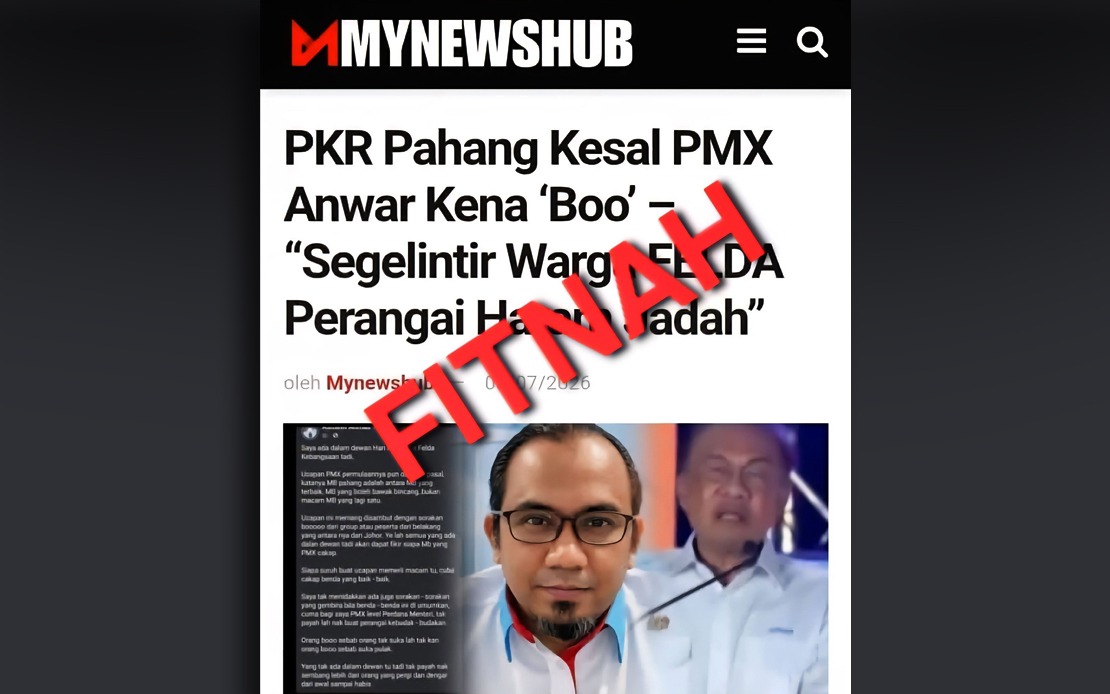
PKR Pahang has roundly rejected claims circulated by an online news portal that alleged the party expressed disappointment with the response received by Prime Minister Datuk Seri Anwar Ibrahim during yesterday's Felda Settlers' Day celebration and FELDA's 70th anniversary gathering held at Stadium Tun Abdul Razak in Jengka. The party's information chief, Datuk Dr Suhaimi Ibrahim, characterised the report as fundamentally misleading and emphasised that PKR Pahang had not issued any such statement.
Dr Suhaimi, who was present throughout the event, provided a firsthand account that directly contradicted the online portal's narrative. He asserted that from beginning to end, the celebration proceeded without incident and that the atmosphere remained positive and energetic. The gathering, which drew tens of thousands of FELDA settlers to the venue, was marked by enthusiastic participation and genuine engagement from attendees. Far from experiencing any hostile reception, the Prime Minister encountered consistent warmth and encouragement from the assembled crowd.
Central to Dr Suhaimi's rebuttal was his explicit denial of the allegation that the Prime Minister had been subjected to jeering or disapproval from attendees. He characterised such claims as distorted interpretations that bear no resemblance to what actually transpired on the ground. The suggestion that the crowd responded negatively to government announcements, he argued, fundamentally misrepresents the observable facts of the event. This distinction between alleged perception and documented reality forms the crux of the party's objection to the online report.
According to Dr Suhaimi's account, the atmosphere at the stadium reflected genuine enthusiasm rather than discord. Whenever government officials announced initiatives or welfare measures aimed at improving conditions for FELDA settlers, these announcements were consistently greeted with applause and positive reaction from the assembled audience. The programme itself was well-executed and professionally organised, creating an environment conducive to productive engagement between government and the settler community. This characterisation stands in sharp contrast to implications contained in the disputed online article.
Beyond disputing the factual accuracy of the report, Dr Suhaimi took particular exception to the misappropriation of PKR Pahang's name in the fabricated statement. He described this practice as irresponsible and unethical, noting that attributing false claims to the party creates a false impression of party position and potentially undermines public confidence in the party's actual communications. Such tactics, he suggested, represent a departure from responsible journalism and contribute to a toxic information environment.
Dr Suhaimi further contended that the disputed narrative appears deliberately constructed to shape political perception rather than accurately convey events. The strategic deployment of inflammatory language and the misrepresentation of the crowd's actual response suggest an intent to manufacture controversy where none existed. This interpretation gains weight when considered alongside the fabrication of a fake PKR Pahang statement, indicating a coordinated effort to distort the record rather than simply misreporting an event.
The Prime Minister's visit to Jengka yesterday was marked by the announcement of seven specific incentive packages designed to strengthen development efforts and improve living standards within the FELDA community. These announcements represented substantive commitments to settler welfare and formed the centrepiece of the government's engagement with the settler community. Against this backdrop of concrete policy initiatives, the alleged negative reception described in the online report appears particularly implausible and suggests an attempt to manufacture false controversy.
Dr Suhaimi's response includes a broader appeal to the media landscape and social media users to exercise greater responsibility in information verification and dissemination. In an era of rapid information sharing and declining trust in institutions, he argues, the consequences of unverified reporting and careless sharing of misleading content extend beyond individual news cycles. False narratives, once introduced into circulation, establish themselves in public consciousness and become difficult to fully correct, even when definitively refuted. This observation points to systemic challenges in Malaysia's media environment.
The incident illustrates recurring tensions in Malaysian political communication, where online portals increasingly compete with traditional media organisations and where verification standards sometimes take backseat to sensationalism. The ease with which false statements can be attributed to political parties, and the speed with which such claims spread across social media platforms, poses challenges for democratic discourse. PKR Pahang's measured but firm response represents an attempt to set the record straight while calling attention to broader journalistic standards.
For FELDA settlers and their representatives, the question of accurate portrayal of government engagement carries significance. Mischaracterising public reception to government announcements affects not only political narratives but also shapes settler perceptions of government responsiveness and commitment. The denial of hostile reception, therefore, functions as more than a defensive political statement; it affirms that government engagement with settlers proceeds in a constructive environment capable of addressing community concerns. This framing positions the government as genuinely responsive to settler needs.
Moving forward, Dr Suhaimi's appeal for more responsible information practices reflects a broader concern among political actors and observers about declining standards in digital journalism. The incident serves as a case study in how online media platforms, freed from some traditional editorial constraints that govern print and broadcast journalism, can generate false narratives with significant political implications. The responsibility for combating such misinformation extends beyond political parties to include media organisations, fact-checking initiatives, and informed citizens willing to question suspicious claims.

