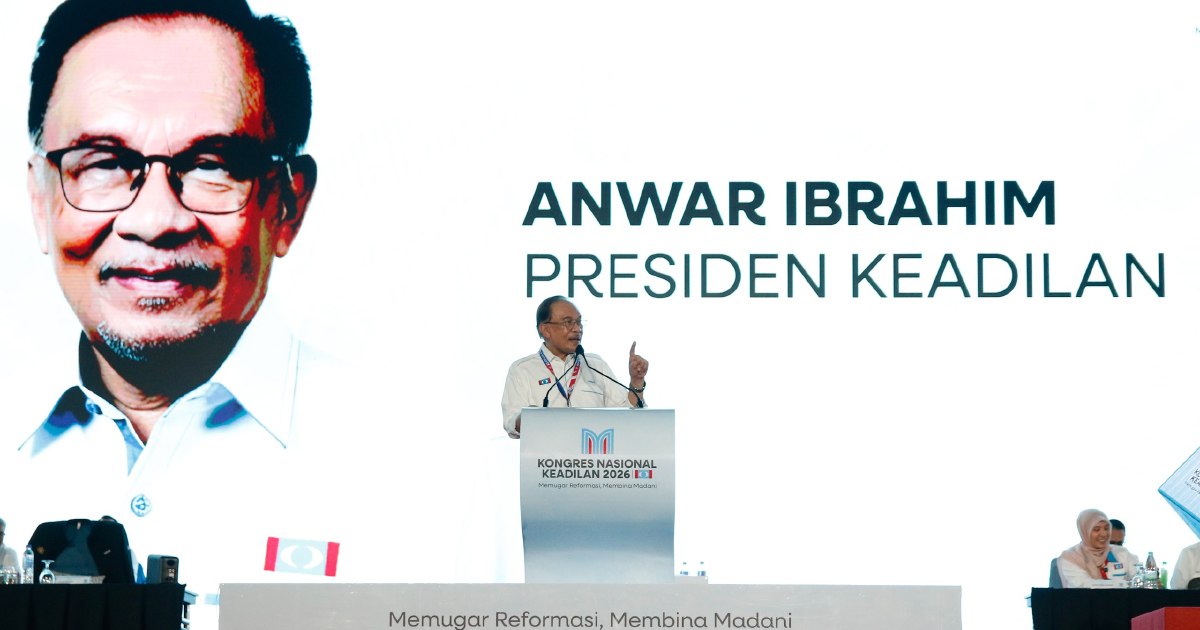
PKR President Anwar Ibrahim has reaffirmed his party's commitment to maintaining its delicate political balancing act, pledging that the People's Justice Party will preserve its pragmatic working relationship with Umno and the broader Barisan Nasional coalition while honouring its fundamental ties to Pakatan Harapan partners. The statement underscores the intricate equilibrium that has characterised Malaysian politics since the 2022 election results left no single coalition with overwhelming parliamentary control.
The positioning reflects the reality that PKR, as a pivotal player in both formal and informal arrangements, occupies a uniquely influential but precarious position within the federal government. Since the formation of the Madani administration, PKR has served as the primary architect of cross-coalition cooperation, brokering arrangements that enable executive stability whilst navigating the competing demands of ideologically distinct political blocs. This arrangement has proven neither entirely comfortable nor unsustainable, allowing the government to function despite deep historical animosities between traditional rivals.
Anwar's clarification arrives at a moment of heightened political sensitivity in Malaysia. Rumours regarding potential coalition shifts and realignments regularly circulate in parliamentary corridors, with political observers closely monitoring whether any faction might gain sufficient numbers to alter the current balance. PKR's ability to hold simultaneous relationships with both Umno-led groupings and its Pakatan colleagues has become the glue maintaining governmental continuity, yet this position exposes the party to accusations from multiple directions that it is compromising principle for pragmatism.
The Pakatan Harapan coalition, comprising PKR, DAP, and Amanah, has articulated reservations about extended cooperation with parties and figures associated with the previous decade's governance controversies. Many within the opposition alliance view ongoing parliamentary arrangement with Umno as morally problematic and strategically limiting, potentially compromising the reformist agenda upon which Pakatan was originally founded. However, the mathematical realities of legislative arithmetic have forced difficult accommodations that defy the categorical positions parties might prefer to maintain.
Umno and Barisan Nasional, having experienced electoral decline and the trauma of 2023's state elections, have approached engagement with PKR as a means of preserving relevant political power whilst recovering organisational vitality. The arrangement has allowed the older coalition to participate in governance decisions and maintain access to state resources in territories where it retains control, effectively preventing complete marginalisation despite its reduced numerical strength in parliament.
For Malaysian voters and regional observers, this tri-directional balancing act illuminates contemporary Southeast Asian politics where electoral fragmentation is producing intricate power-sharing arrangements rather than decisive two-bloc competition. Unlike some neighbouring democracies where coalition arrangements follow clearer ideological or religious-communal lines, Malaysia's current governmental structure operates through opportunistic alliance-building that prioritises immediate stability over long-term institutional coherence. This instability, whilst frustrating to observers expecting clear political choices, has so far prevented the kind of governmental paralysis that might have emerged from the 2022 election's fractured outcome.
The sustainability of this arrangement remains contested. Political scientists and analysts question whether PKR can indefinitely satisfy competing constituency expectations without ultimately fracturing or witnessing significant defections to rival parties. DAP and Amanah have periodically expressed publicly their discomfort with Umno proximity, whilst grassroots members across all three Pakatan parties have occasionally challenged leadership decisions to extend parliamentary cooperation. Conversely, conservative elements within Umno question whether engagement with PKR represents sufficient advancement of their party's political rehabilitation and policy objectives.
Regional developments will likely influence the durability of current arrangements. Upcoming state elections in additional territories, potential by-elections, and the natural attrition of parliamentary numbers through retirement or defection could alter the mathematical foundations upon which the current balance rests. International pressure regarding governance standards and the ongoing judicial proceedings involving several prominent political figures may also reshape the political landscape in unpredictable ways, creating openings or closing doors for coalition modification.
Anwar's reaffirmation serves partly as reassurance to Pakatan allies that PKR has not abandoned the original coalition's foundational values despite tactical cooperation with ideological opponents. It simultaneously signals to Umno-BN that PKR recognises the necessity of their continuing participation in governmental stability. This messaging reflects sophisticated political navigation, though it remains uncertain whether such careful calibration can remain effective indefinitely or whether Malaysian politics will eventually demand clearer, more permanent alignment choices from the parties involved.
The implications for Malaysian governance extend beyond parliamentary management. The nature of coalition politics fundamentally shapes policy outcomes, budget allocations, and the trajectory of reform initiatives. Packages passed through parliament increasingly require compromise formulations that satisfy elements of multiple coalitions, potentially producing watered-down legislation or strategic inconsistency in governmental programme implementation. Understanding PKR's continuing commitment to this balancing act therefore clarifies not merely parliamentary mechanics but the substance of contemporary Malaysian governance under conditions of distributed political power.

