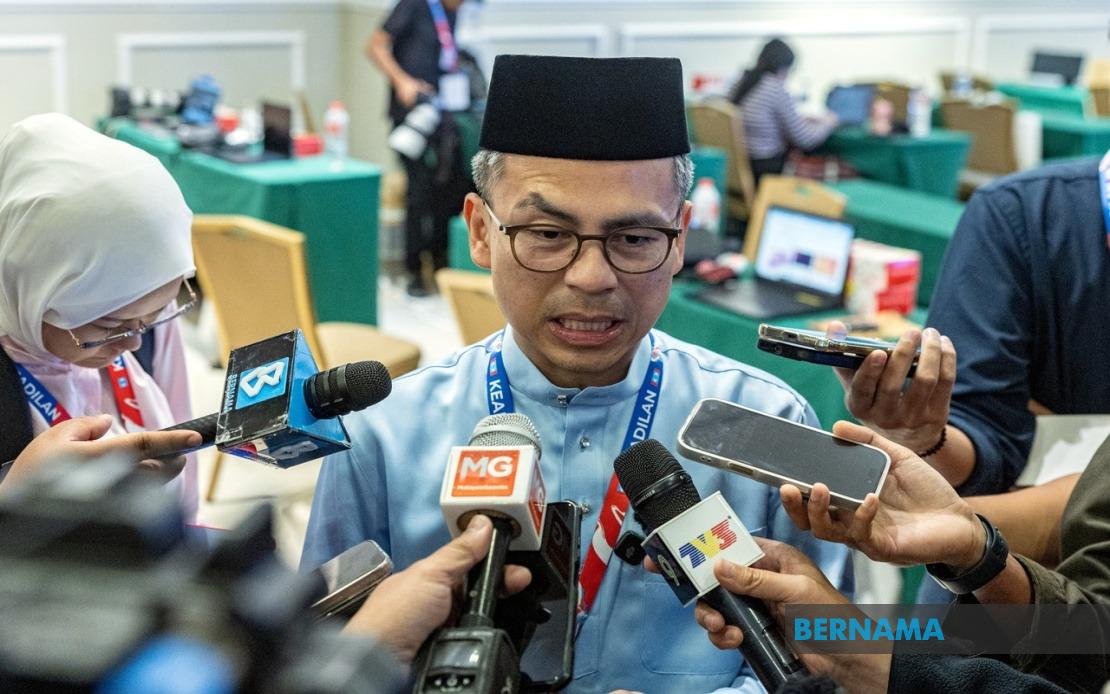
The ruling Parti Keadilan Rakyat is embarking on a significant overhaul of its information and communications operations, seeking to bridge what party leaders acknowledge is a critical gap between government accomplishments and public perception. Speaking at the PKR National Congress 2026 in Melaka, party officials indicated that despite substantial economic achievements at the macro level, ordinary Malaysians have struggled to see tangible benefits affecting their daily lives. This recognition of a messaging problem represents an important admission from the coalition's component party about the need to fundamentally rethink how it communicates with voters.
Datak Seri Fahmi Fadzil, who holds the dual roles of PKR Information Chief and Minister of Communications, emphasized the urgency of the party's revised approach during the congress proceedings at the Melaka International Trade and Exhibition Centre in Ayer Keroh. His remarks came after attending sessions where delegates tabled numerous suggestions for enhancing the party's information dissemination mechanisms. The Communications Minister framed the overhaul not merely as an administrative adjustment but as central to the government's ability to maintain public confidence, particularly in conveying complex economic policies in ways that resonate with household concerns.
The gap between macroeconomic performance and household sentiment has become a persistent challenge for the administration. While Malaysia has maintained relatively stable growth and various government initiatives have been implemented, many citizens struggle to see how these translate into improved purchasing power, reduced cost of living, or better service quality. Fahmi's acknowledgment of this disconnect points to a broader communications failure—not necessarily in the substance of policies, but in articulating their relevance to ordinary Malaysians. This is particularly acute in matters of economic management, where statistics and aggregate measures often obscure individual financial circumstances.
Delegate proposals at the congress touched on several dimensions of communication strategy, though specific details remain limited at this stage. However, the receptiveness of party leadership to these suggestions indicates a willingness to fundamentally restructure how information flows from government to the public. Fahmi indicated that proposals would be formally presented during the congress's closing session, suggesting that meaningful changes may emerge from this party gathering. The fact that party delegates themselves are pushing for reform suggests grassroots concern about the current effectiveness of communication channels.
One key proposal appears to involve formalizing mechanisms for branch leaders to escalate local concerns and issues to federal level policymakers in Putrajaya. Fahmi referenced the existence of previous channels but suggested that a more structured and systematic approach is necessary. This suggests that informal communication networks may be insufficient for the party to capture and respond to public sentiment at scale. By institutionalizing these feedback loops, PKR hopes to create a more responsive system where local issues surface quickly enough for policy adjustments to be implemented.
The role of Pakatan Harapan's coalition structure also features in this discussion, with Fahmi noting his responsibilities in the broader coalition's communications strategy. This indicates that the communications overhaul extends beyond PKR as an individual party to encompass the government coalition's entire public engagement apparatus. Coordinating messaging across multiple coalition partners while maintaining distinct party identities presents considerable complexity, yet appears central to improving overall government communications.
Fahmi's openness to proposals and acknowledgment of branch leaders' commitment to greater information dissemination roles suggests a decentralization of communications responsibility. Rather than maintaining a top-down messaging structure, the party appears inclined to empower regional and local leaders to articulate government achievements and policies in their communities. This approach recognizes that voters often trust local figures more than distant federal officials, and that information delivered through trusted community channels may carry greater persuasive weight.
The timing of this communication strategy reset merits consideration. With various challenges affecting public sentiment—from economic pressures to service delivery concerns—the government faces pressure to demonstrate that it understands and is addressing citizen priorities. By formally restructuring communications during the PKR congress, party leaders signal that improving public messaging is a priority at the highest levels. This could reflect recognition that messaging gaps have contributed to erosion of public confidence in specific policy areas.
For Malaysian voters and observers, these developments suggest that government leaders are taking seriously the perception problem that has dogged the administration. The acknowledgment that economic achievements have not translated into felt improvements at the household level is candid, and the commitment to reform communications infrastructure could yield tangible changes in how government messages are crafted and delivered. However, the success of such reforms will ultimately depend on whether improved communications accompanies substantive policy adjustments that genuinely address cost-of-living pressures and household economic concerns.
The broader Southeast Asian context adds another dimension. As regional governments navigate post-pandemic recovery and inflationary pressures, many face similar challenges in communicating economic policies to skeptical publics. Malaysia's efforts to refine its communication strategy could offer lessons for other nations grappling with perception gaps between macroeconomic performance and household welfare. The emphasis on formalizing feedback mechanisms and empowering local communicators represents one approach to bridging this common governance challenge.
Moving forward, the efficacy of PKR's revamped communication strategy will be measurable against shifts in public perception of government performance and economic management. The party has committed to presenting detailed proposals during the congress's conclusion, which should clarify the concrete mechanisms being introduced. Whether these reforms extend to communications training, resource allocation, or structural reorganization remains to be seen, but the party leadership's engagement with the issue suggests serious intent behind the announced changes.

