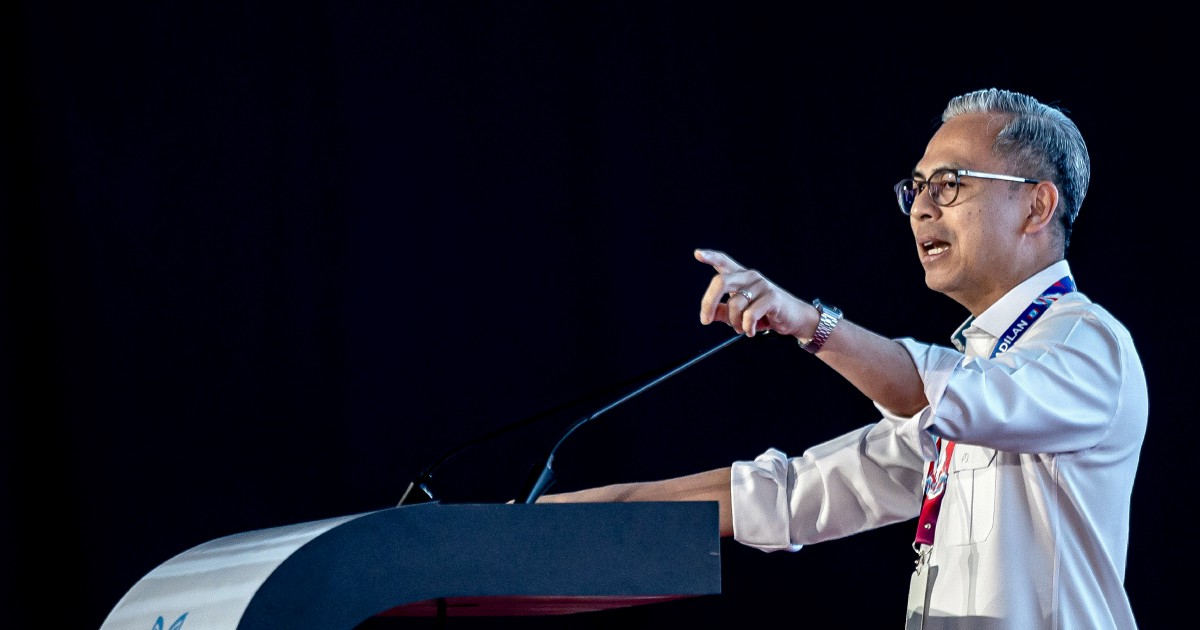
Datuk Seri Fahmi Fadzil, PKR's information chief, has delivered a pointed message to the party's leadership: convincing voters to maintain support requires more than pointing to solid macroeconomic performance. Speaking at an event in Ayer Keroh, Fahmi stressed that ordinary Malaysians are grappling with tangible financial pressures that go beyond what headline economic growth figures reveal, and the party must centre its messaging and policy priorities on these lived experiences if it hopes to retain electoral momentum.
The remarks highlight a persistent challenge facing Malaysia's ruling coalition. While government announcements routinely emphasise strong GDP growth, rising foreign direct investment, and robust monetary reserves, many households continue reporting strained budgets, rising living costs, and difficulty affording basic necessities. This disconnect between headline economic data and household sentiment has become a flashpoint in Malaysian politics, with opposition parties frequently capitalising on voter frustrations to challenge the government's narrative of economic stability.
Fahmi's intervention reflects PKR's awareness that technical economic achievements alone cannot substitute for tangible improvements in voters' daily lives. Issues such as affordable housing, transportation costs, food prices, and utility bills shape public perception far more viscerally than quarterly GDP figures or inflation rates. When families struggle to afford rent or put meals on the table, messaging focused on abstract macroeconomic metrics rings hollow, regardless of their accuracy.
The context in which Fahmi made these comments is particularly significant for Malaysian politics. PKR has served as a cornerstone of the ruling Pakatan Harapan (PH) coalition and, more recently, the Unity Government framework. As part of Malaysia's governing coalition, the party shares responsibility for economic outcomes, which gives added weight to Fahmi's acknowledgment that current policies and communication strategies may not be resonating effectively with ordinary citizens.
Critics have previously argued that the coalition's tendency to emphasise macroeconomic achievements—such as improvements in external debt-to-GDP ratios or currency stability—overlooks pressing microeconomic concerns affecting households and small businesses. Shop owners struggling with higher rental costs, workers facing wage stagnation, and young families postponing major purchases due to affordability concerns represent constituencies whose concerns require targeted policy responses rather than reassurances about national financial indicators.
Fahmi's remarks suggest that PKR recognises the need for a strategic recalibration. Rather than continuing to lead with economic statistics in public communications, the party should emphasise concrete measures designed to ease immediate financial pressure on ordinary households. This might include initiatives targeting rental affordability, subsidy programmes for essential goods, or wage policies that track with inflation—measures that generate palpable benefit in voters' wallets and therefore greater political traction.
The broader implication extends to Southeast Asia's broader political landscape, where populist movements and opposition parties across the region have gained ground by articulating frustrations about economic inequality and the gap between national growth and household prosperity. Malaysia's experience offers a cautionary lesson: strong macroeconomic fundamentals do not guarantee political durability if they fail to translate into improved living standards for the majority. Thailand, the Philippines, and Indonesia have all witnessed voter backlash against governments perceived as prioritising large-scale economic indicators over addressing everyday affordability challenges.
Fahmi's message also carries internal party significance. By publicly acknowledging that current messaging and priorities may be insufficient, he is effectively signalling to PKR's broader leadership that strategic adjustments are necessary. This kind of self-criticism from a senior party figure can serve as a catalyst for internal debate about policy direction and communication strategy, potentially leading to more voter-centric approaches in the coming months.
The challenge facing PKR mirrors one confronting governing parties across Southeast Asia: how to credibly champion both macroeconomic stability and household prosperity when these objectives sometimes require different policy emphases. A government committed to inflation control and fiscal prudence may resist expansionary spending that could immediately alleviate household financial pressure. Navigating this tension requires sophisticated communication and genuine policy innovation—demonstrating that strong macro-level management can coexist with tangible micro-level improvements.
Looking forward, Fahmi's call suggests that PKR may be reconsidering its approach to economic messaging and policymaking. Whether this translates into substantive programme changes or remains primarily rhetorical will significantly influence the party's standing with voters. The effectiveness of government economic policy ultimately depends not just on whether national indicators improve, but whether citizens perceive meaningful benefit in their own circumstances. PKR's challenge is ensuring these perceptions align with reality.

