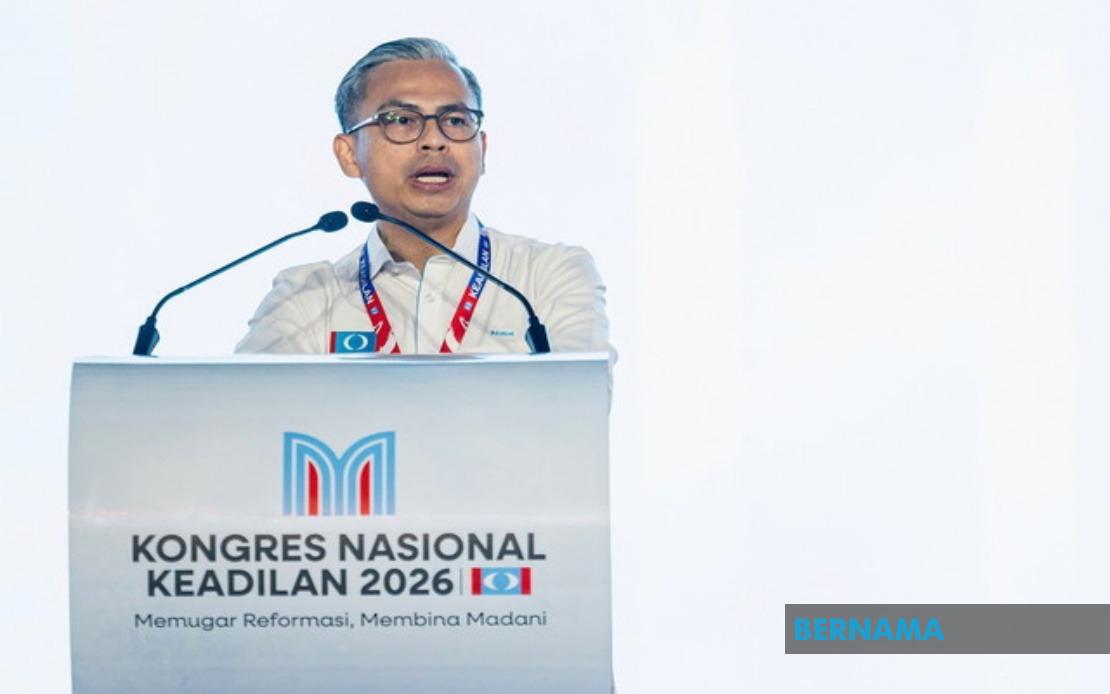
Communications Minister Datuk Seri Fahmi Fadzil has pledged that the government will intensify its outreach efforts to ensure Malaysians not only understand government policies but genuinely experience their positive impact in daily life. Speaking at the PKR National Congress in Melaka, Fahmi acknowledged a persistent communication gap between what the administration describes as its macroeconomic successes and public perception, a challenge that has become increasingly pressing as the government seeks to build confidence ahead of the coming electoral cycle.
The PKR information chief framed the issue as extending beyond mere knowledge dissemination. He stressed that government achievements in managing the broader economy—what he termed the "pot economy"—must translate into concrete, observable improvements that resonate with ordinary Malaysians, particularly in areas directly affecting household finances, employment, and living costs. This distinction between statistical success and felt impact reflects a growing recognition within the cabinet that strong economic data alone has proven insufficient to shift public sentiment, especially as inflation and cost-of-living concerns continue to dominate popular discourse throughout the region.
Fahmi's remarks highlight an underlying tension within the current administration. While Prime Minister Anwar Ibrahim's government has promoted various policy initiatives and cited improvements in macroeconomic indicators, public surveys and electoral results have suggested that this messaging has not effectively penetrated voter consciousness or shifted perceptions meaningfully. The Communications Minister's acknowledgment that "many feel that the many successful government policies introduced by PKR president Datuk Seri Anwar Ibrahim and his team are not being sufficiently enjoyed or understood" represents a candid admission of this communication failure, signalling internal debates about strategy and execution.
To address these shortcomings, PKR plans to adopt a more emotionally intelligent communication approach. Rather than relying solely on technical explanations or statistical evidence, the party intends to frame government achievements in ways that connect with people's lived experiences and aspirations. This shift recognises that political messaging in Malaysia must account for the emotional dimensions of governance—how citizens feel about their economic security, their prospects, and their government's commitment to their welfare. Such an approach acknowledges that rational arguments alone rarely shift political allegiances or build sustained public support.
A key element of the revised strategy involves expanding grassroots engagement through smaller, localised discussion forums. By moving away from large-scale, formal presentations toward intimate community gatherings, the government hopes to create environments where citizens feel comfortable asking questions and receiving direct responses from political leaders and party representatives. These settings allow for nuanced discussion of complex policy issues in accessible language, potentially reducing the distance between government narratives and public comprehension. Division chiefs and local leaders will play a crucial role in facilitating these conversations, leveraging their existing relationships and credibility within their communities.
Fahmi also outlined plans to strengthen the government's capacity to counter disinformation, particularly regarding sensitive topics that carry high emotional charge. The Malaysian Communications and Multimedia Commission has identified over 8,410 fake accounts exploiting what are termed "3R issues"—religion, race, and the royal institution—since the recent Johor state election. These accounts represent coordinated attempts to manipulate public opinion by weaponising communal sensitivities, often to undermine confidence in government initiatives. Addressing this challenge has become essential, as false narratives can rapidly erode public trust and obscure the government's actual record.
The strategy for combating misinformation reflects an attempt to balance transparency with order. Fahmi explicitly rejected characterisations of the government as seeking to control media narratives, instead framing the approach as correcting factual inaccuracies through established channels. This distinction matters politically in Malaysia, where media freedom concerns and questions about democratic space have occasionally generated international scrutiny. By emphasising cooperation with the MCMC and respectful engagement with journalists, the government aims to address false information while maintaining its commitment to democratic principles and press freedom.
Women's organisations and the PKR Women's Wing will assume greater responsibility for information dissemination, recognising that female voters and community leaders often occupy influential positions in household and neighbourhood decision-making. By engaging women's networks directly, the party hopes to reach voters who may be underserved by conventional political communication channels. This gendered approach to messaging acknowledges demographic realities in Malaysian society and seeks to build support among constituencies whose concerns may not always receive adequate attention in mainstream political discourse.
The timing of these communication adjustments coincides with the government's ongoing efforts to build momentum ahead of elections anticipated in the coming years. How effectively PKR and its coalition partners implement these revised strategies will significantly influence public perception of the administration's performance and accomplishments. The challenge remains formidable: translating economic data into felt improvements requires sustained, consistent messaging, genuine policy delivery, and credible engagement with communities experiencing economic anxiety. For Malaysian readers, particularly those in lower-income brackets most affected by inflation and employment uncertainty, the gap between government claims and lived reality continues to shape political calculations and electoral preferences.

