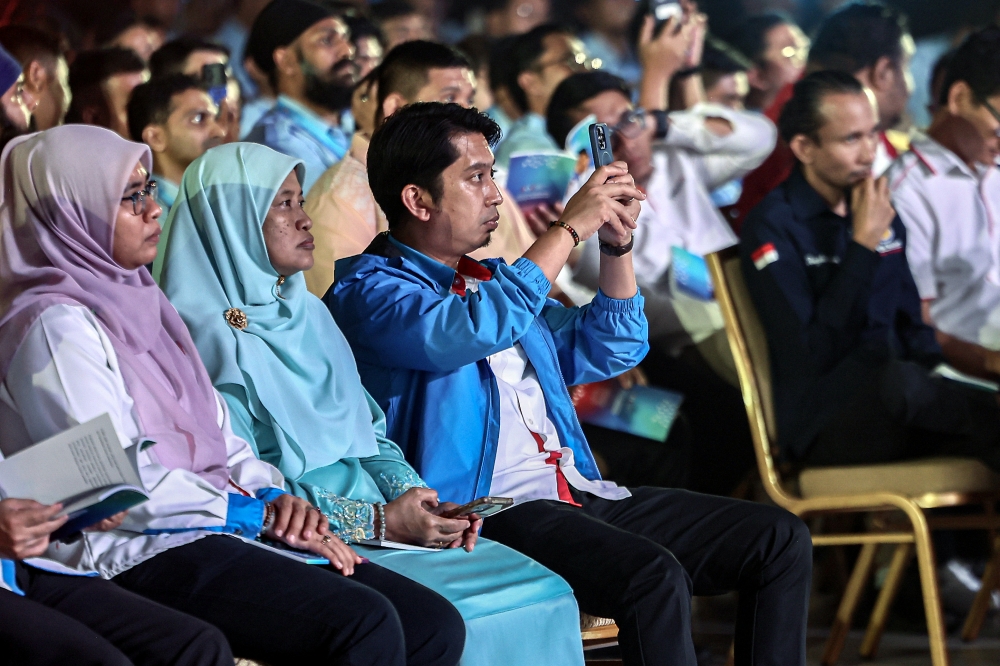
The 2026 National Congress of Angkatan Muda Keadilan (AMK), held in Melaka, marked a significant shift in how Malaysia's opposition-aligned youth movement approaches generational politics. Rather than relying on traditional party channels, AMK delegates moved beyond conventional discourse to confront the digital realities and economic anxieties defining Generation Z engagement with politics. The congress proceedings revealed a party wing acutely aware that young Malaysians increasingly inhabit different media ecosystems than their older counterparts, and that economic concerns fundamentally shape political participation among voters aged 18 to 25.
Central to the congress agenda were youth employment initiatives. Delegates tabled motions addressing the transition from education to stable career pathways, a persistent challenge throughout Southeast Asia as automation reshapes labour markets and graduate unemployment remains stubbornly elevated. Within Malaysia's context, where youth joblessness has fluctuated between four and seven percent in recent years—well above general unemployment rates—the economic insecurity facing first-time job-seekers represents both a vulnerability and an opportunity for political mobilization. PKR's youth wing signalled recognition that employment prospects directly influence political loyalty, particularly among younger voters making initial electoral choices.
The congress equally emphasized digital platforms and social media strategy. This orientation reflects a fundamental truth about contemporary youth politics: traditional media consumption patterns have dissolved, replaced by fragmented, algorithm-driven information environments. Generation Z acquires political information through TikTok, Instagram Reels, and YouTube content creators rather than television news broadcasts or newspaper editorials. AMK's explicit focus on digital engagement suggests the party recognizes that outdated communication methods risk rendering its messaging invisible to its intended audience. The motions debated signal an institutional commitment to meeting young voters where they actually congregate online.
The FOMO—fear of missing out—reference embedded in the congress framing carries particular salience. Political participation among youth operates increasingly as a social identity performance undertaken partly through digital platforms. Younger Malaysians perceive political engagement as either culturally central or embarrassingly peripheral based substantially on how their peer networks normalize such participation. When political movements successfully integrate themselves into dominant youth cultural platforms and conversations, they transform from distant institutional structures into relevant, contemporary forces. Conversely, parties perceived as disconnected from youth cultural spaces risk complete irrelevance among demographic cohorts who have never known politics outside digital contexts.
From a regional perspective, PKR's strategic repositioning aligns with broader Southeast Asian trends. Indonesia's Partai Demokratik Indonesia Perjuangan navigated similar youth engagement challenges, as did Thai and Philippine opposition movements. The region has witnessed repeated instances where parties adopting sophisticated digital strategies and youth-focused economic policies substantially improved their standing among younger voters. Singapore's youth movements, meanwhile, have demonstrated that digital-native political discourse increasingly operates by different rhetorical and aesthetic rules than traditional party communications.
The economic dimension deserves particular emphasis for Malaysian readers. Graduate unemployment remains concentrated among young degree-holders in competitive fields, while gig economy participation has expanded dramatically without corresponding legal protections or career stability. PKR's focus on employment motions indicates party recognition that macroeconomic messaging alone resonates poorly with workers facing precarious income streams. Young Malaysians increasingly demand concrete policy proposals addressing skills gaps, employer exploitation, and industry transition support rather than abstract political narratives about systemic change.
Digital engagement strategy also involves reputational management within youth-dominant spaces. Platforms like TikTok function as primary news sources for substantial segments of Malaysian Gen Z, yet political parties traditionally struggle to maintain authentic voices across such platforms. AMK's congress attention to digital outreach suggests potential investment in content creator partnerships, younger spokesperson recruitment, and platforms adapted specifically for youth consumption patterns. Successfully executing such strategy requires more than simply posting on Instagram; it demands genuinely youth-centric communications that resonate with contemporary cultural references and communication norms.
The timing of this congress pivot carries significance. As Malaysia approaches electoral cycles and younger cohorts represent increasingly substantial voter populations, parties that master youth engagement mathematics gain disproportionate electoral advantage. PKR's institutional focus on Gen Z outreach positions the party defensively against rival opposition movements and proactively against Barisan Nasional and Perikatan Nasional youth wings that possess greater resource advantages. Whoever successfully captures youth political participation simultaneously secures electoral momentum extending across multiple electoral cycles.
However, translating congress motions into sustained, authentic youth engagement remains challenging. Political authenticity among younger voters demands consistency, genuine policy commitment, and credible delivery on promises. PKR's congress successfully identified relevant issues—employment and digital presence—but implementation determines whether such motions become meaningful party transformation or symbolic gestures quickly forgotten. Young Malaysians possess finely tuned authenticity detectors shaped by online environments where performative politics faces immediate exposure and ridicule. The party's capacity to implement employment initiatives and maintain meaningful digital dialogue will ultimately determine whether this congress represents genuine strategic reorientation or temporary institutional performance.

