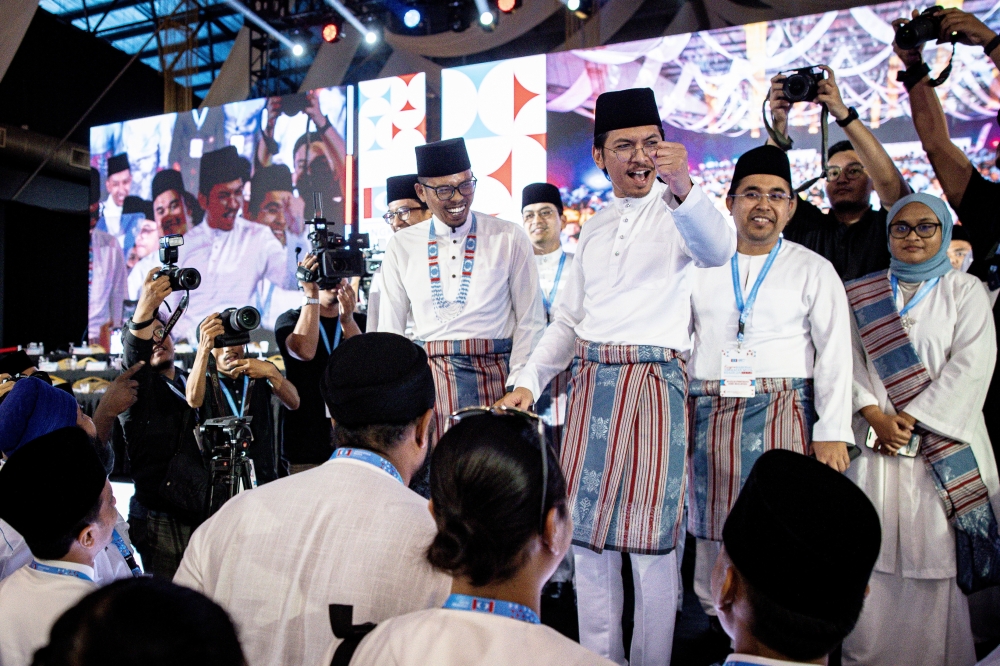
PKR Youth has publicly endorsed Prime Minister Datuk Seri Anwar Ibrahim's commitment to dismantle the Universities and University Colleges Act, marking a significant moment in Malaysia's ongoing debate over academic freedoms and institutional autonomy. The youth wing's backing represents a critical endorsement from within the ruling coalition, signalling broader momentum behind a policy that has long been contested by student activists, academics, and civil rights organizations across the nation.
The repeal of the UUCA has emerged as a cornerstone reform in Malaysia's higher education landscape, with proponents arguing that the legislation has historically constrained institutional independence and limited students' capacity to engage in meaningful political discourse. For decades, the Act has been characterized by critics as an instrument that restricts democratic participation on university campuses and impedes the development of critical thinking. PKR Youth's public stance underscores growing recognition within government circles that these constraints no longer align with the aspirations of a younger generation increasingly vocal about institutional reform and democratic participation.
Beyond merely supporting the legislative change, PKR Youth has taken the additional step of mobilizing student populations to amplify their demands for transformation. This dual-track approach—securing official backing while simultaneously energizing grassroots advocacy—demonstrates a sophisticated understanding of how policy change gains traction in Malaysia. By encouraging students to organize and articulate their positions independently, PKR Youth is effectively building a constituency that can sustain pressure for implementation even as parliamentary deliberations unfold. Such engagement reflects an implicit recognition that repealing the UUCA represents only the beginning of a necessary institutional overhaul.
The wider reform agenda that PKR Youth references extends considerably beyond the mere removal of legislative restrictions. Higher education observers note that comprehensive transformation would encompass questions of university governance structures, the scope of institutional autonomy granted to individual universities, mechanisms for student representation in administrative decision-making, and the relationship between academic institutions and political authorities. These interconnected issues have frustrated stakeholders across Malaysia's tertiary education sector for years, creating a policy space where ambitious reform has become politically viable in ways previously unimaginable.
For Malaysian universities, which rank competitively across Southeast Asia but have struggled with issues of administrative opacity and limited student voice, the proposed changes carry significant implications. Institutions in neighbouring countries have increasingly moved toward models emphasizing institutional autonomy and participatory governance, potentially creating competitive disadvantages for Malaysian universities if reform is delayed. PKR Youth's activism reflects concern that Malaysia's higher education sector risks falling further behind regional peers unless systemic changes are implemented promptly and comprehensively.
The timing of PKR Youth's intervention also carries political significance. As the ruling coalition navigates complex coalition dynamics and prepares for electoral cycles ahead, demonstrating responsiveness to youth demands becomes strategically important. University students represent an influential demographic capable of mobilizing broader constituencies and shaping public discourse around governance issues. By positioning itself at the forefront of education reform, PKR Youth strengthens its appeal among younger voters while demonstrating that the coalition remains committed to substantive policy changes rather than rhetorical commitments alone.
International precedents offer instructive examples of how UUCA-style legislation affects institutional development and knowledge production. Countries that have progressively loosened restrictions on academic institutions have generally witnessed enhanced research productivity, stronger international partnerships, and increased capacity for addressing complex societal challenges through interdisciplinary approaches. These outcomes suggest that Malaysian universities could potentially enhance their regional standing and research impact following institutional liberalization, benefits that extend beyond symbolic questions of student freedoms to tangible improvements in knowledge creation and intellectual output.
Student organizations across Malaysia's universities have articulated detailed critiques of the UUCA's operational effects, pointing to instances where the legislation has been weaponized against legitimate political expression and activism. PKR Youth's call for students to speak up amplifies these voices and creates institutional legitimacy for their concerns at a moment when policymakers appear receptive. This alignment of grassroots activism with official party positioning can accelerate movement toward reform, though skeptics note that intentions and implementations often diverge in Malaysia's political context.
The broader landscape of Malaysian education policy reveals competing priorities around academic freedom, national security, religious sensitivities, and social cohesion. Any comprehensive reform agenda must navigate these contested dimensions carefully, addressing legitimate concerns while removing unnecessary restrictions. PKR Youth's framing suggests recognition that these tensions exist, but that a more balanced approach—granting expanded freedoms while maintaining appropriate guardrails—represents achievable middle ground that diverse stakeholders could eventually accept.
As discussions progress regarding UUCA repeal timelines and the legislative architecture that would succeed it, PKR Youth's mobilization efforts will likely prove influential in determining whether reform gains sufficient momentum for passage. The youth wing's strategy of combining elite endorsement with grassroots mobilization has historically proven effective in Malaysian politics, where parliamentary outcomes frequently reflect the intensity of organized constituencies and the political capital invested by ruling coalition partners. Whether this energy translates into substantive legislative change remains to be seen, but the convergence of student activism and official party backing has unquestionably shifted Malaysia's education reform conversation onto considerably firmer political ground.

