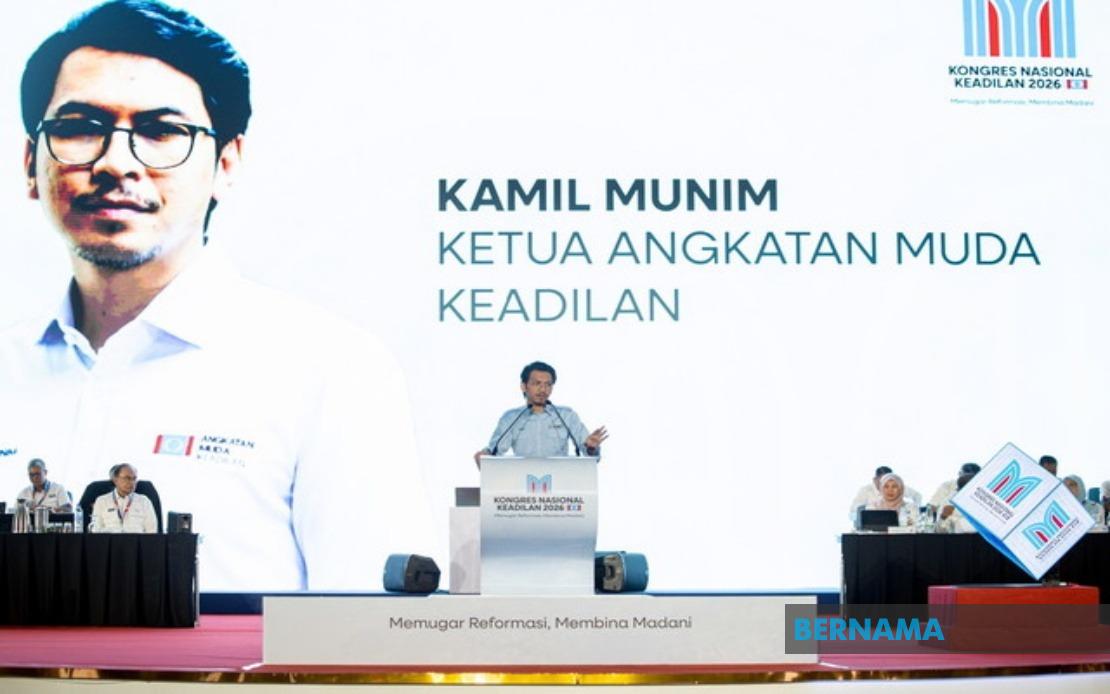
Muhammad Kamil Abdul Munim, the chief of PKR Youth (AMK), has issued a pointed challenge to the party's youth wing to fundamentally rethink its political approach if it hopes to secure Malaysia's most important voting bloc. Addressing delegates at the PKR National Congress in Melaka on August 16, Kamil argued that the party must undergo what he termed a paradigm shift, moving beyond conventional tactics to connect authentically with voters aged 45 and below. This demographic represents the single largest segment of Malaysia's electoral register, making their allegiance crucial to any party's hopes of securing a national mandate—a reality that recent electoral results have underscored with uncomfortable clarity.
The impetus for this strategic recalibration comes directly from two consecutive disappointments at the ballot box. Both the Johor and Negeri Sembilan state elections delivered results that forced PKR and its Pakatan Harapan coalition partners to confront uncomfortable truths about their standing with voters. Rather than dismiss these outcomes as mere tactical setbacks, Kamil framed them as wake-up calls demanding a comprehensive reassessment of the party's organisational strengths and the effectiveness of its campaign methodologies. This willingness to acknowledge electoral feedback, though politically difficult, suggests a pragmatic recognition that the MADANI Government's mixed public reception requires more than rhetorical repackaging.
Critically, Kamil's intervention highlights a disconnect between administrative performance and political persuasion that has long plagued Malaysian political parties. He pointedly reminded grassroots leaders that their roles extend far beyond managing bureaucratic responsibilities and executing top-down directives. Instead, he advocated for a deepening of leadership competencies that centre on understanding constituent anxieties—the everyday concerns that shape how ordinary Malaysians view their government and its representatives. This shift towards empathetic, listening-based leadership represents an implicit admission that PKR's grassroots machinery has become overly transactional and insufficiently attuned to community sentiment.
The demographic focus on younger voters deserves particular attention for Malaysian readers. This cohort, coming of age during periods of significant political turbulence and economic uncertainty, brings different expectations to politics than their older counterparts. They are more likely to demand transparency, accountability, and concrete policy outcomes rather than accept loyalty based on historical party narratives. The fact that this group constitutes the largest voting segment means that no party can credibly claim electoral supremacy without their active support—a reality that traditional political structures in Malaysia have sometimes underestimated.
Kamil's call for direct community engagement, particularly in smaller rural settlements, addresses a persistent weakness in urban-centric political organising. Rural communities, often overlooked in national political discourse, harbour legitimate grievances about development disparities, agricultural support, infrastructure gaps, and economic opportunity. By urging party representatives to conduct genuine grassroots conversations rather than perform token community visits, Kamil is articulating a strategy grounded in authentic relationship-building. The emphasis on identifying "concerns and fears" and offering credible solutions positions problem-solving rather than partisan rhetoric as the basis for political legitimacy.
The broader context of government performance adds texture to Kamil's remarks. While feedback on the MADANI Government's administration has been relatively positive, particularly regarding initiatives like fuel subsidies and targeted assistance programmes, this approbation has not translated into stronger electoral performance. This paradox suggests that voters distinguish between appreciating specific policies and granting broader political trust or enthusiasm. Kamil's acknowledgment of this gap—the existence of "voids" among the populace despite some positive government actions—reflects a maturing understanding that administrative competence alone cannot sustain political dominance.
Looking forward, Kamil positioned the impending general election as a defining moment that requires the party to draw strategic lessons from its historical pattern of surprise victories and defeats. He referenced PKR's dramatic 2008 performance, when the then-opposition coalition unexpectedly denied Barisan Nasional a two-thirds parliamentary majority, and the party's triumphant 2018 showing when Pakatan Harapan captured federal power. These references function both as morale-boosters and as historical anchors suggesting that electoral surprises favour parties capable of rapid strategic adaptation and authentic popular mobilisation. The implicit message: PKR must recover its reputation as a disruptive force responsive to grassroots energy, not merely an establishment party managing administrative routine.
For Malaysian observers, Kamil's speech carries implications extending beyond PKR's internal dynamics. It represents a recognition that Malaysia's political landscape remains genuinely competitive, with voter preferences malleable and contingent on how effectively parties address contemporary concerns. The emphasis on younger demographics signals that demographic change is reshaping electoral mathematics in ways that benefit parties willing to adapt their messaging and methodology. Conversely, parties that treat voters as fixed constituencies loyal to historical party brands risk alienating the majority of Malaysia's electorate.
The operational challenge implicit in Kamil's remarks is substantial. Converting leadership principles into effective ground-level organising requires investment in training, resource allocation, and cultural change within party structures often accustomed to hierarchical command-and-control approaches. Rural community engagement demands sustained commitment beyond election cycles, creating infrastructure for listening and problem-solving rather than merely soliciting votes. These transformations cannot be accomplished through conference speeches alone; they require institutional restructuring and genuine commitment to power-sharing with grassroots voices.
Ultimately, Kamil's intervention reflects a maturing Malaysian political environment in which leaders increasingly understand that electoral success depends on responsive, inclusive governance models rather than inherited party loyalty or entrenched incumbency advantages. Whether PKR's organisational machinery can translate this strategic vision into effective implementation will significantly shape Malaysia's next electoral cycle and the broader trajectory of Pakatan Harapan's political sustainability.

