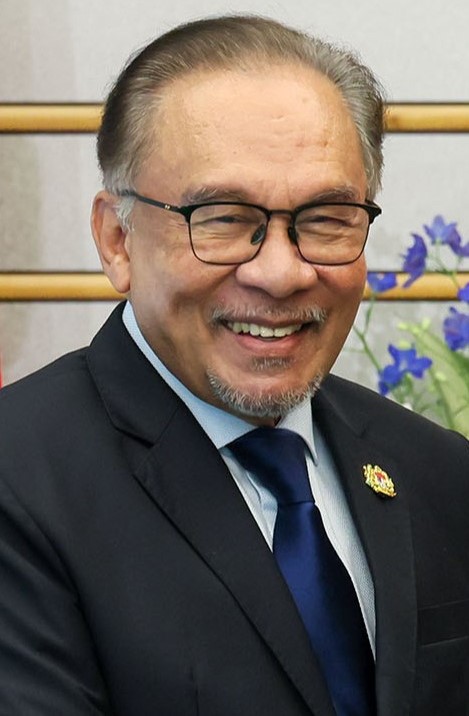
Prime Minister Anwar Ibrahim has secured a commitment from Johor Regent Tunku Ismail Sultan Ibrahim to preserve harmonious working relations between the Johor state government and the federal administration, following a high-level meeting in the capital. The audience, sought by the Prime Minister at an appointed venue in Kuala Lumpur, underscores the significance of maintaining cooperative channels between Putrajaya and one of Malaysia's most economically vital states.
The meeting carries particular weight given Johor's prominence as a major economic and political force within the federation. The state government, led by Menteri Besar Onn Hafissaharuddin, has pursued several significant development initiatives that intersect with federal priorities, spanning infrastructure projects, investment attraction, and regional connectivity efforts. Ensuring alignment between state and federal agendas remains critical for executing major programmes that span both jurisdictions and require coordinated implementation.
Tunku Ismail Sultan Ibrahim, who holds the constitutional position of Regent during the tenure of Sultan Ibrahim Ismail, wields considerable influence over state affairs and carries substantial symbolic authority within Johor's governance framework. His endorsement of sustained good relations with the federal government carries weight beyond mere ceremonial acknowledgment, as the royal institution remains deeply embedded in state decision-making processes. The Regent's agreement to preserve cordial ties signals receptiveness to federal initiatives while affirming Johor's commitment to the broader national agenda.
Anwar's proactive engagement reflects the Prime Minister's broader strategy of building consensus across state administrations controlled by different political coalitions. While Johor has traditionally aligned with Umno-led coalitions, the voluntary engagement demonstrates a pragmatic approach to governance that transcends partisan divisions. This diplomatic initiative may set a template for similar consultations with other state leaders, particularly as the federal government pursues nationwide economic and administrative reforms.
The pledge to maintain good relations encompasses multiple dimensions of state-federal cooperation. Infrastructure development presents one crucial arena, with projects such as transportation networks, port facilities, and industrial zones often requiring federal support, approval, or coordination. Similarly, talent development, education initiatives, and healthcare programmes increasingly demand integrated approaches that blend state expertise with federal resources and oversight.
Economically, Johor's significance cannot be overstated. The state serves as a critical manufacturing hub, hosts major port operations, and plays a central role in Malaysia's international trade networks. Federal-state cooperation directly impacts the state's capacity to attract foreign direct investment, expand industrial capacity, and participate effectively in regional economic integration initiatives such as those within ASEAN frameworks. Disruptions or tensions between layers of government can create uncertainty that deters investors and complicates long-term planning.
The timing of this meeting reflects broader considerations around political stability. Malaysia's federal system distributes considerable powers to state governments across areas including land, Islamic affairs, and local administration. When state and federal administrations operate at cross-purposes, implementation of national policies faces friction, and states may struggle to leverage federal support for their development objectives. Conversely, strong inter-governmental coordination amplifies policy effectiveness and enables states to access federal funding mechanisms and technical expertise more readily.
For Malaysian readers, the significance lies in understanding how effective governance depends on functional relationships across political hierarchies. Citizens in Johor and beyond benefit when state governments can seamlessly engage with federal agencies on matters from education and health to commerce and tourism. When relations deteriorate, bureaucratic delays, conflicting regulations, and duplicative efforts ultimately impose costs on residents and businesses operating within the state.
The agreement also carries implications for Malaysia's regional standing. As ASEAN emphasizes regional connectivity and integration, Johor's geographic position as a gateway to Singapore and the broader Southeast Asian region makes state-federal coordination essential for Malaysia to fully capitalize on regional opportunities. Cross-border trade, investment flows, and people movements depend on regulatory coherence and administrative efficiency that require seamless coordination between state and federal authorities.
Looking forward, the pledge provides a foundation for addressing specific areas of cooperation. Infrastructure megaprojects, regulatory harmonization, skills development programmes, and initiatives targeting sustainable growth all stand to benefit from this reaffirmed commitment. The explicit public acknowledgment also establishes accountability, as future actions by either party will be measured against this stated commitment to preserving good relations.
Anwar's willingness to engage directly with state leaders, rather than delegating such consultations to ministers, underscores the seriousness with which the federal administration regards these partnerships. The personal investment signals that Johor-federal cooperation ranks among the Prime Minister's governance priorities. For Tunku Ismail, reciprocating this commitment reflects Johor's own interest in maximizing the state's development trajectory through cooperative rather than adversarial engagement with the federal centre.
The sustainability of this pledge will ultimately depend on both parties demonstrating genuine commitment through concrete actions. Disputed jurisdictional matters, resource allocation disagreements, and differing policy preferences will inevitably arise. How both sides navigate these inevitable tensions—whether through dialogue, compromise, and mutual respect or through confrontation and brinkmanship—will determine whether today's agreement translates into lasting institutional improvement or merely represents a temporary diplomatic gesture.