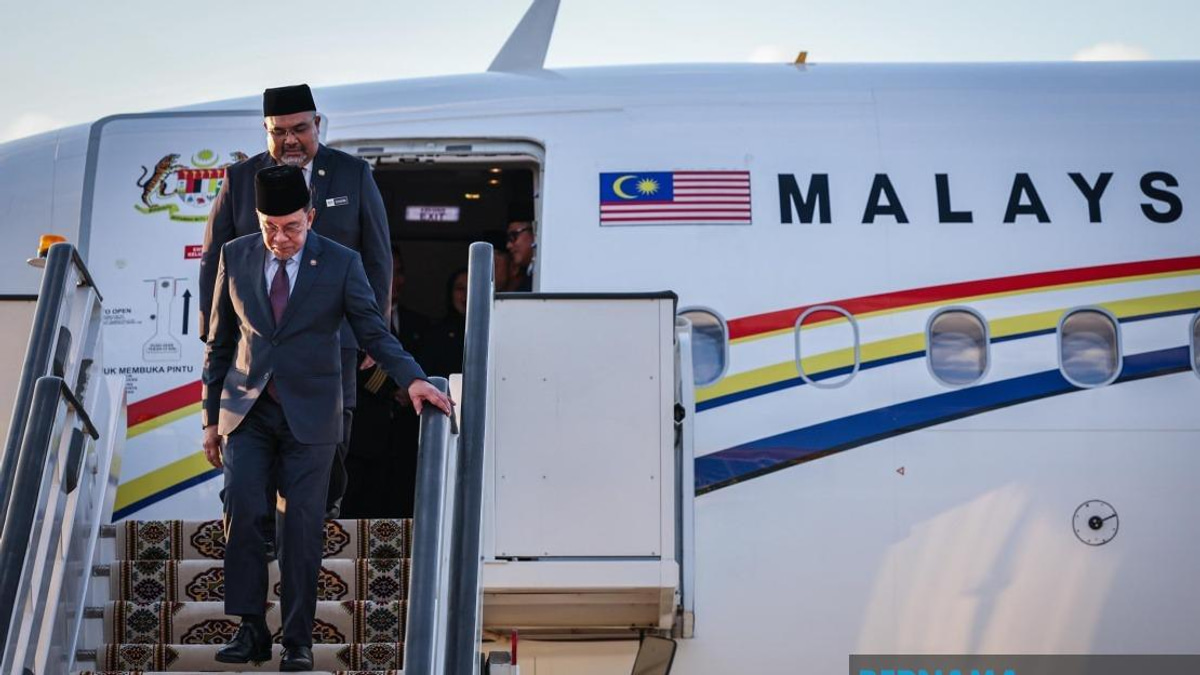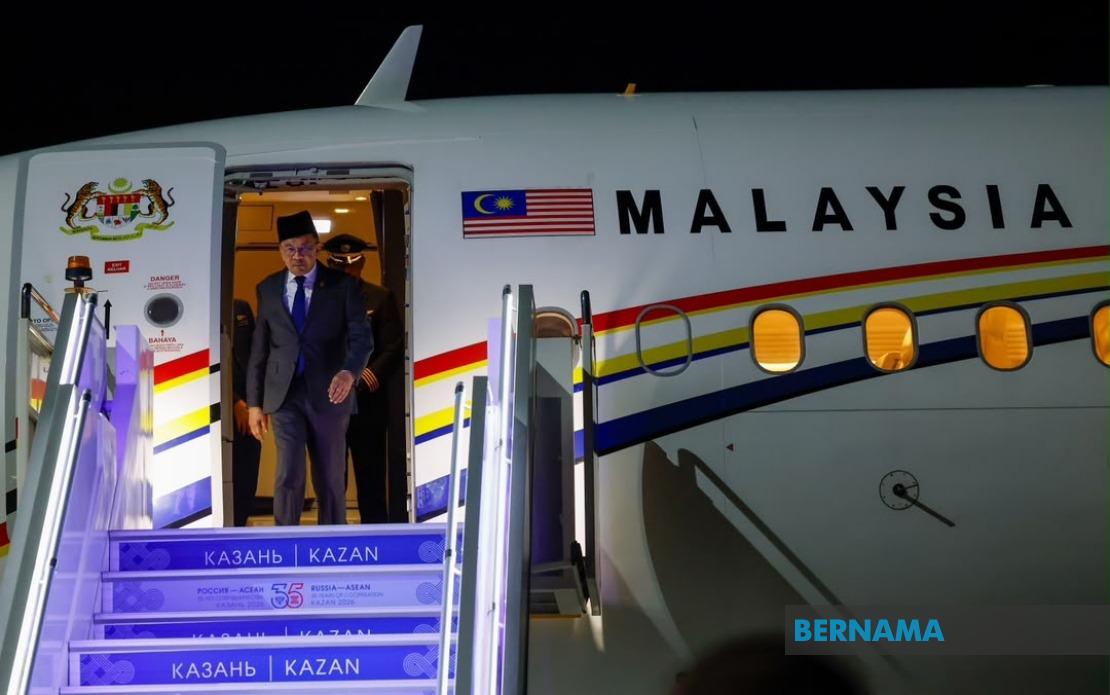
Prime Minister Datuk Seri Anwar Ibrahim has touched down in Kazan to participate in a landmark diplomatic gathering that underscores Southeast Asia's deepening engagement with Russia at a time of significant geopolitical realignment. The Malaysian leader arrived at Kazan International Airport late on June 16 for a two-day visit centred on the ASEAN-Russia Commemorative Summit scheduled for June 17-18. His delegation included Minister of Investment, Trade and Industry Datuk Seri Johari Abdul Ghani and Minister of Economy Akmal Nasrullah Mohd Nasir, signalling the economic dimension Malaysia places on the engagement.
The timing of this visit reflects Malaysia's strategic positioning within ASEAN at a moment when the bloc seeks to maintain balanced relationships with major powers. The summit itself carries symbolic weight, commemorating the 35th anniversary of formal ASEAN-Russia relations, which were initiated in Kuala Lumpur in 1991. This milestone provides an occasion for both parties to assess the trajectory of their partnership and recalibrate expectations for the next phase of cooperation. For Malaysia, which holds considerable influence within ASEAN given its founding member status and economic standing, the prime minister's attendance demonstrates active commitment to strengthening the bloc's external partnerships.
The summit will produce four substantive outcome documents designed to shape ASEAN-Russia cooperation through 2030. These include the Kazan Declaration honouring the 35-year relationship, along with joint statements addressing energy cooperation and cultural exchange. A Comprehensive Plan of Action will serve as the operational blueprint for the coming five years, providing concrete frameworks within which both parties can advance shared interests. These documents represent more than ceremonial gestures; they establish mechanisms through which practical collaboration can deepen across multiple sectors critical to regional stability and prosperity.
Cooperation areas identified for emphasis span trade, investment, energy security, food production, digital infrastructure, scientific advancement, educational exchange, tourism and people-to-people connections. For Malaysia and other ASEAN members, the energy and food security dimensions hold particular urgency given regional vulnerabilities to global supply chain disruptions and climate pressures. Russia's role as a major energy exporter and agricultural producer positions it as a natural partner for addressing these concerns, especially as Southeast Asian economies seek to diversify their strategic partnerships beyond traditional Western suppliers.
Anwar is expected to hold bilateral discussions with Russian President Vladimir Putin during his Kazan visit, continuing a pattern of high-level engagement established since his assumption of office in November 2022. This will mark his third visit to Russia in less than three years, underscoring the frequency and importance Malaysia accords to the relationship. His previous engagements—at the Eastern Economic Forum in Vladivostok in September 2024 and an official Moscow visit in May 2025—covered extensive ground including trade, investment, agriculture, education, aerospace and energy cooperation. These recurring interactions suggest that Malaysia views Russia not merely as a geopolitical counterbalance but as a practical economic partner with whom meaningful commercial relationships can be cultivated.
The diplomatic architecture surrounding this summit reflects ASEAN's broader strategy of maintaining equidistance from competing global powers during a period of heightened strategic competition. By convening the commemorative summit and producing forward-looking cooperation documents, both ASEAN and Russia signal their intention to sustain engagement despite international tensions. For Malaysia and other Southeast Asian nations, this positioning offers opportunities to extract maximum benefit from relationships with major powers while retaining strategic autonomy. The emphasis on dialogue and peaceful resolution in Anwar's outlined focus areas aligns with ASEAN's longstanding commitment to addressing disputes through diplomatic channels rather than confrontation.
The energy security dimension carries particular weight for Malaysia and the broader ASEAN region. As global energy markets remain volatile and geopolitical risks to traditional supply routes persist, developing reliable partnerships with diversified suppliers becomes strategically imperative. Russia's hydrocarbon resources and technological expertise in energy production offer potential avenues for Malaysian enterprises and the region's energy-dependent economies. Similarly, food security cooperation addresses fundamental vulnerabilities; Russia and other former Soviet republics remain among the world's largest grain and fertiliser producers, making them essential partners for food-importing Southeast Asian nations.
Digital economy cooperation represents an emerging frontier in ASEAN-Russia relations with significance for Malaysia's technology ambitions. Southeast Asia's rapid digital transformation creates demand for technological partnerships, infrastructure development and expertise sharing. Russia's computational and software development capabilities, though constrained by international sanctions, remain noteworthy in specific sectors. Collaboration in this area could facilitate Malaysia's efforts to build indigenous technological capacity while diversifying sources of technical knowledge beyond traditional Western providers.
Anwar's emphasis on deepening people-to-people exchanges and advancing educational cooperation reflects recognition that sustained diplomatic relationships require grassroots foundations. Educational partnerships facilitate knowledge transfer, cultural understanding and the development of networks that transcend formal governmental structures. Tourism cooperation similarly builds familiarity between populations and generates economic activity; the opening of travel and hospitality linkages between Malaysia and Russia could benefit both nations' tourism industries while enhancing mutual understanding.
From a broader Southeast Asian perspective, Malaysia's active engagement in strengthening ASEAN-Russia relations contributes to ASEAN Centrality—the bloc's central principle of maintaining independent agency in regional affairs rather than aligning with any single power. By demonstrating Malaysia's willingness to engage substantively with Russia across economic, cultural and strategic dimensions, the visit reinforces ASEAN's positioning as an independent actor capable of building mutually beneficial relationships with multiple international partners. This approach proves particularly relevant as Malaysia navigates complex relationships with the United States, China, Europe and other major actors.
The Kazan summit also provides platform for discussing regional security concerns and approaches to conflict resolution that reflect Southeast Asian interests. As conflicts in Ukraine and the Middle East create ripple effects affecting global economic stability, energy prices and trade routes, ASEAN's voice in advocating dialogue and peaceful settlement becomes increasingly valuable. Malaysia's participation demonstrates commitment to these principles while positioning the nation as bridge-builder capable of facilitating communication between parties with differing strategic perspectives.
Looking forward, the outcome documents from Kazan will establish operational parameters for ASEAN-Russia cooperation extending to 2030. For Malaysia specifically, successful implementation of agreed frameworks in energy, food security and digital economy could yield tangible economic dividends while strengthening the nation's strategic position within ASEAN. The visit represents investment in long-term relationship-building that transcends immediate political cycles, establishing foundations for sustained engagement across multiple domains.