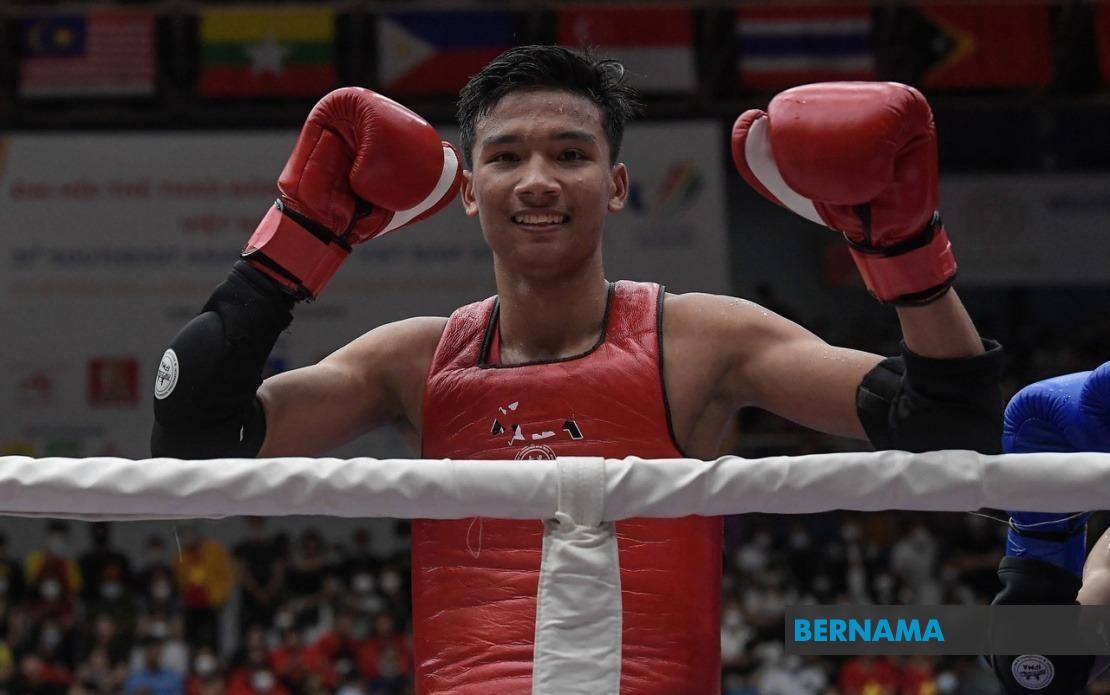
Prime Minister Datuk Seri Anwar Ibrahim has issued a public appeal for Malaysians to unite in support of national Muay Thai champion Ahmad Nor Iman Aliff Rakib as he pursues a world title opportunity that carries profound significance for the nation's combat sports legacy. The call to action, delivered through a Facebook statement on July 22, underscores the political establishment's recognition of sporting achievement as a vehicle for national pride and international visibility.
Ahmad Nor Iman Aliff stands at the threshold of a historic milestone. Should he secure victory against his opponent, he would become the first Malaysian combat sports athlete to successfully compete for a world title at the ONE Championship level, an organization that has emerged as Asia's premier mixed martial arts and combat sports promoter. This distinction carries weight beyond individual accomplishment, representing a breakthrough moment for Malaysian participation in professional combat sports at the highest echelon of global competition.
The challenge will unfold at Lumpinee Stadium in Bangkok, one of the most storied venues in Muay Thai history, where Ahmad Nor Iman Aliff will face Sam-A Gaiyanghadao, a Thai Muay Thai legend whose credentials and experience present a formidable test. The elevation to this stage reflects years of rigorous training, competitive progression through the ONE Championship ranks, and demonstrated technical excellence that has captured the attention of promoters and matchmakers. For Malaysian followers of combat sports, the bout represents an opportunity to witness homegrown talent competing against established international champions.
The Prime Minister's public endorsement serves multiple functions within Malaysia's contemporary political and sporting landscape. First, it acknowledges the legitimacy and growing prominence of combat sports within the nation's athletic portfolio, moving beyond traditional frameworks that historically prioritized badminton, football, and other conventional disciplines. By elevating Ahmad Nor Iman Aliff's pursuit to the level of Prime Ministerial commentary, Anwar Ibrahim signals governmental recognition that professional combat sports merit the same institutional support and national backing as established sporting codes.
Second, the intervention reflects a calculated approach to nation-branding in the Southeast Asian context. As Malaysia competes regionally for international attention and soft power, athletic achievement provides tangible evidence of national capability and individual excellence. A victory at the ONE Championship level would generate media coverage across Asia, strengthening Malaysia's profile within sporting circles and demonstrating that the nation produces athletes capable of excelling on continental stages.
Third, Anwar's message explicitly targets younger Malaysians, positioning Ahmad Nor Iman Aliff as an inspirational figure whose trajectory illustrates the possibility of achieving international success through dedication and excellence. This intergenerational framing connects sporting accomplishment to broader narratives about Malaysian potential and aspiration, implicitly encouraging youth participation in combat sports disciplines.
The particular choice of the ONE Interim Strawweight Muay Thai World Championship carries strategic significance. The interim designation indicates this is a path to eventual undisputed championship status, meaning victory would position Ahmad Nor Iman Aliff as a legitimate contender for the organization's highest honours. The strawweight classification, requiring athletes to maintain a specific weight, represents one of combat sports' most technically demanding divisions, where precision and efficiency often determine outcomes in ways that showcase refined skill rather than raw power alone.
Muay Thai itself occupies a complex position within Malaysian national identity. While Thailand claims the sport as central to its cultural heritage, Muay Thai has developed significant followings and training communities throughout Southeast Asia, including Malaysia. Malaysian fighters have participated in professional Muay Thai for decades, yet international championship-level recognition has remained elusive. Ahmad Nor Iman Aliff's opportunity thus represents a potential shift in the regional competitive hierarchy, demonstrating that Malaysian athletes can reach apex competitive levels.
The ONE Championship organization, founded in Singapore in 2011, has fundamentally reshaped professional combat sports in Asia by marketing directly to regional audiences, featuring local champions, and creating pathways for Asian fighters to compete at world-class standards. For Malaysian athletes, the organization has provided unprecedented opportunities to pursue international careers while remaining geographically proximate to home markets and Asian fan bases. Ahmad Nor Iman Aliff's elevation reflects this broader ecosystem transformation.
From a broader Malaysian sporting perspective, combat sports have historically received less institutional support and media attention than football or badminton despite producing numerous accomplished international competitors. Ahmad Nor Iman Aliff's world title opportunity occurs within a context of rising interest in professional fighting in Malaysia, driven partly by ONE Championship's expansion and partly by growing digital engagement with combat sports content. Prime Ministerial backing potentially accelerates this momentum by legitimizing the sport within governmental and national discourse.
The Bangkok venue carries additional symbolic weight. Lumpinee Stadium represents the global epicenter of traditional Muay Thai, where champions across all weight categories have established their legacies. Competing within these hallowed confines against an established Thai legend provides Ahmad Nor Iman Aliff an opportunity to demonstrate Malaysian competitiveness within Thailand's own sporting heartland, a reversal of conventional hierarchies in which Thai dominance in Muay Thai goes largely uncontested.
Looking forward, should Ahmad Nor Iman Aliff's world title bid prove successful, the ramifications would extend well beyond individual achievement. Victory would establish a template for Malaysian combat sports participation at championship levels, potentially encouraging other athletes to pursue professional opportunities within the ONE Championship system and similar organizations. It would also strengthen Malaysia's international sporting profile at a moment when regional competition for athletic prominence remains intense.
Anwar Ibrahim's public statement, while seemingly straightforward encouragement, reflects sophisticated recognition that national sporting success serves broader purposes in contemporary statecraft. The call for unified Malaysian backing of Ahmad Nor Iman Aliff represents an investment in both individual aspiration and collective national narrative, positioning a single athlete's Friday bout in Bangkok within frameworks of national pride, generational inspiration, and Malaysian international positioning that extend far beyond the Muay Thai competition itself.

