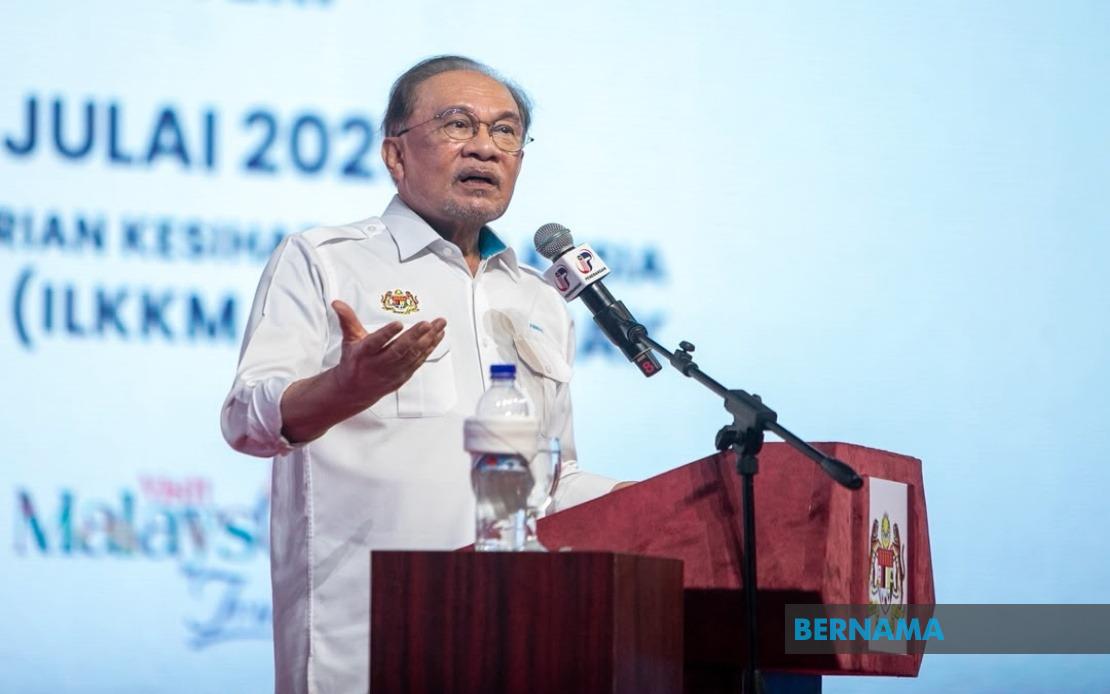
Prime Minister Datuk Seri Anwar Ibrahim has issued a pointed call for Malaysia's youth to develop a meaningful understanding of the nation's independence struggle, warning against treating national pride as a superficial exercise divorced from historical reality. Launching the 2026 National Month and Fly the Jalur Gemilang Campaign in Ipoh on July 19, Anwar articulated a vision of patriotism rooted firmly in acknowledgement of past suffering and sacrifice rather than empty ceremonialism.
The Prime Minister's message carries particular weight at a moment when Malaysia's post-independence generation—those with no living memory of colonial rule or the independence movement—comprises an increasingly large share of the electorate. Anwar framed the challenge as one of institutional failure: Malaysian society risks losing connection to the foundational narrative that explains why the nation exists as an independent state. This disconnect matters politically, as collective understanding of shared sacrifice traditionally serves as social glue binding diverse communities.
Anwar's characterisation of independence as achieved "through the blood, sweat and tears" of previous generations reflects the historical reality of Malaysia's path to freedom. Unlike several neighbouring nations that experienced violent anti-colonial wars, Malaysia's independence struggle combined constitutional negotiation with underlying grassroots mobilisation. The Prime Minister's invocation of this layered sacrifice suggests he views contemporary Malaysians as custodians of an inheritance that carries moral weight and imposes obligations.
The timing of this campaign launch merits examination. With Malaysia approaching the mid-point of the 2020s, the government appears intent on reinforcing national cohesion during a period marked by significant political and social change. National Month campaigns traditionally serve dual purposes: they offer opportunities for ceremonial displays of unity while simultaneously functioning as moments for leadership to articulate visions of national identity. Anwar's emphasis on historical understanding rather than mere flag-waving suggests an administration concerned that surface-level patriotism may prove insufficient to maintain social stability.
The Prime Minister specifically proposed a three-step approach to meaningful patriotism: first, revisiting history through serious engagement with the independence struggle; second, translating historical consciousness into symbolic action through displaying the Jalur Gemilang; and third, channelling this consciousness into forward-looking national development. This framework positions the flag not as an ornament but as a tangible representation of collective historical memory converted into present-day action.
The ministerial attendance at the Ipoh launch underscores the interconnected nature of Anwar's appeal. Communications Minister Datuk Seri Fahmi Fadzil's presence reflects government commitment to disseminating historical narratives, while National Unity Minister Datuk Aaron Ago Dagang's attendance signals official recognition that historical consciousness directly supports contemporary social cohesion. Perak Menteri Besar Datuk Seri Saarani Mohamad's participation grounds the campaign in state-level governance, ensuring that national messaging finds local institutional expression.
For Malaysian readers, Anwar's intervention addresses a genuine generational concern. Schools increasingly emphasise examination-driven learning over historical narrative; meanwhile, competing narratives about Malaysia's founding—emphasising different aspects of the independence struggle depending on ethnic or political perspective—have complicated consensus around a singular historical meaning. The Prime Minister's call for renewed engagement with history implicitly acknowledges these tensions while attempting to recover a unifying understanding of independence as a collective achievement.
The campaign's explicit focus on 2026 suggests forward planning around Malaysia's centennial independence anniversary. By launching promotional efforts five years in advance, the government positions itself to shape national conversation about historical meaning well before the centennial moment arrives. This extended timeline permits gradual cultivation of historical consciousness through repeated messaging and educational programming.
Anwar's emphasis on teaching children about the independence struggle reflects concern about transmission of historical knowledge across generations. Malaysian educational curricula have evolved significantly since independence, and many young Malaysians encounter the independence period through textbooks rather than family narratives or community memory. The government's intervention through national campaigns attempts to supplement formal education with state-sponsored historical consciousness-building.
The implications for Southeast Asian regional identity also merit consideration. Malaysia's success in maintaining multicommunal stability depends partly on shared understanding of the independence period as a moment when diverse communities worked toward common liberation. In a region experiencing centrifugal pressures from rising ethnonationalism and identity politics, Malaysia's emphasis on collective historical inheritance offers a counternarrative. Anwar's message implicitly argues that remembering the collaborative nature of independence struggle provides immunisation against contemporary identity fragmentation.
Sustaining meaningful historical consciousness requires more than campaign launches and flag displays. Malaysian civil society, educational institutions, and media will ultimately determine whether government messaging translates into genuine historical engagement among younger Malaysians. The challenge facing policymakers involves making independence history feel relevant to contemporary concerns rather than relegating it to ceremonial observance.
As Malaysia navigates demographic change, economic transformation, and evolving social dynamics, questions about national identity and historical meaning will intensify rather than diminish. Anwar's intervention at the Ipoh launch represents an attempt to ensure that these conversations remain anchored in substantive understanding of how the nation came into being and what that founding struggle demands of its inheritors.

