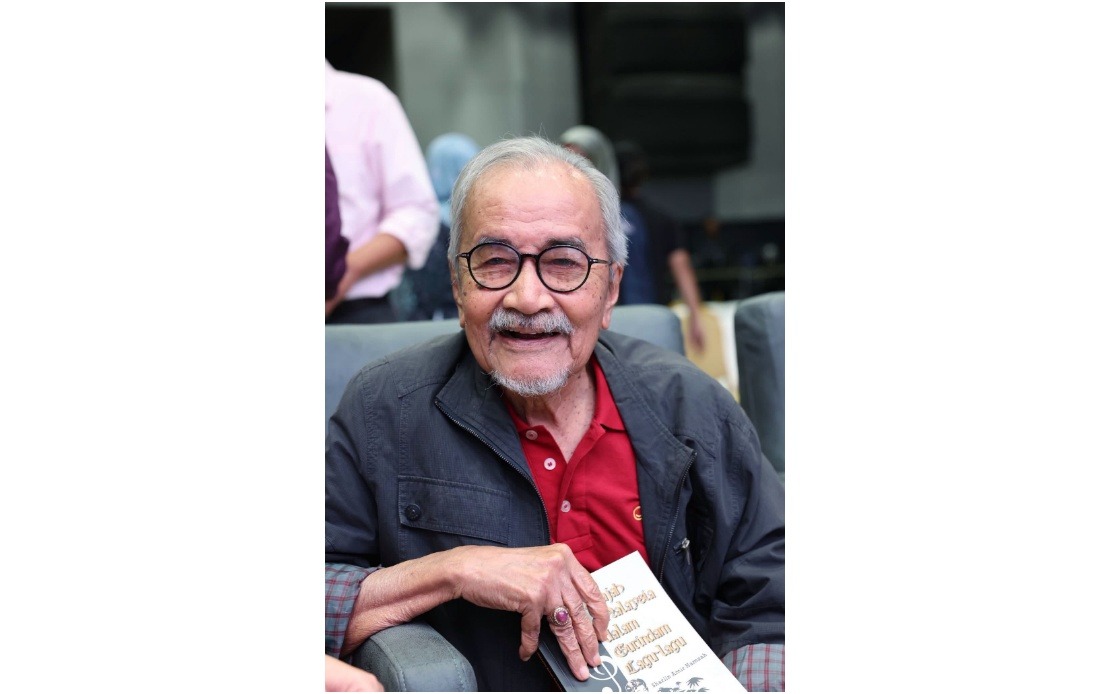
Prime Minister Datuk Seri Anwar Ibrahim has extended warm birthday wishes to Datuk Rahim Razali, one of Malaysia's most respected cultural figures, as the veteran actor, director and creative entrepreneur marks his 87th birthday. Through a Facebook tribute, Anwar recognised Rahim's remarkable journey and enduring influence on the nation's creative landscape, emphasising how his artistic vision has shaped generations of performers and cultural practitioners.
Anwar's public acknowledgement underscores the significance of Rahim Razali's legacy within Malaysian society. Rather than merely cataloguing his achievements, the Prime Minister highlighted the deeper philosophical dimension of Rahim's work—his consistent commitment to exploring human values, cultural identity and what it means to be Malaysian through cinema and performance art. This framing reflects how senior government figures view the role of the arts in nation-building, positioning cultural production not as entertainment alone but as a vehicle for conveying national consciousness and values.
Born on July 3, 1939, in Batu Gajah, Perak, Rahim Razali has spent over six decades working across multiple creative disciplines. His career trajectory demonstrates the interconnected nature of Malaysia's entertainment and cultural sectors during the latter half of the twentieth century. Beginning as an actor and expanding into directing, scriptwriting, sports journalism and broadcasting, he exemplifies a particular generation of creative professionals who viewed themselves as custodians of Malaysian artistic standards and cultural memory.
Rahim's filmography includes numerous productions that have become touchstones in Malaysian cinema history. His acting and directorial roles have earned him multiple accolades, including Best Director and Best Male Actor recognitions at the Malaysian Film Festival, Malaysia's premier platform for cinematic achievement. These honours reflect the critical esteem in which the industry has held his work, suggesting that his contributions extended beyond commercial success to artistic innovation and credibility.
The film Matinya Seorang Patriot, which Anwar specifically referenced, represents the thematic preoccupations that have defined much of Rahim's creative output. The title itself—translating roughly to "The Death of a Patriot"—signals Rahim's interest in narratives centred on national consciousness, sacrifice and citizenship. This thematic consistency across his body of work has positioned him as more than an entertainer; he functions as a cultural commentator whose films serve as historical documents of Malaysian society's evolution.
Anwar's invocation of religious blessing—praying that Rahim be granted good health, longevity and continued strength—reflects the cultural practice of honouring elders and distinguished citizens within Malaysian society. This ritualistic element of public tribute serves multiple functions: it affirms respect for age and experience, acknowledges the contributions of previous generations to nation-building, and implicitly passes the torch of cultural stewardship to those following.
The timing of such public recognition, delivered through contemporary digital platforms like Facebook, reveals how Malaysia's political leadership engages with cultural memory in the social media era. Rather than relegating tributes to older figures to ceremonial occasions or heritage publications, Anwar's approach treats the celebration of cultural icons as an ongoing priority worthy of direct, public engagement. This democratises the appreciation process, making acknowledgement of Rahim's contributions part of broader social discourse rather than confined to elite circles.
Rahim Razali's career also illuminates the historical development of Malaysian arts infrastructure. His transition from acting to directing, and subsequently into sports journalism and broadcasting, demonstrates how Malaysia's creative sector developed multiple overlapping platforms for cultural expression across radio, television, cinema and print media. His versatility reflected both personal ambition and the broader necessity for cultural professionals to work across media boundaries during an era when the Malaysian creative economy was still consolidating itself.
The recognition afforded to figures like Rahim represents a particular understanding of national identity—one that views the arts not as peripheral to governance but as central to how communities understand themselves and transmit values across generations. Anwar's statement that Rahim's works will "continue to inspire future generations of artistes and art enthusiasts" projects his cultural influence forward, suggesting that the value of his contributions transcends his own lifetime and generation.
For Malaysian readers and regional observers, Rahim's story encapsulates the trajectory of Southeast Asia's post-independence cultural development. His seven-decade career spans periods of nation-building, rapid modernisation and technological transformation, yet his commitment to exploring cultural identity and human values through artistic practice remained consistent. In honouring Rahim, political leaders like Anwar acknowledge the role that cultural continuity plays in political legitimacy and social cohesion.

