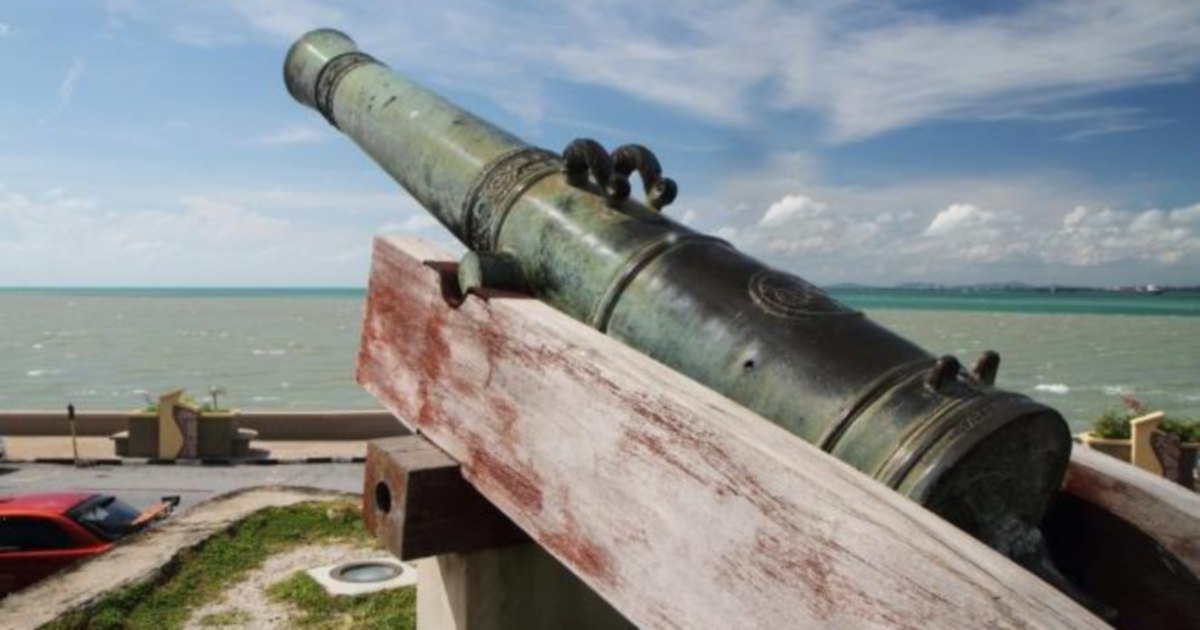
Prime Minister Datuk Seri Anwar Ibrahim has moved to clarify the government's intentions behind the restoration of Fort Cornwallis in George Town, stating unequivocally that the initiative centres on historical understanding rather than any romanticization of colonial rule. His remarks came during the official reopening ceremony of the 18th-century fortress, a structure that has long occupied an ambiguous place in Malaysia's national narrative as both a significant heritage landmark and a symbol of foreign domination.
The restoration project has attracted scrutiny from observers concerned that investing in colonial-era sites risks inadvertently celebrating foreign occupation of Peninsular Malaysia. This sensitivity reflects broader regional conversations about how Southeast Asian nations remember and interpret their colonial pasts. Anwar's intervention suggests the government recognizes these concerns and wishes to position the undertaking squarely within a framework of historical education and national self-awareness rather than nostalgia for British rule.
Fort Cornwallis itself carries substantial historical weight. Constructed in the late 1700s following the establishment of the East India Company's settlement on Penang Island, the fortress served as the administrative and defensive hub of early colonial Penang. Its architectural design reflects British military engineering of the period, featuring thick walls, gun emplacements, and barracks arranged to project imperial authority. For nearly two centuries, the fort symbolized Britain's entrenchment in the Malay Archipelago and the beginning of a colonial presence that would shape the region's political and economic trajectory for generations.
The Prime Minister's framing of the restoration as an educational endeavour opens pathways for engaging with difficult historical questions that Malaysia's education system has not always prioritized. Understanding how the British established their foothold, the mechanisms through which they consolidated power, and the resistance they encountered enriches national consciousness. Rather than presenting colonialism as an inevitable historical episode to be glossed over, this approach invites Malaysians to examine how their ancestors navigated subjugation, adapted, and eventually reclaimed sovereignty.
Penang's particular context makes this distinction especially relevant. As the first British settlement in Peninsular Malaysia, George Town developed as a cosmopolitan trading hub where different communities—Malays, Chinese, Indians, and Arabs—converged under colonial administration. The fort thus represents not merely military occupation but the broader transformation of Penang's demographics, commerce, and social structures. For younger Malaysians, particularly those who rarely encounter detailed colonial history outside formal education, the restored site could serve as a tangible gateway to understanding how their ancestors lived under foreign rule.
The government's investment in heritage preservation also reflects a pragmatic recognition of Fort Cornwallis's value as a cultural tourism asset. Penang, already established as a premier heritage tourism destination, attracts visitors worldwide seeking to understand Southeast Asian history. A properly maintained and intelligently contextualized fort can educate both domestic and international audiences while generating economic activity for local communities. This balancing act—preserving heritage while avoiding celebratory framings of colonialism—requires careful curation through interpretation panels, guided tours, and educational programming that emphasizes Malaysian agency and resistance.
Anwar's comments implicitly acknowledge that historical sites can be misread or instrumentalized for nationalist purposes if interpretive frameworks remain unclear. By explicitly stating the restoration's educational purpose, the Prime Minister attempts to foreclose readings that might present British colonial administration in a positive light. This preventive messaging suggests awareness of how heritage projects elsewhere in Asia have occasionally backfired when they appeared to sanitize colonial narratives or elevate colonial administrators as enlightened figures.
The broader implications for Malaysia's historical consciousness are significant. As the nation matures as a democracy, it develops greater capacity to examine its past with nuance rather than through binary frameworks of victimization or triumphalism. Fort Cornwallis can be simultaneously acknowledged as a symbol of foreign domination and appreciated as an architectural artifact that tells stories about how Malaysians experienced, resisted, and eventually transcended colonialism. This intellectual sophistication reflects a country confident enough in its independence to confront rather than suppress inconvenient historical realities.
For Southeast Asia more broadly, Malaysia's approach to this restoration may set a template for other nations grappling with colonial-era structures and sites. The region contains numerous forts, administrative buildings, and monuments erected under European rule. How nations choose to preserve, interpret, or repurpose these structures influences how citizens understand themselves and their place in global history. Malaysia's attempt to position heritage restoration within an explicitly anti-colonial educational framework offers a model that prioritizes agency and learning over nostalgia.
Moving forward, the success of Fort Cornwallis as an educational institution will depend heavily on execution. Museum exhibits, educational materials, and interpretive programming must substantively engage with colonialism's impacts rather than offering surface-level historical narrative. Involving historians, educators, and community representatives in shaping how the fort is presented to visitors becomes essential. Without such intentional curation, even well-meaning restoration projects risk becoming hollow celebrations of architectural heritage divorced from meaningful historical context.
Anwar's defence of the restoration project reflects the government's commitment to historical preservation balanced against anti-colonial principles. This positioning allows Malaysia to maintain its heritage while explicitly rejecting any suggestion that colonialism deserves celebration. For a nation that fought for and achieved independence less than a century ago, maintaining this interpretive clarity remains crucial to national memory and identity.

