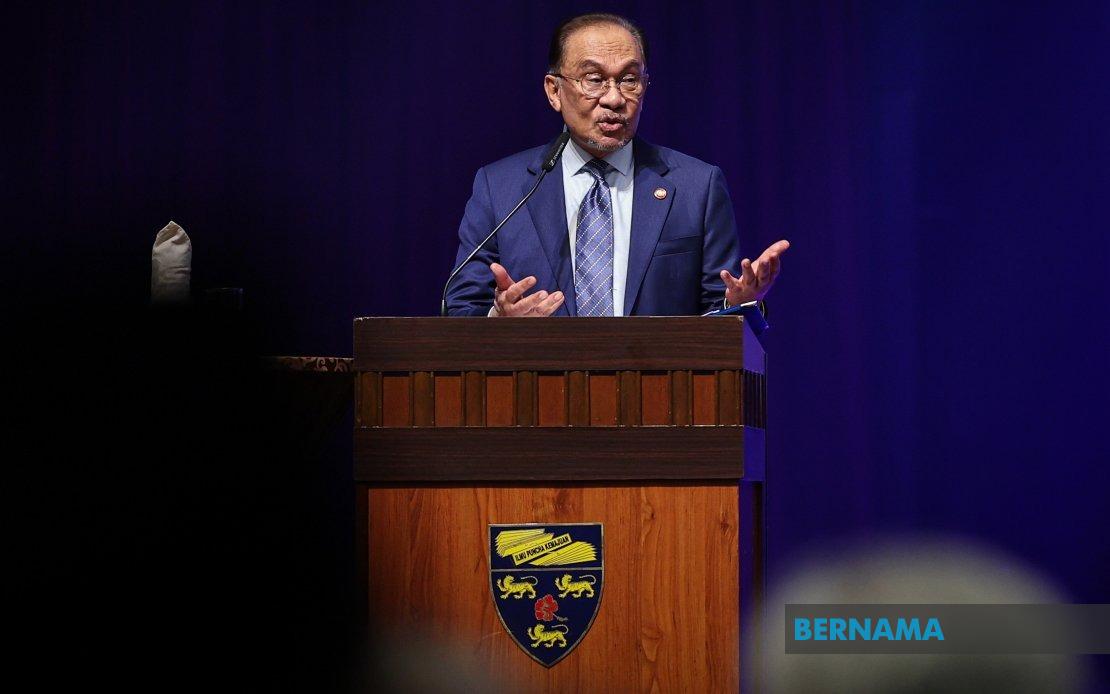
Prime Minister Datuk Seri Anwar Ibrahim has extended financial assistance to a gravedigger in Kuala Terengganu who is grappling with mouth cancer, underscoring the government's commitment to reaching marginalised individuals in need of medical support. The gesture highlights how the leadership is proactively identifying cases of hardship within local communities and responding with tangible relief measures.
Rosli Abdullah, 52, received a cash donation of RM2,000 presented on behalf of the Prime Minister through the Implementation Coordination Unit (ICU) of the Prime Minister's Department. The handover took place at the Flat Batas Baru surau, with Azhar Abd Hamid, deputy director of the Terengganu Federal Development Department (PPPN) under the ICU, delivering the contribution. The timing of this intervention is critical, as Rosli is facing imminent surgical procedures that require substantial financial outlay.
Azhar explained that the contribution was specifically designed to ease Rosli's financial burden and help cover the mounting medical expenses associated with his treatment. Beyond the immediate cash assistance, officials identified a significant gap in Rosli's access to government support systems. He was not yet registered as an e-Kasih recipient—Malaysia's electronic cash transfer scheme targeting low-income households—despite meeting the eligibility criteria. Recognising this oversight, authorities committed to registering him immediately to ensure he receives ongoing government assistance beyond the initial donation.
Rosli's medical situation has deteriorated sharply in recent months, painting a sobering picture of how serious illness can rapidly erode quality of life for vulnerable workers. The surau's deputy chairman, Mohd Radzali Mohamad, noted that Rosli has been rendered unable to speak for the past month due to severe swelling in his mouth and right cheek. This physical deterioration extends beyond speech impediment—he has been unable to consume solid food for two weeks, surviving solely on fluids administered through a feeding tube. For someone whose livelihood depends on manual labour, this condition represents both a health crisis and an economic catastrophe.
Rosli's residence at the Flat Batas Baru surau for over three decades speaks to his rootedness within this community, yet his social circumstances reveal pronounced vulnerability. He is unmarried and lives alone, lacking the family safety net that might buffer financial shocks during illness. Before his health collapsed, he supplemented his gravedigger income by cleaning the surau, but his advancing condition has made even these occasional tasks impossible. The surau management now bears responsibility for ensuring he has shelter and subsistence, a burden that extends the mosque's charitable obligations beyond typical religious duties.
The medical pathway ahead is complex and costly. Rosli underwent surgery twice previously, but his illness recurred, necessitating further intervention. The Sultanah Nur Zahirah Hospital has referred his case to the Universiti Sains Malaysia Hospital in Kubang Kerian, Kelantan—a more specialised facility—indicating that his condition requires advanced oncological intervention. These transfers between institutions suggest complexity in his treatment that will demand sustained medical engagement and associated expenses.
The surau management has independently launched a fundraising campaign to cover Rosli's medical and surgical expenses, demonstrating community solidarity. However, Mohd Radzali candidly acknowledged that donations collected thus far remain insufficient to meet the projected costs. This funding gap illustrates why government intervention, though welcome, must be sustained and substantial. A single RM2,000 grant, while meaningful, addresses only a fraction of the financial requirement for comprehensive cancer treatment in Malaysia's healthcare system.
Rosli's case represents a broader challenge facing Malaysia's social safety net—identifying and assisting individuals who, despite working, remain economically precarious and vulnerable to catastrophic health expenses. His status as a gravedigger, performing essential but low-wage labour, typifies workers whose incomes rarely accumulate sufficient savings to absorb major medical events. The fact that he was not automatically enrolled in e-Kasih despite meeting criteria suggests that outreach mechanisms may still miss deserving cases, particularly among elderly workers in informal employment.
The government's decision to prioritise Rosli's e-Kasih registration carries implications beyond his individual circumstances. It demonstrates institutional recognition that emergency grants must be complemented by integration into permanent support schemes. e-Kasih provides monthly cash transfers calibrated to household circumstances, offering predictability and dignity compared to one-off charitable donations. For someone facing prolonged treatment requiring multiple hospital visits and potential loss of work capacity, such systematic support provides a foundation upon which to build recovery.
Rosli's plight also reflects the uneven geography of Malaysian development and healthcare access. As a resident of Terengganu reliant on referrals to facilities in neighbouring Kelantan, he faces not only medical challenges but logistical burdens in accessing specialist care. Travel costs, accommodation during treatment, and foregone income during hospital stays compound the direct medical expenses. Government assistance programmes must account for these ancillary costs if they are to genuinely alleviate hardship.
The role of community institutions like the surau in identifying vulnerable individuals deserves recognition. Mosques and religious gatherings often serve as the primary contact point for discovering cases of hardship that might otherwise remain invisible to state apparatus. Formalising mechanisms for suraus, temples, and community centres to flag cases requiring government assistance could enhance the responsiveness of social protection systems.
Moving forward, Rosli's case underscores the importance of both immediate humanitarian response and systemic reform. The Prime Minister's personal attention and the resulting assistance provide critical relief during a medical emergency. Simultaneously, ensuring that individuals in Rosli's circumstances are automatically detected and enrolled in available support schemes would prevent such crises from emerging unnoticed. For Malaysia's evolving social safety net to function equitably, it must reach not only those who proactively seek help but those whose circumstances make advocacy difficult.

