%22%2F%3E%3C%2Fpattern%3E%3C%2Fdefs%3E%3Crect%20width%3D%22100%25%22%20height%3D%22100%25%22%20fill%3D%22url(%23ph1tabgg)%22%2F%3E%3Crect%20width%3D%22100%25%22%20height%3D%22100%25%22%20fill%3D%22url(%23ph1tabgp)%22%2F%3E%3Ctext%20x%3D%2250%25%22%20y%3D%2250%25%22%20text-anchor%3D%22middle%22%20dominant-baseline%3D%22central%22%20fill%3D%22rgba(255%2C255%2C255%2C0.95)%22%20font-family%3D%22Georgia%2C%20'Times%20New%20Roman'%2C%20serif%22%20font-weight%3D%22700%22%20font-size%3D%22320%22%20letter-spacing%3D%22-0.02em%22%3EPM%3C%2Ftext%3E%3C%2Fsvg%3E)
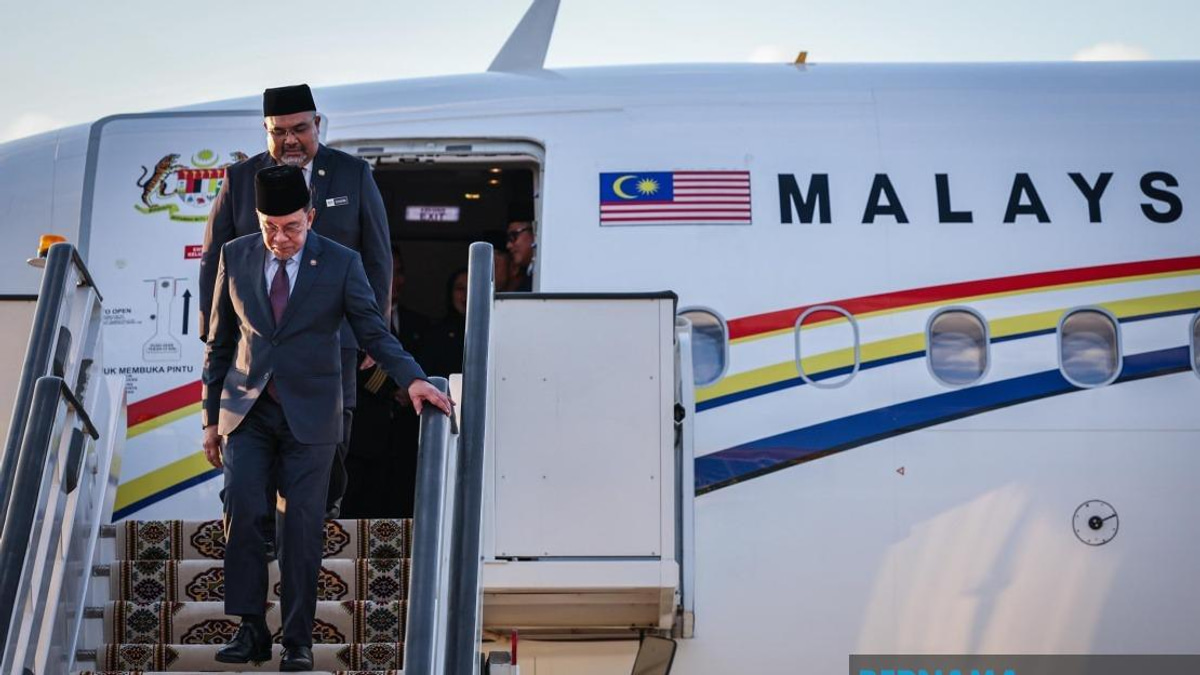
Prime Minister Datuk Seri Anwar Ibrahim has arrived in Kazan for a two-day working visit aimed at strengthening bilateral relations between the Association of Southeast Asian Nations and Russia during a period of significant geopolitical realignment. The visit underscores Malaysia's commitment to maintaining constructive engagement with major powers while prioritising regional stability and economic partnership.
The timing of Anwar's visit to the Russian city carries particular weight given the current international climate. Russia continues to face isolation from Western nations due to ongoing geopolitical tensions, yet maintains strategic importance to Asian nations seeking to preserve balanced diplomatic relationships. Malaysia's decision to engage directly with Moscow through a high-level visit signals the country's pragmatic foreign policy approach, wherein economic and security interests transcend ideological divides.
During his stay in Kazan, Anwar is expected to participate in discussions addressing the full spectrum of ASEAN-Russia cooperation. These conversations will likely encompass trade and investment frameworks, defence and security collaboration, cultural exchanges, and educational partnerships. The agenda reflects both organisations' recognition that bilateral engagement serves mutual interests across multiple sectors, rather than being confined to traditional security concerns.
The visit gains significance within Malaysia's broader positioning in Southeast Asia. As chair or participant in various ASEAN mechanisms, Malaysia frequently serves as a bridge between regional and global powers. By visiting Russia and engaging substantively with Moscow's leadership, Anwar reinforces ASEAN's status as a non-aligned bloc capable of maintaining relationships across competing spheres of influence. This stance proves increasingly valuable as smaller nations navigate a world where alignment pressure grows from multiple directions.
Russia's strategic interest in deepening ties with ASEAN reflects its recognition that the Southeast Asian region remains economically dynamic and geopolitically significant. With China strengthening its regional presence through investment and military modernisation, Russia seeks to maintain relevance through diplomatic engagement and selective partnerships. For ASEAN members including Malaysia, such Russian overtures present opportunities to enhance energy security, defence partnerships, and technology cooperation without compromising existing commitments to Western allies.
Economic dimensions feature prominently in contemporary ASEAN-Russia relations. Despite Western sanctions, Russia continues to export energy commodities, a sector of critical importance to Malaysia and other regional economies grappling with high fuel costs and supply chain vulnerabilities. Enhanced trade arrangements and investment agreements could provide Malaysian businesses with alternative markets and supply chains, reducing dependence on traditional Western partners and creating competitive advantages through diversified economic networks.
The regional peace agenda outlined for the visit addresses concerns relevant to Malaysian interests. The South China Sea remains a flashpoint where Russia, whilst geographically distant, maintains naval interests and diplomatic stakes. ASEAN nations appreciate Russian support for principles of freedom of navigation and peaceful dispute resolution, even as Moscow pursues its own strategic objectives in the region. Discussions on these matters allow Malaysia to advocate for international legal frameworks whilst acknowledging Russia's legitimate security concerns.
Anwar's participation in this dialogue also reflects Malaysia's sophisticated understanding of multipolarity. Rather than viewing international relations as a binary choice between competing blocs, Malaysian leadership recognises the necessity of engagement across ideological and strategic boundaries. This approach has historically served Malaysia well, allowing the nation to attract foreign investment, secure defence partnerships, and maintain diplomatic influence despite its relatively modest military and economic capacities compared to major powers.
The defence and security dimensions of ASEAN-Russia cooperation have expanded considerably in recent years. Military-to-military contacts, joint exercises, and technology transfers represent areas where both sides find mutual benefit. For Malaysia, such relationships provide opportunities to diversify defence capabilities and reduce reliance on single-source suppliers. Russia's willingness to engage Southeast Asian militaries on favourable terms appeals to nations seeking cost-effective upgrades to their defence infrastructure.
Cultural and educational exchanges programme the softer aspects of state-to-state relations. Universities, research institutions, and cultural organisations benefit from strengthened connections that facilitate scholarly exchanges and people-to-people contacts. These initiatives generate long-term dividends by creating networks of professionals and academics with personal experience of bilateral relationships, fostering understanding that transcends official diplomatic channels.
The visit proceeds at a moment when ASEAN itself confronts questions about its unity and effectiveness in addressing regional challenges. Russia's engagement with the bloc, conducted through dialogue with individual members like Malaysia, reinforces ASEAN's centrality to Asian geopolitics. External powers continue to seek ASEAN's cooperation and input on regional matters, validating the organisation's relevance despite internal divisions on contentious issues.
Anwar's presence in Kazan also sends domestic political signals within Malaysia. By demonstrating active engagement in international affairs and securing high-level meetings with Russian officials, the Prime Minister projects competence and diplomatic acumen to domestic audiences. Such visits generate favourable media coverage and reinforce perceptions of Malaysia as a country with significant international standing.
Looking forward, the outcomes of this visit will likely shape Malaysia's approach to ASEAN-Russia cooperation in subsequent quarters. Agreements or understandings reached in Kazan will establish frameworks for sustained engagement, creating momentum for expanded relations across sectors. For Malaysian stakeholders ranging from businesses to defence officials to academics, strengthened ASEAN-Russia ties present concrete opportunities for advancement and partnership within an increasingly multipolar international environment.