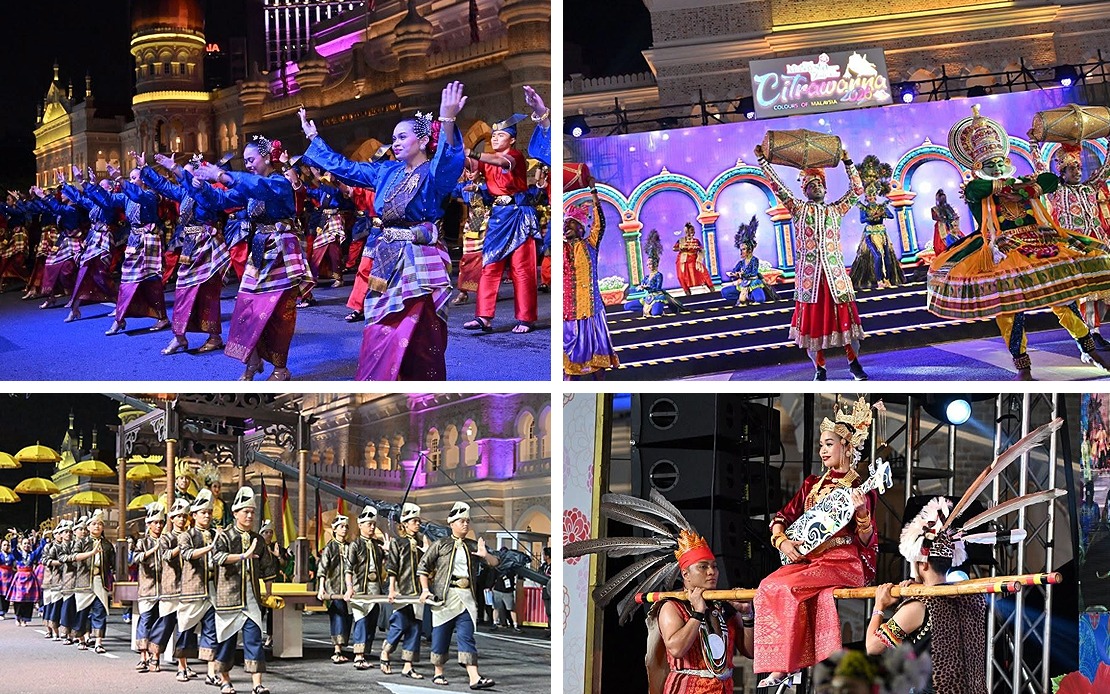
Prime Minister Datuk Seri Anwar Ibrahim presided over the opening of Citrawarna 2026 at Dataran Merdeka on July 25, officially launching what has become a centrepiece attraction within Malaysia's broader Visit Malaysia 2026 campaign. The sprawling cultural festival represents the government's strategic push to position the nation as a premier destination for heritage tourism, with the event drawing participation from government officials, cultural institutions and tourism bodies across multiple tiers of administration.
The ceremony brought together Tourism, Arts and Culture Minister Datuk Seri Tiong King Sing, Deputy Minister Chiew Choon Man, Chief Secretary to the Government Tan Sri Shamsul Azri Abu Bakar and Tourism Malaysia director-general Mohd Amirul Rizal Abdul Rahim, underscoring the significance accorded to the initiative by Malaysia's policy-making establishment. The breadth of institutional backing reflects a coordinated national effort spanning DBKL, Warelig Kuala Lumpur, the National Department for Culture and Arts, Istana Budaya and the National Textile Museum, each contributing expertise and resources to ensure the event's success.
Citrawarna 2026 operates as a multifaceted platform designed to amplify Malaysia's cultural identity on both domestic and international stages. The event's core purpose extends beyond mere entertainment; it functions as a tool for economic diversification within the tourism sector, particularly in showcasing non-beach, non-business tourism offerings that appeal to culturally-conscious travellers seeking authentic experiences. By curating experiences around Malaysia's diverse artistic traditions, the event positions heritage tourism as a viable revenue stream capable of distributing visitor spending across the calendar year.
The centrepiece Colours of Parade mobilised an impressive contingent of 3,500 dancers representing all 13 Malaysian states, the three Federal Territories, and the nation's multicultural communities. This choreographed spectacle served simultaneously as cultural celebration and diplomatic statement, with the participation of representatives from every administrative region signalling national cohesion and shared investment in Malaysia's international image. The parade transcended conventional festival programming by deliberately foregrounding Malaysia's multicultural character, presenting diversity not as a challenge to be managed but as a distinctive asset in global tourism markets.
Beyond the parade's visual spectacle, Citrawarna 2026 integrated complementary cultural programming that extended visitor engagement across multiple sensory experiences. Traditional fashion displays, musical performances, and dance presentations provided layered encounters with Malaysia's heritage, whilst cultural contingents offered interpretive presentations contextualising the stories, traditions and identities embedded within the nation's communities. This curatorial approach recognised that contemporary cultural tourism consumers increasingly demand narrative depth and educational substance alongside entertainment value.
International attendance figures offer compelling evidence of the event's global resonance. Tourism Malaysia reported that Citrawarna 2026 attracted more than 700 international visitors through specially developed tourism packages, with participants drawn from a geographically diverse roster including China, India, Mauritius, Japan, Vietnam, Indonesia, Singapore, Kazakhstan, Italy, the Netherlands, Switzerland and France. The breadth of source countries—spanning Asia-Pacific, Europe, Africa and the Middle East—demonstrates that Malaysia's cultural messaging resonates across distinct global markets and tourism segments.
For Southeast Asian observers, the international turnout carries particular significance. The event's appeal to visitors from Vietnam, Indonesia and Singapore indicates that cultural tourism interest in Malaysia extends across the region itself, potentially establishing new benchmarks for intra-ASEAN tourism development and positioning Malaysia as a regional hub for heritage experiences. The participation of travellers from established tourism markets like Switzerland and the Netherlands simultaneously signals competitive positioning within global tourism hierarchies dominated by traditional European and North American destinations.
Operating across three days, Citrawarna 2026 organised its programming around four thematic pillars: the Colours of Parade, Colours of Flavour, Colours of Culture and Colours of Arts. This structural framework ensured comprehensive engagement across cultural expression modes, recognising that heritage tourism requires multi-sensory engagement and varied duration commitments from visitors with differing interests and schedules. The stratification acknowledged modern festival design principles that prioritise visitor agency and customisable experiences.
The supporting infrastructure reflected sophisticated event management. Over 70 food and beverage vendors, 20 cultural activity booths and 10 arts and crafts stalls distributed throughout the venue created a self-contained cultural marketplace. These constituent elements—alongside live performances, heritage demonstrations, traditional games and hands-on workshops—constructed an immersive environment where visitors transitioned from passive spectators to active cultural participants. The experiential emphasis represented evolution beyond conventional parade-based festivals toward engagement models recognised as more effective in generating sustained visitor satisfaction and repeat visitation.
From a national tourism strategy perspective, Citrawarna 2026 exemplifies the government's pivot toward diversified visitor attractions extending beyond conventional sun-sea-sand offerings. By foregrounding cultural heritage as a primary tourism commodity, Malaysia addresses global market trends favouring experiential, educational and culturally-meaningful travel. For Southeast Asian governments monitoring Malaysia's tourism positioning, the event demonstrates how strategic cultural investment can yield measurable returns in visitor arrivals and international profile elevation.
The Visit Malaysia 2026 campaign within which Citrawarna 2026 operates represents a multi-year commitment to elevating the nation's competitive position within global tourism markets. Cultural events function as force multipliers within such campaigns, generating media coverage, social media engagement and word-of-mouth marketing that extends far beyond direct attendance figures. The diplomatic dimension—demonstrated through Prime Minister-level attendance—signals that cultural tourism constitutes not merely a revenue-generating sector but a strategic national priority meriting top-level political engagement and resource allocation.

