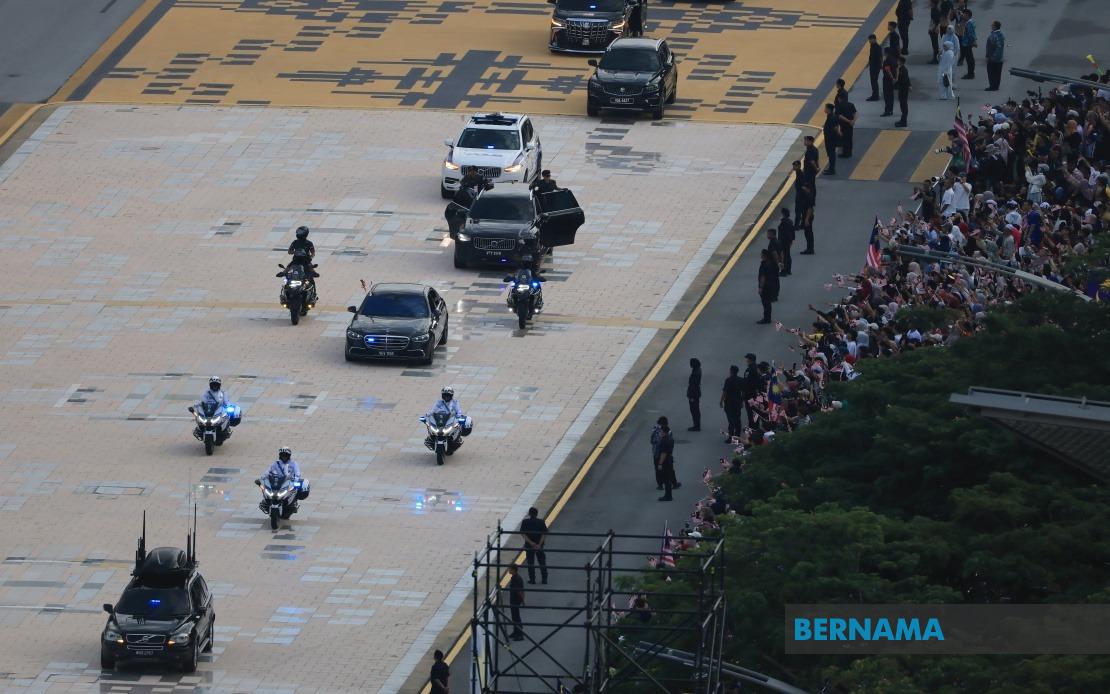
Prime Minister Datuk Seri Anwar Ibrahim and his Cabinet colleagues marked Malaysia's 69th National Day with a large-scale ceremony at Dataran Putrajaya on August 31, underscoring the government's commitment to national unity and commemorative traditions. The Premier, who also holds the Finance portfolio, arrived at the royal pavilion at 7.53 am as the Hormat Perdana anthem resonated through the ceremonial grounds, accompanied by his wife Datuk Seri Dr Wan Azizah Wan Ismail. The occasion brought together a cross-section of the nation's political leadership and thousands of citizens united in patriotic observance.
Deputy Prime Minister Datuk Seri Dr Ahmad Zahid Hamidi had arrived at the venue earlier at 7.45 am, setting the stage for what would become one of the calendar year's most significant national events. The presence of senior government figures reflected the symbolic importance placed on the annual commemoration, which traces Malaysia's path to independence and nationhood. The gathering represented a moment of collective reflection on the nation's journey and progress across nearly seven decades since independence.
A notable array of Cabinet ministers participated in the proceedings, including Communications Minister Datuk Seri Fahmi Fadzil, who simultaneously oversees the main organising committee for the 2026 National Day and Malaysia Day celebrations. Home Minister Datuk Seri Saifuddin Nasution Ismail and Defence Minister Datuk Seri Mohamed Khaled Nordin were among other key portfolios represented at the ceremony. The broad ministerial attendance demonstrated how National Day celebrations serve as a platform for demonstrating governmental cohesion and collective national purpose across various policy domains.
The ceremonial occasion extended beyond the capital's political elite. Deputy ministers, state dignitaries, and representatives of foreign nations attending Malaysia were present, transforming the event into a multifaceted representation of the country's diplomatic relationships and internal governance structures. This inclusive approach to the celebrations reflected evolving practices in how nations commemorate their founding narratives while simultaneously projecting unity to both domestic audiences and the international community.
The 69th National Day celebration operated under the overarching theme of "Malaysia MADANI: Kesejahteraan Dinikmati," which emphasises the government's socioeconomic development agenda and the distribution of prosperity among citizens. This thematic framing connects the historical commemoration with contemporary policy priorities, demonstrating how annual national celebrations increasingly serve as occasions for articulating governmental vision and development philosophy. The chosen theme reflects deliberate messaging about inclusive growth and shared wellbeing across the nation's diverse population.
The scale of the celebration underscored Malaysia's capacity for coordinating substantial public events. Organisers assembled 10,819 participants drawn from 76 distinct contingents, creating a composite portrayal of national diversity and institutional representation. The procession included 22 marching bands, adding ceremonial grandeur and cultural dimension to the proceedings. This logistical coordination across multiple organisational units and social groups requires weeks of preparation and represents the culmination of substantial planning efforts by event authorities.
The parade component featured impressive displays of national capability and modernity. Eleven decorated vehicles circulated through the venue, while 328 land, sea and air assets participated, ranging from military hardware to civilian transport infrastructure. These visible demonstrations of national resources and defence capabilities serve multiple purposes simultaneously: they provide citizens with tangible evidence of state capacity, offer entertainment value, and project national strength to both domestic observers and international audiences monitoring Malaysia's development.
Integration of contemporary environmental and technological consciousness was evident in the inclusion of 112 working animals and 22 electric vehicle assets within the parade composition. The deliberate inclusion of EV assets reflected Malaysia's evolving positioning within regional sustainability conversations and the government's commitment to transitioning toward cleaner energy frameworks. This subtle integration of modern environmental consciousness into traditional national celebration formats demonstrates how ceremonial events adapt to contemporary policy imperatives and societal values.
National Day celebrations in Malaysia carry particular significance within the regional context, where they function as annual reaffirmations of national identity and constitutional order. For Malaysian citizens and the broader Southeast Asian audience, such ceremonies represent moments when governmental priorities become tangible and visible. The attendance of international delegates simultaneously signals Malaysia's integration into global diplomatic networks and its desire to present a unified national image to external observers.
The concentration of political leadership at the Putrajaya venue reflected the strategic importance placed on demonstrating governmental unity and institutional stability. In Malaysia's coalition-based political environment, such public appearances by Cabinet colleagues from different political parties carry added significance, as they visually communicate inter-party cooperation and shared commitment to national symbols and institutions. These appearances matter particularly in a federation where managing relationships between constituent states and federal authority remains an ongoing negotiation.
The choice of Dataran Putrajaya as the celebration venue itself merits consideration, as the purpose-built administrative capital symbolises Malaysia's modernist aspirations and contemporary governance infrastructure. Conducting the nation's primary celebration at this location rather than at traditional venues in Kuala Lumpur or other states carries implications for how the nation's identity is geographically conceived and institutionally centred. It positions the federal administrative apparatus as central to national identity narratives.
Looking forward, the prominence accorded to Communications Minister Fahmi Fadzil's role as chairman of preparations for the 2026 celebrations suggests that future commemorations may expand in scale and sophistication. The advance planning underway indicates that Malaysia's National Day celebrations will continue evolving as major state occasions combining ceremonial tradition with contemporary messaging about national development and regional positioning. These annual observances will remain crucial occasions through which Malaysia articulates its self-conception and communicates its priorities to citizens and the world.

