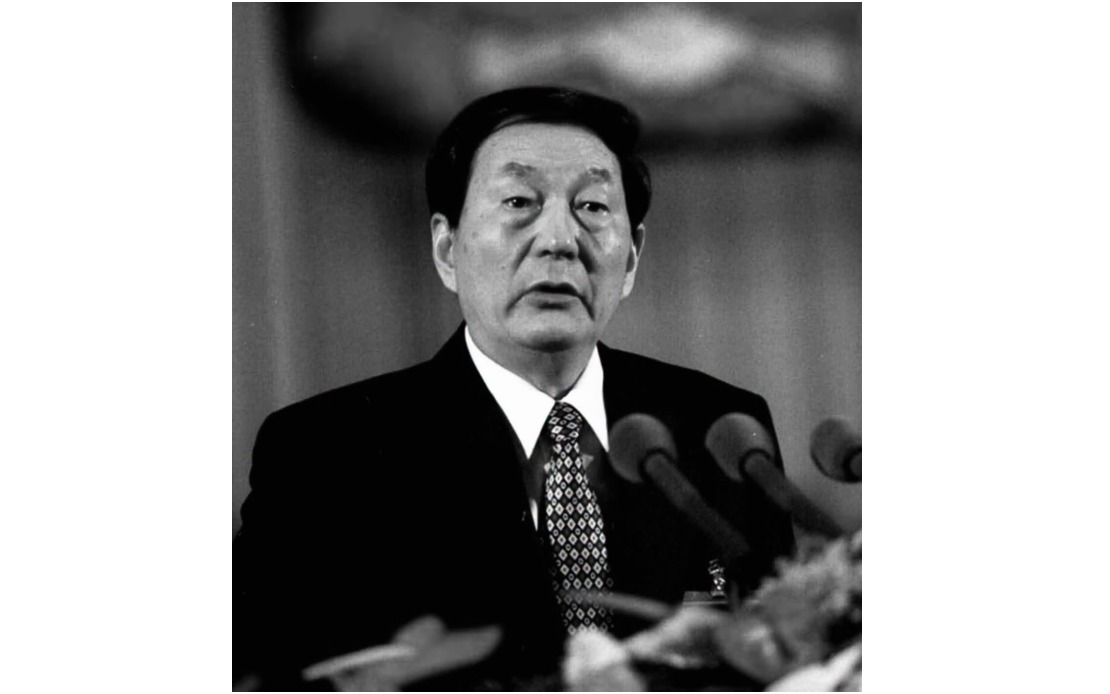
Prime Minister Datuk Seri Anwar Ibrahim has paid tribute to Zhu Rongji, the former Premier of the People's Republic of China who died at 97, characterising him as one of the pivotal figures behind Beijing's emergence as a global economic force. In a statement released on August 12, Anwar extended his condolences to Zhu's family while reflecting on the statesman's outsized influence on modern China's trajectory and their shared history of bilateral cooperation.
Zhu's tenure as Premier, spanning 1998 to 2003, proved transformative for China's economy. His signature achievement involved orchestrating sweeping market-oriented reforms that fundamentally restructured the nation's state-owned enterprise sector, a move that positioned China for its subsequent decades of rapid growth. Beyond domestic restructuring, Zhu navigated China's controversial entry into the World Trade Organisation, a milestone that opened global markets to Chinese goods and services while integrating the country into international commerce frameworks. These decisions, though contentious at the time, established institutional foundations that continue to shape China's economic model.
Anwar's recollection of their partnership underscores the depth of Malaysia-China engagement during the 1990s, a formative period when regional powers were recalibrating their economic relationships following the Cold War's conclusion. During this era, Anwar and Zhu collaborated specifically to strengthen financial and commercial linkages between the two nations. The architectural elements of their cooperative framework have demonstrated remarkable durability, persisting as the bedrock upon which contemporary Malaysia-China bilateral relations rest. This suggests that the institutional trust and economic mechanisms established three decades ago continue to facilitate current trade, investment, and diplomatic engagement.
Beyond policy initiatives, Anwar emphasised his personal connection to Zhu, recounting moments of cultural exchange that illustrated the former Premier's multifaceted intellect and refined sensibility. These included excursions to Qufu, the ancestral home of Confucius, visits to the sacred Tai Shan mountain, and pilgrimages to sites commemorating Admiral Zheng He, the legendary Ming Dynasty navigator whose voyages established early Chinese maritime dominance in Southeast Asia. Notably, Anwar recalled Zhu presenting him with carefully curated Chinese classical texts from his personal library, a gesture that revealed Zhu's intellectual breadth and his deliberate cultivation of cultural understanding across diplomatic boundaries.
Anwar's characterisation of Zhu as a "formidable statesman" and "man of great character" driven by patriotic devotion offers insight into how he perceives exemplary leadership. The Prime Minister's emphasis on duty to nation resonates with traditional East Asian concepts of governance wherein officials view themselves as custodians of national interest rather than partisan agents. For Malaysian audiences, this framing suggests how Anwar interprets the responsibilities of high office—placing institutional and national imperatives above personal or factional considerations.
The timing of Zhu's death carries broader geopolitical significance for Southeast Asia. As China undergoes its own contemporary leadership transitions and grapples with economic slowdown, Zhu's legacy as an architect of market liberalisation and institutional reform acquires renewed relevance. Regional economies including Malaysia, which depend substantially on Chinese investment, trade partnerships, and regional stability, have direct interests in how Beijing's current leadership engages with the institutional legacy Zhu helped establish.
Anwar's public mourning also reflects Malaysia's strategic positioning within Chinese diplomatic architecture. By offering prominent condolences and invoking personal memories, the Prime Minister reinforces Malaysia's claims to being a particularly valued partner in China's Southeast Asian relationships. This diplomatic signalling matters in the context of regional competition among ASEAN members for Chinese favour and investment capital. Malaysia's historical depth of engagement with Beijing, anchored in figures like Zhu, provides comparative advantage in negotiations around Belt and Road Initiative projects, technology partnerships, and financial cooperation.
The reference to Zheng He's legacy holds particular resonance in a Malaysian context, given the Admiral's historical connections to the Malay Peninsula and the Straits of Malacca. That Anwar and Zhu visited sites commemorating this legacy suggests a shared understanding that Southeast Asian geography and commercial importance have long been central to Chinese strategic thinking. This historical consciousness, when invoked by Malaysian leaders in mourning Chinese figures, implicitly reinforces the narrative of enduring regional interdependence.
Zhu's economic reforms, particularly his restructuring of state-owned enterprises, established templates that subsequent Chinese leaders have refined and adapted. Current debates about Chinese economic policy—concerning property markets, private sector regulation, and state intervention—reflect ongoing tensions between the market-oriented trajectory Zhu championed and alternative approaches favoured by different political constituencies in Beijing. For Malaysian policymakers and investors tracking Chinese economic direction, understanding Zhu's intellectual contributions provides context for anticipating possible policy shifts.
Anwar's tribute arrives during a period when Malaysia-China relations warrant careful management. The two nations maintain extensive economic interdependencies, yet tensions occasionally surface regarding infrastructure projects, debt sustainability, and labour practices. By honouring Zhu's role in establishing the institutional framework for bilateral engagement, Anwar implicitly appeals to the durability and mutual benefit of Malaysia-China cooperation. This narrative framing may serve to insulate current bilateral relations from short-term controversies by anchoring them in decades of productive partnership.
The public expression of personal grief from a serving Prime Minister for a deceased foreign leader, while customary in diplomatic protocol, carries weight beyond formality. Anwar's specific recollections—the library visit, the classical texts, the cultural pilgrimages—humanise what could have been perfunctory condolences. This approach reflects how contemporary diplomacy often operates through cultivation of personal relationships alongside institutional channels, a practice particularly pronounced in Asian political cultures.
Zhu Rongji's passing marks the departure of a generation of Chinese leaders who navigated the country's transition from centrally planned economy toward market mechanisms. For Malaysia and other Southeast Asian economies whose fortunes became increasingly entwined with Chinese growth, Zhu's reforms represented the structural changes that enabled decades of Chinese investment and market expansion into the region. His intellectual legacy, centred on pragmatic market reforms and international economic integration, will likely continue shaping policy discussions long after his death.

