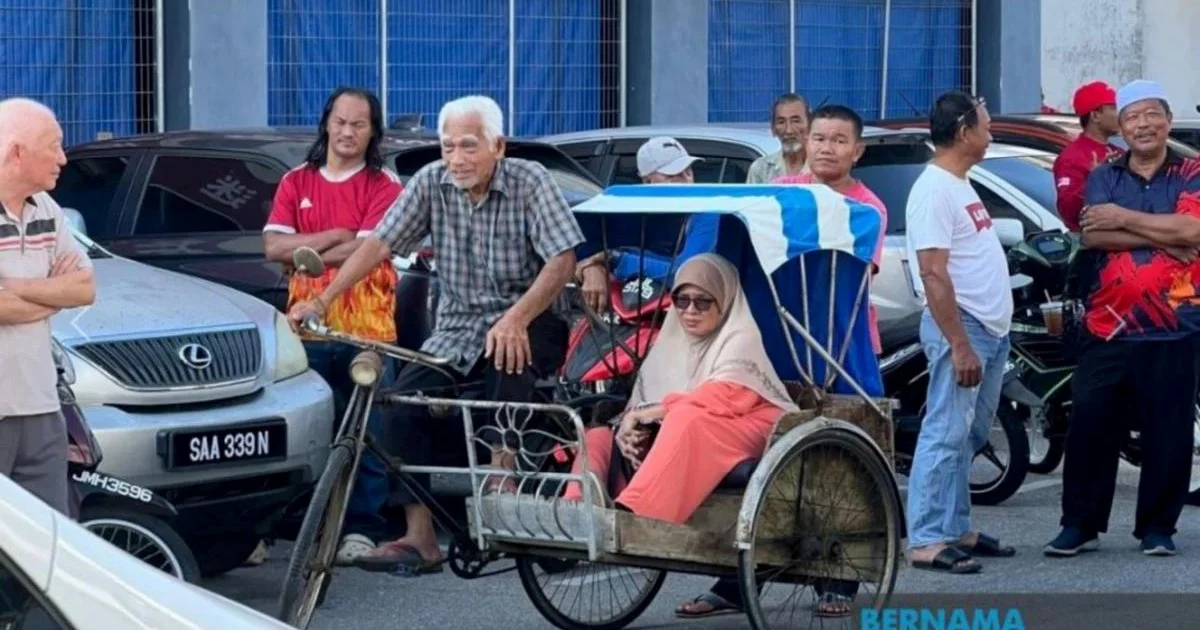
Prime Minister Datuk Seri Anwar Ibrahim has publicly acknowledged the remarkable determination of an 86-year-old trishaw operator from Kuala Lumpur, who pedalled his vehicle nearly a kilometre to fulfil a deeply personal wish—his wife's desire to see the nation's leader in person. The gesture, which combined physical endurance with genuine devotion, moved the Prime Minister enough to express his formal appreciation for the elderly man's efforts.
The incident underscores a touching dimension of Malaysian civic life, where ordinary citizens maintain profound connections to the country's political leadership. For this octogenarian, the act of steering his trishaw through Kuala Lumpur's streets was not merely about transport; it represented a labour of love dedicated to his spouse. The couple's determination to bridge the distance—both literally and symbolically—between their daily lives and the nation's highest office reflects the aspirations that many Malaysians harbour for meaningful encounters with their elected representatives.
Trishaw riders, a fixture of Malaysia's urban heritage, have historically served as connectors within their communities. These traditional three-wheeled vehicles represent not just a mode of transportation but a living symbol of Malaysia's cultural continuity. That an 86-year-old chose this humble method to undertake his mission speaks to a generation that has witnessed Malaysia's transformation from independence through decades of change. His refusal to abandon this iconic vehicle, even for such an important personal mission, carries its own quiet statement about tradition and identity.
At an age when most would reasonably limit their physical exertions, this pensioner demonstrated a vitality and purpose that challenges contemporary assumptions about ageing. The near-kilometre journey, while modest in distance, represented a significant undertaking for someone in his ninth decade. The fact that he undertook this expedition specifically to grant his wife's wish demonstrates the emotional bonds that sustain long marriages and the ways in which shared dreams continue to motivate couples even in their later years.
Prime Minister Anwar's public acknowledgment of this gesture carries broader significance within Malaysia's political culture. The response signals an openness to recognising the human stories that intersect with governance and leadership. In an era when political communication often occurs through formal channels and digital platforms, this encounter represents a more organic connection—one forged through physical presence and personal determination rather than through carefully orchestrated media events.
The narrative also illustrates the enduring relevance of grassroots-level political engagement in Malaysia. While modern discourse frequently emphasises online activism and social media mobilisation, this elderly couple's choice to pursue direct, in-person contact with the Prime Minister reveals that traditional forms of political participation remain meaningful to many Malaysians, particularly among older generations. Their approach bypassed technology entirely, relying instead on physical presence and personal commitment.
For Malaysian society more broadly, the story resonates with values that have long been embedded in the national consciousness—respect for elders, the importance of family devotion, and the accessibility of leadership. The trishaw rider and his wife embodied these principles through their actions. Their narrative became, unexpectedly, a statement about what matters in Malaysian life beyond the political machinery that typically dominates news coverage.
The Prime Minister's gratitude serves as recognition that governance, while often appearing distant and institutional, remains fundamentally rooted in relationships with real people whose lives unfold in the nation's streets and communities. By publicly thanking the trishaw rider, Anwar acknowledged that such personal gestures of civic participation deserve notice and appreciation, even when they operate outside formal political structures.
The incident also offers a gentle reminder about the resilience and ingenuity characteristic of Malaysia's older generation. Men and women who came of age during the nation's formative years have consistently demonstrated adaptability and determination. This 86-year-old's willingness to undertake a physical challenge in service of his wife's happiness reflects the practical optimism that has characterised his cohort throughout their lives.
As Malaysia navigates contemporary challenges ranging from economic pressures to social divisions, moments like these provide perspective. They highlight that amidst the complexities of modern governance, the most memorable political interactions often emerge from simple human encounters—when a wife's wish becomes a husband's mission, when a trishaw becomes a vehicle for personal devotion, and when a Prime Minister takes time to acknowledge the extraordinary ordinariness of such gestures.

