Prime Minister Datuk Seri Anwar Ibrahim has underlined that translating the spiritual principles of Hijrah into tangible national progress demands consensus and collective unity across Malaysia's diverse communities. Speaking during the Maal Hijrah 1448H observances, he drew parallels between the Prophet Muhammad's migration to Madinah and contemporary efforts to advance reforms centred on justice, truth, prosperity and security. The historical significance of that migration, Anwar suggested, offers crucial lessons for a modern Malaysia grappling with complex developmental challenges and the need for institutional transformation.
The Prime Minister's remarks positioned Hijrah not merely as a religious commemoration but as a framework for understanding how societies achieve meaningful change. He highlighted that the Hijrah narrative encompasses far more than the actions of a single leader, pointing instead to the multifaceted contributions that enabled the establishment of Madinah as a functioning Islamic state. Young figures such as Saidina Ali Abi Talib, women of commitment including Asma Abu Bakar, and countless companions organised and participated in this migration, demonstrating that historical transformations emerge from coordinated community action rather than isolated heroism. This interpretation carries implicit messaging for Malaysian stakeholders—whether in government, civil society, or the private sector—that institutional reform requires distributed responsibility and shared ownership.
Anwar cautioned against the limitations of rhetorical appeals and slogans when divorced from substantive organisational effort. The accumulation of political messaging, he suggested, cannot substitute for the harder work of building consensus across competing interests and ideological positions. His emphasis on patience reflects an acknowledgement that reform agendas, particularly those touching on governance and social reorganisation, generate friction and resistance. The framing suggests that those championing change must approach reform implementation with strategic patience, accepting incremental progress rather than expecting rapid transformation. For Malaysian policymakers and civic leaders, this carries the implication that durable institutional change requires sustained effort and tolerance for the messy process of negotiation and compromise.
Critically, Anwar stressed that reform initiatives cannot be the preserve of any single political party or governmental faction. This pluralistic framing proves significant in Malaysia's context, where power-sharing arrangements and coalition governance have become defining features of contemporary politics. By anchoring reform to collective effort rather than partisan ownership, the Prime Minister appears to be positioning his administration's agenda as transcending narrow party interest. Whether this translates into concrete power-sharing on substantive policy matters remains an open question, but the rhetoric signals receptiveness to input from non-aligned political actors and civil society organisations. Such framing may facilitate broader buy-in for reforms addressing contentious matters such as institutional integrity, judicial independence, or economic restructuring.
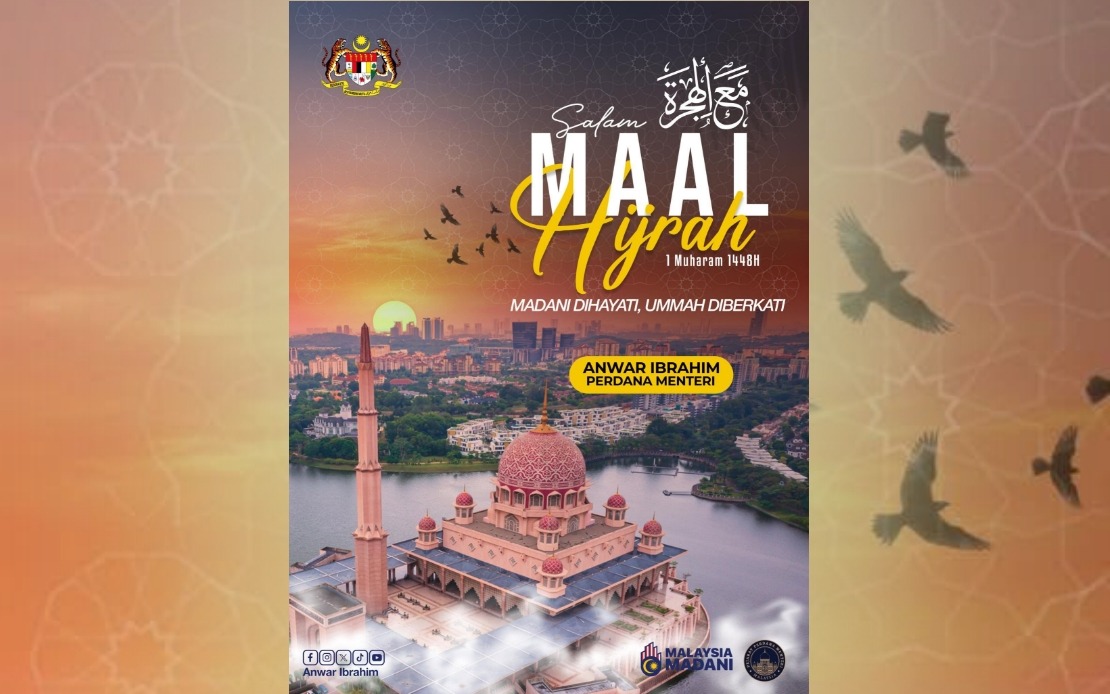
The Department of Islamic Development Malaysia (Jakim) selected the theme "MADANI Dihayati, Ummah Diberkati" (MADANI Embraced, The Ummah Blessed) for this year's National Maal Hijrah Celebration, explicitly tying the observance to the broader MADANI framework that has become central to the government's governance philosophy. This thematic choice reinforces the administration's messaging that institutional reform and spiritual renewal operate as complementary processes. The reference to Madinah's development as a great Islamic civilisation implies that contemporary Malaysian governance should similarly aspire to combining material progress with ethical and spiritual dimensions. For regional observers, this represents an attempt to position Malaysia as an exemplar of inclusive, value-centred governance—distinct from secular developmental models that many Southeast Asian nations have pursued.
The invocation of Quranic verse 100 from Surah An-Nisa regarding rewards for those who migrate in Allah's path cements the spiritual dimension underpinning the political message. Anwar's exegetical interpretation—defining Hijrah as sacrifice, struggle, brotherhood, and unity-building—translates abstract theological concepts into pragmatic language about collective action. This rhetorical move appeals simultaneously to Malaysia's Muslim majority and to the broader population concerned with national cohesion and institutional efficacy. The layering of religious language with governance concerns reflects a deliberate attempt to mobilise faith-based motivations in service of secular policy objectives, a strategy particularly prevalent in Muslim-majority democracies navigating the integration of religious and civic identities.
For Southeast Asian observers, Anwar's emphasis on consensus-based reform resonates with regional traditions of decision-making that often privilege collective harmony over majoritarian imposition. Countries including Indonesia and Thailand have similarly invoked concepts of shared deliberation and communal agreement when advancing contentious policy changes. However, the gap between rhetorical commitment to consensus and actual implementation frequently widens when governments face practical policy trade-offs. Whether Malaysia's administration can sustain inclusive decision-making processes while advancing a comprehensive reform agenda remains a critical test of these principles.
The timing of these remarks during Maal Hijrah observances strategically positions the government as steward of both material and spiritual dimensions of national development. By anchoring reform discourse to Islamic historical precedent, the administration appeals to cultural and religious sensibilities among the Muslim electorate whilst maintaining ostensible commitment to pluralism and inclusive governance. This rhetorical balancing act reflects the political pressures inherent in Malaysia's federal structure and multi-community composition, where no single ideological framework commands universal assent.
For Malaysian policymakers implementing the MADANI agenda, Anwar's emphasis on consensus and unity carries practical implications for legislative strategy and institutional coordination. Legislation touching on sensitive domains—constitutional interpretation, religious authority, economic restructuring—may require extended consultation periods and deliberate coalition-building across parliamentary alignments. The alternative, executive action pursued without broad stakeholder engagement, risks generating backlash and institutional fragmentation. Whether the government will demonstrate the patience and flexibility that consensus-seeking demands, particularly when reform objectives encounter entrenched resistance, will substantially shape the trajectory of institutional change in Malaysia over the coming years.