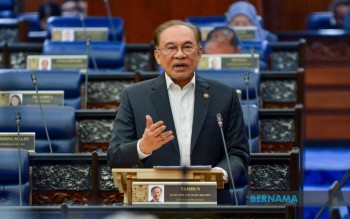
Prime Minister Datuk Seri Anwar Ibrahim has made clear that Malaysia's government will accept no tolerance whatsoever for fraud or corruption linked to the Retirement Fund (Incorporated) KWAP's investment in eFishery, an aquaculture technology start-up. Speaking in the Dewan Negara, Anwar stressed that while preliminary findings have not uncovered evidence of such misconduct, the Malaysian Anti-Corruption Commission must conduct a thorough examination of the entire investment undertaking to ensure accountability and protect public confidence in the nation's pension fund system.
The Prime Minister, who also holds the Finance portfolio, disclosed that he has personally engaged with KWAP's management to demand their unequivocal cooperation with the investigation. His intervention underscores the political sensitivity of the matter, particularly given heightened public scrutiny of large institutional investments and questions about governance standards across Malaysia's retirement fund ecosystem. By positioning himself directly in the oversight process, Anwar has signalled that pension fund integrity ranks among his government's core governance priorities.
Anwar's statement arrived in response to parliamentary queries about safeguarding national retirement assets during a period of global economic turbulence and geopolitical strain. Senator Mohd Hasbie Muda had raised concerns about ensuring that Malaysia's principal retirement schemes—the Employees Provident Fund (KWSP) and KWAP—could deliver optimal returns for contributors despite international headwinds. This concern reflects broader anxiety among Malaysian workers about whether institutional fund managers are navigating complex investment landscapes with sufficient rigour and prudence.
The eFishery controversy has emerged at a moment when Malaysia's retirement funds face mounting pressure to generate competitive returns in an environment of sluggish economic growth and volatile equity markets. Both KWSP and KWAP manage trillions of ringgit in contributions from millions of Malaysian workers, making investment decisions consequential not only for individual retirement security but for national economic stability. Any perception of compromised governance in fund management could erode contributor confidence and invite scrutiny from regulators and oversight bodies globally.
Anwar was equally emphatic that the MACC should evaluate not merely the final investment decision but the entire analytical and decision-making framework that preceded it. This includes scrutinising the investment panel's deliberations and the board's approval processes—a comprehensive approach designed to identify potential weaknesses in institutional controls or lapses in due diligence. Such thoroughness reflects lessons learned from previous corporate governance failures in Malaysia and underscores a determination to prevent reputational damage to the fund management sector.
The Prime Minister's comments indicate that while he has confidence in KWAP's initial assessments, he recognises that public and regulatory confidence cannot rest solely on internal reviews. An independent investigation by the anti-corruption agency provides the institutional credibility necessary to reassure stakeholders—whether contributors, lawmakers, or international observers—that Malaysia's retirement funds operate under rigorous standards. This layered accountability mechanism also protects fund management executives by insulating their professional judgements from allegations of bias or self-interest.
Senator Wan Martina Wan Yusoff's supplementary question about government transformation efforts in investment governance touches a deeper institutional anxiety. She probed whether Malaysia has established adequate frameworks to identify suitable investment targets and whether sufficient safeguards exist to protect worker savings. These questions reflect a broader conversation across Southeast Asia about how national funds can pursue growth opportunities—particularly in emerging technology sectors—without exposing contributors to undue risk or governance failure.
The eFishery investment illustrates the tension facing Malaysia's fund managers between seeking returns in innovative sectors and maintaining conservative fiduciary standards. Aquaculture technology represents a legitimate growth domain aligned with global sustainability trends and Southeast Asia's economic positioning. However, investments in private start-ups inherently carry execution risks that conservative pension fund models traditionally minimise. Balancing growth aspirations against protection of contributor capital requires robust governance frameworks—precisely what Anwar is signalling the government intends to strengthen.
Anwar's emphasis on non-compromise regarding fraud reflects recognition that public trust in pension systems rests fundamentally on perceived integrity. Malaysia's retirement funds are not discretionary financial instruments but repositories of workers' lifetime savings. Any scandal involving mismanagement or misdirection of resources would carry profound consequences for political legitimacy and public confidence in government-linked institutions. By articulating zero tolerance early, Anwar attempts to establish clear governance boundaries and insulate the government from accusations of leniency if irregularities emerge.
The MACC's mandate to examine the investment process comprehensively will likely yield broader institutional insights into how KWAP evaluates risk, conducts due diligence on technology companies, and ensures board-level oversight of unconventional investments. Such scrutiny may establish precedents affecting how Malaysia's retirement funds approach emerging sectors and private equity opportunities. The outcome could reshape governance frameworks across the broader institutional investment landscape.
For Malaysian workers and contributors to KWAP, Anwar's stance offers reassurance that their interests enjoy political backing at the highest level. However, the investigation's findings and any reforms arising from them will ultimately determine whether current governance structures adequately protect pension fund assets in an increasingly complex investment environment. The government's response to the eFishery matter will establish benchmarks for how seriously Malaysia treats institutional accountability in retirement fund management.

