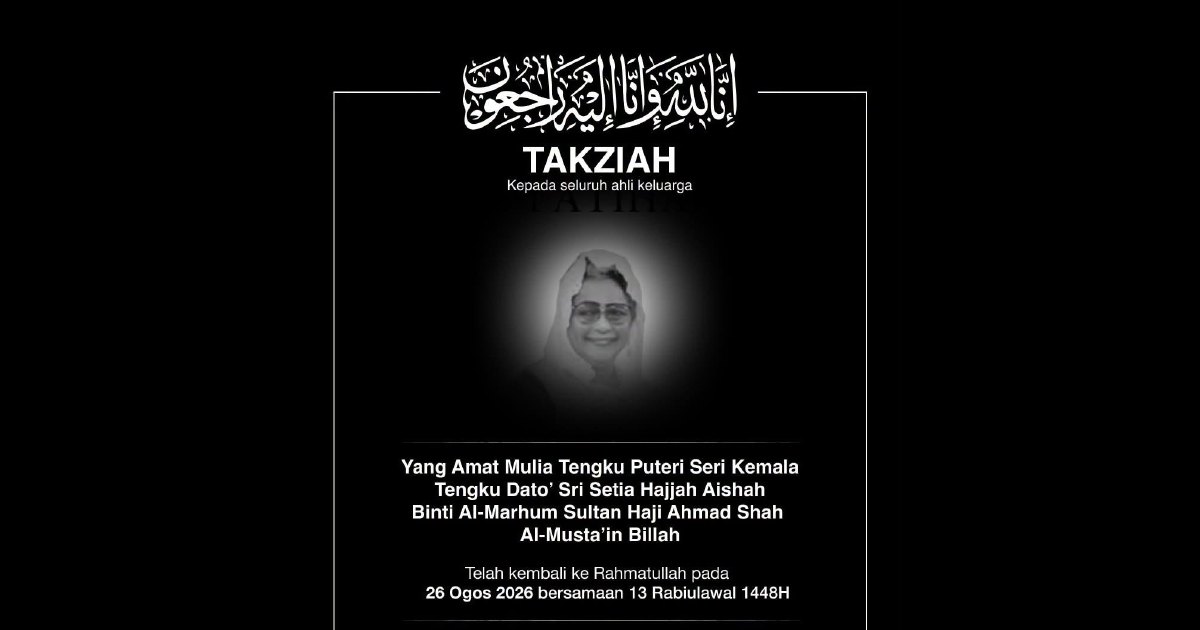
Prime Minister Datuk Seri Anwar Ibrahim has conveyed his sympathies to Pahang's reigning Sultan Al-Sultan Abdullah Ri'ayatuddin Al-Mustafa Billah Shah and members of the Pahang Royal Family following the recent passing of the Sultan's elder sister, Tengku Puteri Seri Kemala Tengku Datuk Seri Aishah Almarhum Sultan Ahmad Shah.
The gesture of condolence from Malaysia's top political leader underscores the significance accorded to the royal family's loss within the highest echelons of government. Such expressions of sympathy from the Prime Minister represent an important protocol in Malaysia's constitutional framework, where the relationship between the executive and the institution of royalty remains a cornerstone of the nation's governance structure.
Tengku Puteri Seri Kemala held a distinguished position within the Pahang Royal Family as the elder sister of the reigning Sultan. Members of the extended royal households across Malaysia's different states play ceremonial and symbolic roles that contribute to the cultural fabric of their respective regions. The death of senior royal family members typically prompts formal acknowledgment from key government officials and neighbouring royal households as a matter of tradition and respect.
Pahang, as one of Malaysia's largest states by area and a significant player in the nation's political and economic landscape, maintains a royal institution with deep historical roots. The Pahang Sultan holds considerable influence not only within the state but also participates actively in the Conference of Rulers, the collective body of Malaysia's nine reigning sultans that exercises important constitutional functions including the appointment of the King.
The passing of prominent members of royal families across Malaysia typically initiates a period of reflection on the enduring institutions that have shaped the nation's identity since independence. Royal families in Malaysia serve as custodians of cultural heritage and tradition, with their members often engaged in charitable work, state development initiatives, and the preservation of Islamic values throughout their respective regions.
Official condolence messages from the Prime Minister's office represent more than ceremonial formality. These communications reflect the government's acknowledgment of the pivotal role that royal institutions continue to play in Malaysian society and governance. The extended royal families, though removed from day-to-day political decision-making, remain central to the constitutional legitimacy that underpins Malaysia's system of government.
The Pahang Royal Family has maintained its institutional responsibilities through successive generations, adapting to modern governance while preserving the traditions and customs that define their role in state affairs. Members of the royal household frequently represent the state at national and international forums, contributing to Malaysia's diplomatic and cultural engagements beyond its borders.
For the broader Malaysian public, news of senior royal family members' passing often occasions reflection on the continuity of national institutions and the historical trajectories that have defined the nation's post-independence evolution. The response from government leaders, including formal condolences from the Prime Minister, reinforces the symbolic importance these institutions maintain in the national consciousness.
The timing and manner in which government officials express their sympathies during moments of loss within royal families demonstrates the delicate balance Malaysia maintains between its modern constitutional framework and its traditional institutions. This equilibrium has remained a defining feature of Malaysian governance, distinguishing the nation's approach to institutional development from many of its regional peers.
As Pahang's royal household navigates this period of bereavement, the state and nation continue to recognize the contributions that members of the extended royal family have made to state governance, charitable endeavours, and the preservation of cultural identity. The Sultan of Pahang, as head of the state's government in his constitutional capacity, plays a unique role in mediating between tradition and contemporary political requirements, a responsibility that extends to overseeing the state's participation in national affairs through the Conference of Rulers and other formal mechanisms.

