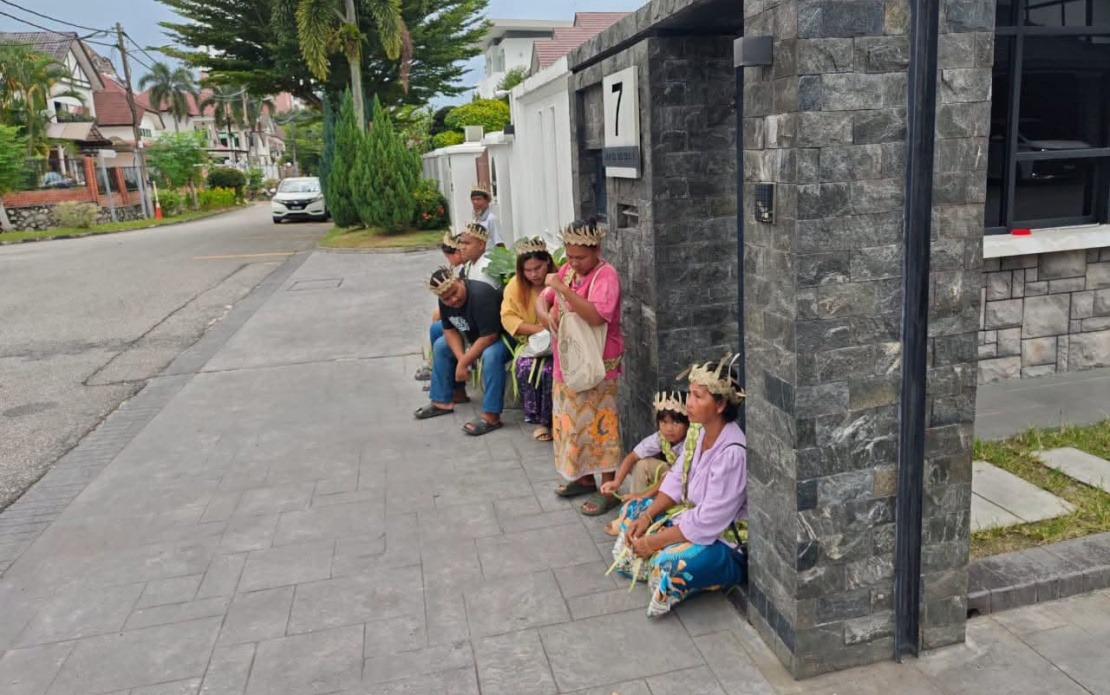
Prime Minister Datuk Seri Anwar Ibrahim has committed to escalating the land rights crisis affecting the Orang Asli settlement of Kampung Sungai Cot in Maran, Pahang, by raising the matter with state-level authorities. The announcement came through a social media post following what the Prime Minister characterised as a constructive engagement with community representatives who visited his residence in Kuala Lumpur on July 17.
The intervention signals heightened federal attention to a dispute that has created considerable tension within the indigenous community and raised questions about land governance frameworks in one of Malaysia's largest states. Kampung Sungai Cot, situated in the Maran district, has long grappled with contested land tenure arrangements, a recurring challenge affecting Orang Asli communities across Peninsular Malaysia where competing claims to territory remain legally and administratively unresolved.
During his conversation with the Orang Asli delegation, Anwar indicated he had received detailed accounts of their grievances encompassing both the substantive land dispute and what he termed "the detention of three Orang Asli residents" from the village. The detention episode appears to have functioned as a catalyst prompting the community to seek direct intervention from the Prime Minister's office, suggesting the situation had escalated beyond local resolution mechanisms.
A development welcomed by the visiting representatives was confirmation that detained individuals have since been released by police. While the Prime Minister's post did not elaborate on the charges or circumstances surrounding the detentions, the relatively swift release indicates either that the initial detention was precautionary or that legal grounds proved insufficient to sustain formal proceedings. This dimension underscores the intersection between land rights activism and potential law enforcement complications that often characterise Orang Asli advocacy efforts.
Anwar's public stance emphasised the necessity for measured, legally grounded resolution rather than what he described as opportunistic manipulation of the dispute. His reference to avoiding politicisation of the issue appears designed to constrain all stakeholders—state authorities, federal agencies, and political parties—from leveraging the community's vulnerability for partisan advantage. This framing reflects growing recognition that Orang Asli concerns, historically marginalised in Malaysian political discourse, have acquired sufficient salience to warrant careful handling by senior leadership.
The decision to engage Pahang's state government represents a calculated escalation of the dispute from informal community advocacy to formal federal-state consultation channels. Pahang, as Malaysia's largest state by area, contains significant Orang Asli populations concentrated in interior regions where land administration remains complex and often contested. State governments retain considerable authority over land matters under the Malaysian federal structure, meaning productive resolution requires genuine cooperation between federal and state machinery.
Kampung Sungai Cot's predicament reflects broader systemic issues affecting indigenous communities nationwide. The legal status of Orang Asli lands remains ambiguous in numerous cases, with overlapping claims from state governments, federal authorities, private developers, and the Orang Asli themselves creating persistent deadlock. Traditional tenure arrangements lack formal documentation, rendering communities vulnerable to encroachment and administrative reclassification that strips lands of indigenous designation.
For Southeast Asian observers, Malaysia's handling of indigenous land disputes carries particular significance. The region hosts some of the world's largest remaining tropical forests, many situated within Orang Asli or other indigenous territories. International frameworks increasingly recognise indigenous land rights as foundational to environmental conservation, yet Malaysian policy has historically prioritised development imperatives and state revenue over communal tenure. The Kampung Sungai Cot case thus reflects tensions between modernisation pressures and indigenous welfare that resonate across ASEAN.
The Prime Minister's intervention also carries implications for federal-state relations and the role of the federal centre in mediating resource conflicts. By committing to direct engagement with Pahang authorities, Anwar's administration signals willingness to invest political capital in resolving indigenous grievances, potentially establishing precedent for similar disputes elsewhere. However, such interventions require follow-through; declarations of intent unmatched by subsequent action risk further eroding indigenous communities' confidence in democratic institutions.
Moving forward, the substantive resolution of Kampung Sungai Cot's land dispute will depend on whether federal engagement produces concrete outcomes. Viable solutions might encompass formal recognition of Orang Asli land rights, demarcation of boundaries, compensation mechanisms, or community participation in development decisions affecting their territories. The legal and administrative architecture for implementing such solutions exists but remains inconsistently applied across Malaysian jurisdictions.
The episode demonstrates that Orang Asli advocacy, when amplified through direct access to senior political leadership, can prompt responsive governmental action. Kampung Sungai Cot residents, by securing a hearing with the Prime Minister, have positioned themselves favourably compared to numerous other indigenous communities lacking similar access channels. Whether this tactical advantage translates into substantive rights protection will ultimately determine whether Anwar's pledge represents genuine policy reform or well-intentioned rhetoric obscuring structural continuities.

