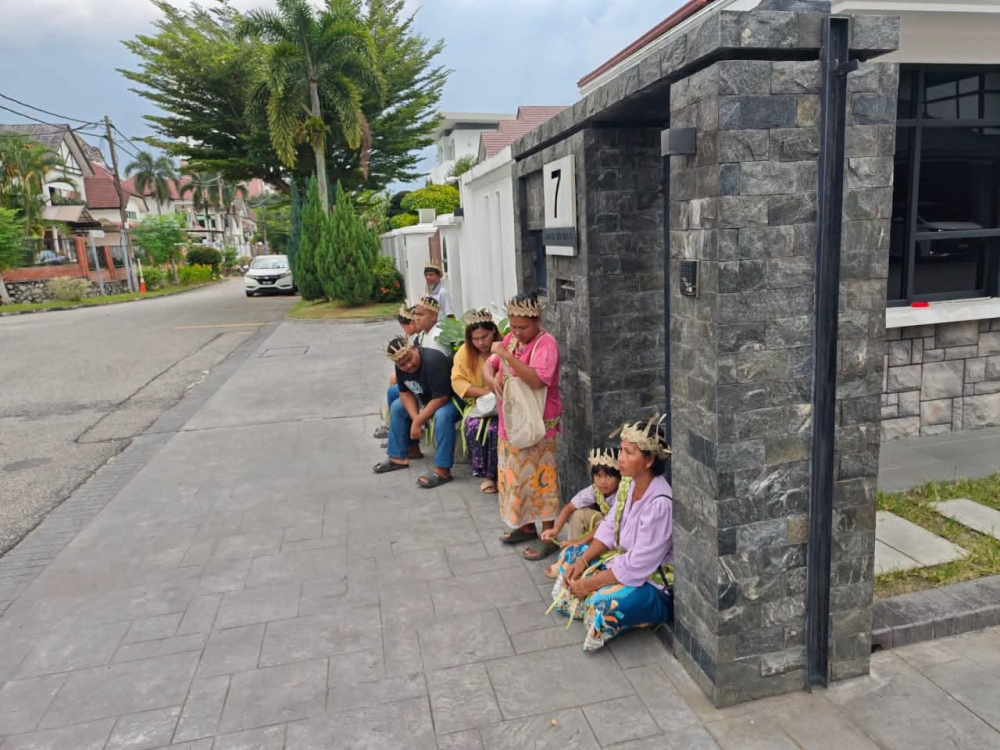
Prime Minister Datuk Seri Anwar Ibrahim has pledged to escalate the contentious land dispute affecting Orang Asli communities in Maran directly to Pahang state authorities, signalling the federal government's intention to intervene in what has become an increasingly sensitive indigenous rights issue. The commitment comes after the premier held discussions with villagers grappling with land ownership claims, underscoring growing political attention to Orang Asli concerns at the highest levels of Malaysian governance.
The Maran land dispute represents a persistent flashpoint in Malaysia's treatment of indigenous populations, whose territorial rights have frequently been marginalised in development planning and resource allocation decisions. Orang Asli communities across Peninsular Malaysia have long faced systematic encroachment on ancestral lands through logging operations, plantation development, and infrastructure projects, with many disputes languishing unresolved in bureaucratic channels for years. The Maran case exemplifies how these conflicts intersect with state-level governance structures, requiring coordinated action between federal and regional authorities to achieve meaningful resolution.
Anwar's direct engagement with village residents reflects a deliberate political strategy to address indigenous grievances through personal consultation rather than relying solely on governmental intermediaries. This approach acknowledges that Orang Asli communities often experience bureaucratic indifference, viewing their concerns as secondary to broader economic development priorities. By meeting with affected villagers, the Prime Minister demonstrated receptiveness to grassroots perspectives and signalled that such matters warrant executive-level attention, potentially reshaping how indigenous issues are prioritised within government channels.
The decision to formally raise the dispute with Pahang's state government carries procedural and political weight. While land policy falls partly under state jurisdiction in Malaysia's federal structure, the Prime Minister's involvement elevates the issue beyond routine administrative handling and positions it as a matter of national significance. This escalation potentially compels state authorities to revisit their approach, knowing that federal attention carries implications for their administration's standing with the federal executive.
Orang Asli land disputes in Peninsular Malaysia typically involve competing claims between indigenous communities, state governments, private developers, and federal agencies. In the Maran context, the specific nature of conflicting interests—whether involving mineral extraction, agricultural development, or settlement expansion—shapes how resolution might proceed. Understanding these underlying commercial or administrative drivers is essential for crafting solutions that acknowledge both indigenous rights and existing stakeholder positions.
The commitment also reflects evolving political calculations within Malaysian governance, where indigenous communities represent a constituency whose electoral influence and advocacy capacity have grown incrementally. With a coalition government navigating diverse interests, paying visible attention to Orang Asli grievances serves multiple purposes: demonstrating responsiveness to marginalised groups, differentiating the administration's stance on indigenous rights, and potentially consolidating support among communities that have historically felt neglected by previous governments.
Resolution of such disputes requires more than rhetoric. Implementation would necessitate detailed fact-finding regarding historical land use, examining documentary evidence of indigenous occupation, and assessing the legitimacy of competing claims. Malaysia's land management systems often lack clear mechanisms for adjudicating disputes between customary indigenous rights and state-granted titles, creating legal ambiguity that perpetuates uncertainty for Orang Asli communities. Federal intervention could establish a precedent for more transparent, equitable dispute resolution processes.
The Maran situation also resonates beyond this specific location. Across Southeast Asia, indigenous land rights remain contested terrain where developmental imperatives frequently override customary territorial claims. In Malaysia particularly, the gap between constitutional recognition of Orang Asli status and practical protection of their rights has widened over decades. A high-profile commitment to addressing Maran could signal broader policy direction regarding how the government intends to balance development with indigenous land protection moving forward.
For Pahang state government, the Prime Minister's intervention creates both opportunity and pressure. Opportunity exists to demonstrate commitment to equitable governance and indigenous welfare through collaborative problem-solving with federal authorities. Simultaneously, visible federal scrutiny may create pressure to expedite resolution or justify any decisions that further disadvantage Orang Asli claimants. The state's response will likely influence perceptions about whether serious change is materialising or whether assurances remain largely symbolic.
The broader significance of Anwar's pledge extends to institutional questions about how Malaysia's government structures handle indigenous issues. Historically, such matters have been scattered across multiple agencies—the Department of Orang Asli Development, state land offices, and various federal bodies—with coordination gaps undermining coherent policy response. A Prime Minister-level commitment potentially creates focal point for coordinated action, though translating high-level attention into sustained bureaucratic change remains challenging.
Implementing substantive change will require sustained engagement beyond initial consultations. Orang Asli communities have experienced cycles of government promises followed by minimal follow-through, breeding understandable scepticism about official commitments. Transparent timelines, measurable benchmarks, and accountability mechanisms for implementation would distinguish genuine policy shift from performative gestures.
The coming months will reveal whether Anwar's pledge initiates genuine dispute resolution mechanisms or remains a political gesture. Observers of Malaysian indigenous affairs will be watching for concrete steps: formal discussions with Pahang officials, establishment of fact-finding commissions, or revised policy frameworks addressing similar disputes nationwide. The Maran case thus becomes a test case for federal government sincerity regarding Orang Asli land rights protection.

