%22%2F%3E%3C%2Fpattern%3E%3C%2Fdefs%3E%3Crect%20width%3D%22100%25%22%20height%3D%22100%25%22%20fill%3D%22url(%23ph2dgtzg)%22%2F%3E%3Crect%20width%3D%22100%25%22%20height%3D%22100%25%22%20fill%3D%22url(%23ph2dgtzp)%22%2F%3E%3Ctext%20x%3D%2250%25%22%20y%3D%2250%25%22%20text-anchor%3D%22middle%22%20dominant-baseline%3D%22central%22%20fill%3D%22rgba(255%2C255%2C255%2C0.95)%22%20font-family%3D%22Georgia%2C%20'Times%20New%20Roman'%2C%20serif%22%20font-weight%3D%22700%22%20font-size%3D%22320%22%20letter-spacing%3D%22-0.02em%22%3EPM%3C%2Ftext%3E%3C%2Fsvg%3E)
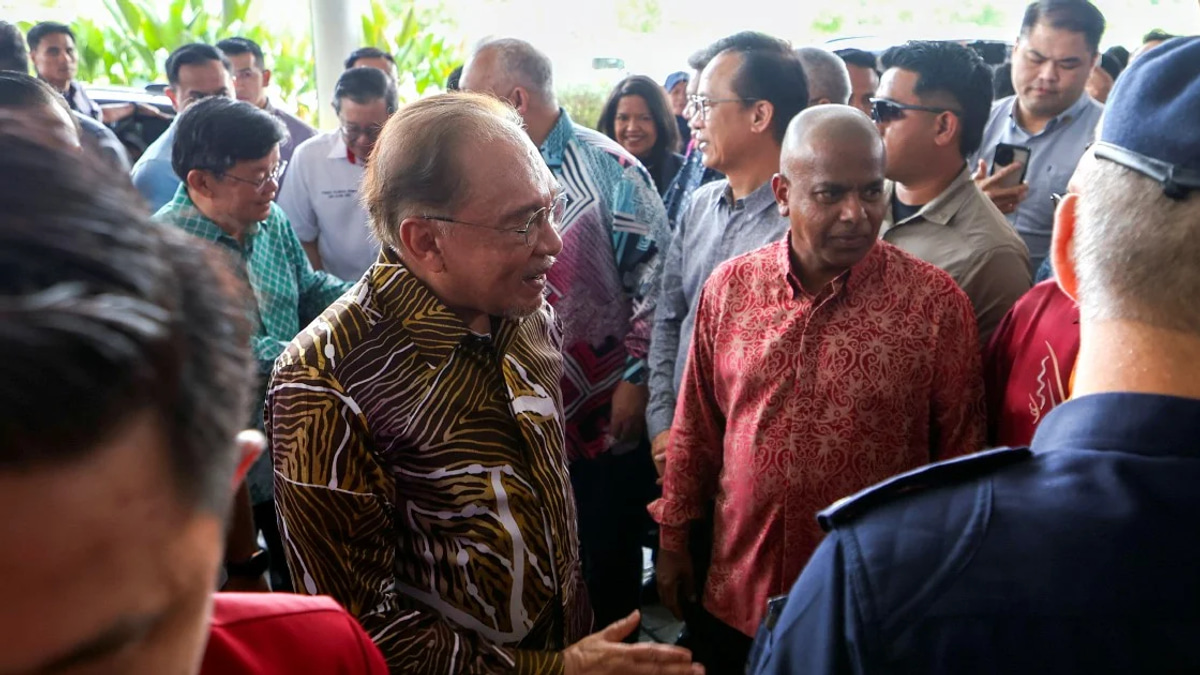
Prime Minister Datuk Seri Anwar Ibrahim has delivered a strong endorsement of Malaysia's journalism community, acknowledging their commitment to ethical reporting during an era of rapid technological transformation. Speaking at the main ceremony for National Journalists' Day (HAWANA) 2026 on June 20 at the PICCA Convention Centre @ Butterworth Arena in Penang, he recognised the substantial contributions media practitioners have made in serving the public interest and supporting the government's developmental objectives.
The Prime Minister framed his remarks within the context of mounting pressures confronting the journalism profession. The convergence of accelerating digital innovation and the proliferation of artificial intelligence technologies has fundamentally reshaped the operational landscape for newsrooms across the country. These technological advances, whilst offering unprecedented opportunities for information gathering and dissemination, have simultaneously introduced complex ethical dilemmas and professional challenges that require careful navigation. Anwar acknowledged that media organisations must grapple with questions of verification, attribution, and accuracy in ways that previous generations of journalists never encountered, particularly as algorithms and automated systems increasingly influence information flows.
Central to the Prime Minister's message was an articulation of media's essential democratic role. Beyond simply reporting facts and events, journalists serve as crucial intermediaries in helping citizens develop a nuanced understanding of government policies and the broader national development agenda. This function becomes increasingly vital as Malaysia pursues complex policy objectives spanning economic expansion, digital transformation, and the transition towards renewable energy systems. When journalists succeed in conveying accurate, contextualised information about these initiatives, they enable citizens to participate more meaningfully in democratic processes and to hold institutions accountable.
Yet Anwar also stressed the necessity of establishing clear boundaries around press freedom. In his view, the right to express oneself and share information must be coupled with a corresponding commitment to responsibility and ethical conduct. This tension between liberty and obligation represents perhaps the defining challenge facing contemporary journalism. The Prime Minister contended that information conveyed to the public must meet standards of accuracy, credibility, and verifiable sourcing. Without such constraints, he suggested, freedom of expression risks becoming a vehicle for misinformation and manipulation rather than enlightenment.
A particularly striking element of Anwar's address involved his observation that values and ethical frameworks ultimately determine the meaning and significance of information. Stated simply, whether a claim qualifies as truthful or misleading, appropriate or harmful, cannot be determined by factual content alone. Instead, these judgments rest upon a foundation of ethical principles and shared values within society. This reflects a sophisticated understanding that journalism operates within a moral dimension extending beyond mere factual reporting. The Prime Minister identified this as a major contemporary challenge requiring sustained commitment from both media practitioners and the broader public.
Anwar articulated the necessity of maintaining equilibrium between openness and stability. Democratic societies must preserve space for critical voices, diverse viewpoints, and robust public debate. Simultaneously, authorities have a responsibility to prevent the weaponisation of information systems in ways that might destabilise governmental institutions or undermine public confidence in democratic processes. This balancing act has become exponentially more difficult in the social media age, where inflammatory narratives can spread instantaneously across networks, potentially mobilising populations around distorted understandings of events.
The gathering itself demonstrated the substantial reach and influence of Malaysia's media sector. More than one thousand journalists and media professionals from Malaysia attended the main ceremony, alongside international delegates from Timor-Leste, Cambodia, and Laos. This regional attendance reflected the transnational dimensions of contemporary journalism and the shared challenges confronting Southeast Asian newsrooms. The presence of Timor-Leste's Secretary of State for Social Communication, Expedito Loro Dias Ximenes, underscored the event's importance as a regional professional convocation.
During the ceremony, Anwar witnessed the execution of a Memorandum of Understanding between Malaysia's national news agency Bernama and Timor-Leste's national news agency TATOLI. This agreement symbolises collaborative efforts to strengthen journalism practices and information-sharing protocols across the region. The Prime Minister also presented the HAWANA Award to Datuk Suhaimi Sulaiman, former director-general of broadcasting, and a special award honouring the late Azlan Idris, former chief of Bernama Radio, recognising their foundational contributions to developing Malaysia's media infrastructure.
Recognition extended to media organisations and individual practitioners who exemplified professional excellence. TV3 and Bernama received honours for their performance in the HAWANA-Dewan Bahasa dan Pustaka Pantun Festival competition, whilst the Prime Minister distributed benevolence contributions to media industry practitioners facing health-related difficulties. These gestures reflected appreciation for journalists' dedication and acknowledgment of the profession's challenging working conditions.
The thematic frame for HAWANA 2026—"Media Integrity Strengthens Credibility"—encapsulates the underlying message of Anwar's remarks. In an information environment increasingly characterized by confusion between verified reporting and rumour, between substantiated analysis and speculation, the maintenance of journalistic integrity has become a public good of paramount importance. Media organisations that invest resources in verification, that decline to publish unconfirmed reports regardless of commercial pressure, and that transparently acknowledge limitations in their knowledge, build reservoirs of public trust.
For Malaysian newsrooms and their regional counterparts, Anwar's comments signal governmental acknowledgment of journalism's value proposition whilst simultaneously establishing expectations regarding responsible practice. The implicit challenge is for media institutions to demonstrate that press freedom need not come at the expense of accuracy, that vigorous reporting can coexist with ethical constraints, and that journalists serve democracy most effectively when guided by principles extending beyond mere access to information. As Malaysia navigates the complexities of digital-era governance and technological disruption, this balance between openness and responsibility will remain the defining test of journalism's contribution to national development and institutional legitimacy.
%22%2F%3E%3C%2Fpattern%3E%3C%2Fdefs%3E%3Crect%20width%3D%22100%25%22%20height%3D%22100%25%22%20fill%3D%22url(%23ph33f18g)%22%2F%3E%3Crect%20width%3D%22100%25%22%20height%3D%22100%25%22%20fill%3D%22url(%23ph33f18p)%22%2F%3E%3Ctext%20x%3D%2250%25%22%20y%3D%2250%25%22%20text-anchor%3D%22middle%22%20dominant-baseline%3D%22central%22%20fill%3D%22rgba(255%2C255%2C255%2C0.95)%22%20font-family%3D%22Georgia%2C%20'Times%20New%20Roman'%2C%20serif%22%20font-weight%3D%22700%22%20font-size%3D%22272%22%20letter-spacing%3D%22-0.02em%22%3EISTAF%3C%2Ftext%3E%3C%2Fsvg%3E)